
Watering
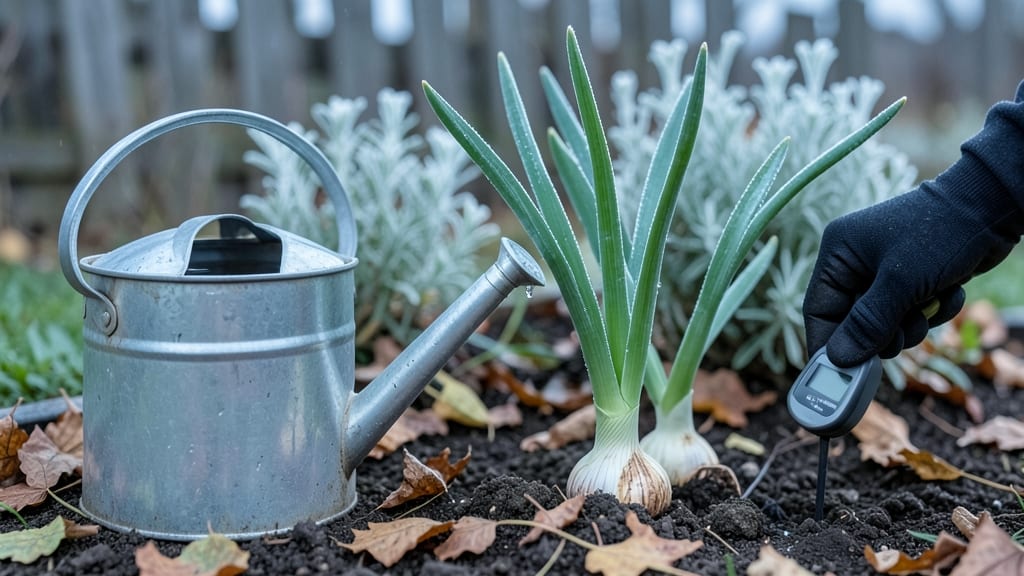
Watering garlic in winter is all about balance—too much risks rot, too little stunts next year’s harvest, and most gardeners guess wrong.
Winter care for garlic 🧄 can make the difference between puny bulbs and harvests so large they’ll feed your family for months—but most gardeners overwater, risking rot and wasted effort.
Here’s the truth: garlic needs far less water in winter, and the key is checking soil moisture before you water. Cold soil holds moisture longer, so you’re likely overdoing it if you’re watering more than once every 3-4 weeks.
Below, I’ll break down the exact schedule for your region, how to spot overwatering (mushy cloves are a red flag), and the mulching tricks that protect bulbs in freezing soil.
Winter watering schedule for garlic: how often and when to stop
Garlic enters dormancy in winter, but that doesn’t mean you can ignore it completely. Overwatering during this period is the #1 mistake gardeners make—leading to rotten bulbs and wasted effort.
The key is minimal moisture while maintaining just enough to prevent desiccation. Think of it like a drought-tolerant survival mode for your cloves.
Science shows garlic roots remain semi-active in winter, absorbing moisture but at a reduced rate. This means your watering schedule should shift from bi-weekly in fall to monthly or less once temperatures drop below 40°F (4°C). The goal? Keep soil barely moist—not soggy, not bone-dry.
Your watering frequency depends on three critical factors: soil type, climate zone, and weather patterns. Sandy soils dry faster and need less frequent watering, while clay holds moisture longer.
In snowy regions, nature waters your garlic for you—just monitor snow melt. In dry winters, you may need to water every 3-4 weeks.
Here’s the golden rule: Check soil moisture 1 inch below the surface before watering. If it’s damp, wait. If it’s dry, give a light drink—enough to moisten but not saturate. Overwatering in winter stresses garlic, making it vulnerable to diseases like white rot.
🌱
| Condition | Watering Frequency | Key Triggers | Action |
|---|---|---|---|
| Soil Temp <40°F (4°C) | Every 3-4 weeks | Ground hardens, leaves yellow | Stop watering until spring |
| Mild Winter (40-50°F) | Every 4-6 weeks | Top 2" of soil dry | Water deeply, 1 inch |
| Snow Cover Present | Hold off until melt | Snowpack >6 inches | Monitor soil after thaw |
| Freeze-Thaw Cycles | Every 5-6 weeks | Ground heaves | Water lightly after thaw |
| Drought Conditions | Every 6-8 weeks | Soil cracks appear | Water sparingly, early AM |
Most gardeners make the mistake of watering on a schedule rather than checking conditions. Instead, use the "finger test": Stick your index finger 1-2 inches into the soil.
If it feels damp but not wet, skip watering. If it’s dry, give garlic a slow, deep drink—think 5-10 minutes with a gentle hose or drip system.
Timing matters too. Water in the early morning to reduce evaporation and fungal risks. Avoid evening watering, which can leave cloves sitting in moisture overnight—a recipe for rot. In freezing conditions, water only if the ground isn’t frozen solid. Frozen soil repels water, making hydration impossible.
Knowing when to stop watering entirely is just as critical. Once soil temperatures consistently stay below 40°F (4°C) and garlic leaves turn yellow-brown, it’s time to halt watering until spring. This signals the plant’s full dormancy phase, where it conserves energy for next year’s growth.
Pro tip: Mulch heavily (4-6 inches of straw or leaves) to insulate roots and lock in moisture. This reduces your need to water at all. In my Zone 5 garden, mulched garlic rarely needs winter watering—nature and the mulch handle it perfectly.
💧
Remember, garlic’s winter watering needs are about balance. Too much water = rotten bulbs. Too little = shriveled cloves. By following this
Signs your garlic is getting too much (or too little) water in winter
Garlic bulbs store food underground during winter, but excess moisture can trigger rot while dry conditions stunt growth. The key is balancing soil moisture—too much creates soggy cloves, while too little leaves brittle, cracked soil.
I’ve learned the hard way that winter watering is more about observation than a rigid schedule.
Start by checking the soil around your garlic—it should feel cool and slightly damp, like a wrung-out sponge. If it’s sticky or smells musty, your garlic is drowning.
On the flip side, if the soil is hard and crumbly, your bulbs aren’t getting enough hydration to survive dormancy. Both extremes stress the plant and reduce next summer’s harvest.
🌱
How often to water garlic in winter? Monthly at most—unless your region has persistent dry spells (then check soil weekly). Overwatering in cold weather drowns roots and invites fungal rot. Use a soil moisture meter or stick your finger 2 inches deep—if it’s damp, wait.
Look for visual clues in your garlic’s leaves. Yellowing or wilting tops signal overwatering, while crispy, brown edges hint at underwatering stress. I once saw garlic leaves curl like parchment paper—turns out, the soil was bone-dry despite recent rains. Always dig deeper: surface moisture can fool you.
For overwatered garlic, reduce frequency immediately and improve drainage. Spread a 2-inch layer of straw mulch to insulate roots and wick excess moisture away. If mold appears on cloves, remove affected bulbs and treat the bed with copper fungicide. Prevention is easier than cleanup!
If your garlic shows underwatering signs, give it a deep drink (about 1 inch of water) and cover the soil with mulch to retain moisture. Avoid frequent shallow watering—it encourages shallow roots. Instead, soak the area slowly to encourage roots to grow deeper for spring growth.
Remember, garlic’s winter needs vary by climate. In snowy regions, natural moisture may mean no watering at all, while dry winters might require occasional checks. Trust your observations over a calendar—your garlic will thank you next harvest season. 🌿