
How To
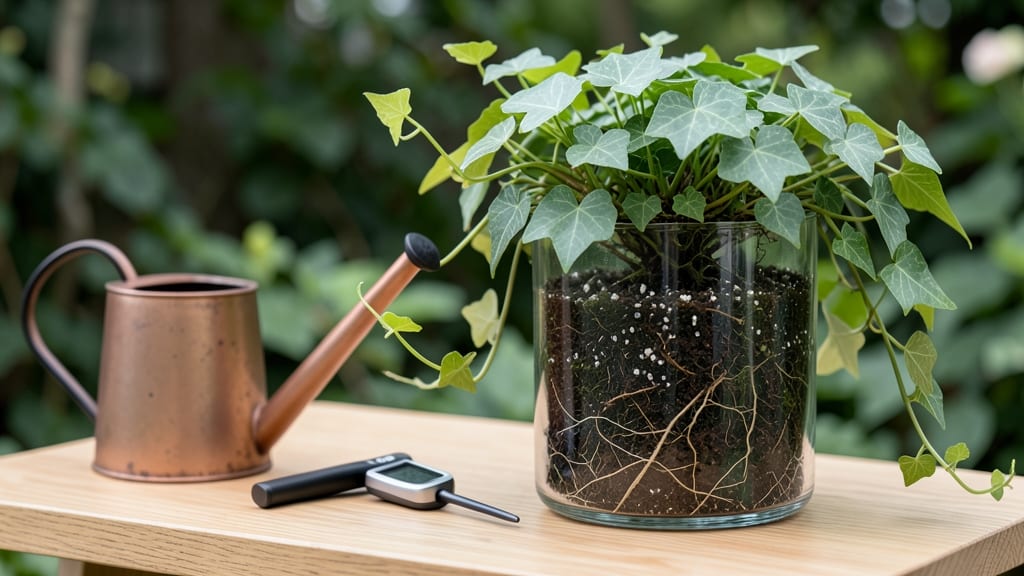
Watering your English Ivy plant indoors once every 1-2 weeks keeps its lush vines thriving, but timing is everything—too much or too little water can turn those vibrant leaves yellow or crispy in no time.
Struggling to keep your 🌿 ivy plant lush and green indoors? Overwatering or underwatering can turn those vibrant vines into sad, brown stems—fast. The key to thriving ivy lies in understanding its subtle thirst cues, and the 1-finger test is your secret weapon.
Most people assume ivy is low-maintenance, but its water needs shift with seasons, pot size, and even humidity levels. A small pot dries out faster than a large one, while winter slows growth—and that means less frequent watering.
Below, I’ll break down the exact watering schedule, how to spot over- or underwatering early, and why checking soil moisture before watering saves you from root rot. Ready to master the art of keeping your ivy happy?
The 1-Finger test: ivy plant watering schedule explained
Mastering the 1-finger test for ivy plants transforms guesswork into a science. This simple method helps you determine exactly when your English ivy or Swedish ivy needs water—without drowning its roots. The key is checking soil moisture 1 inch deep, where the plant's roots actively seek hydration.
Unlike succulents, ivy thrives on consistent moisture, but soggy soil spells disaster. Let’s break down how to use this test like a pro.
Start by inserting your index finger about 1 inch deep into the soil near the plant’s base. The goal is to feel the moisture level—not the surface dryness that can fool you. If the soil feels dry to the touch, it’s time to water.
If it’s still slightly damp, wait another day or two. This test works best when your ivy is in a well-draining pot with holes, preventing waterlogged conditions that choke roots.
Here’s the secret: Ivy plants hate inconsistency. They prefer soil that stays evenly moist but never waterlogged. The 1-finger test aligns perfectly with this need, giving you a reliable benchmark every time.
For example, in my low-humidity apartment, I water my ivy every 5-7 days during summer, but only every 10-14 days in winter when growth slows. Adjust based on your home’s conditions.
🌿
How Often to Water Ivy Plant Indoors: Step-by-Step Guide
- 1
- 2
- 3
- 4
- 5
- 6
Your ivy’s leaf condition is a silent watering diary. Yellowing leaves or drooping vines scream “overwatered!” while crispy, brown edges signal thirst. For instance, my English ivy once developed mushy stems after I ignored the 1-finger test for a week—root rot had set in.
Always pair the test with visual checks to catch issues early. Pro tip: Bottom-watering (placing the pot in a tray of water for 10-15 minutes) helps prevent overwatering while ensuring even moisture.
Humidity plays a sneaky role in ivy care. If your home is dry (common with central heating), your ivy will dry out faster. In these cases, increase watering to every 4-5 days in summer.
Conversely, high humidity (like a bathroom or kitchen) lets you stretch watering to every 10-12 days. I’ve seen Swedish ivy thrive in humid conditions with minimal watering—its leaves stay plump and vibrant, while my English ivy in the living room needs more frequent checks.
Seasonal shifts demand watering flexibility. During spring and summer, when ivy grows most actively, I water every 5-7 days. But in fall and winter, growth slows, and I reduce frequency to every 2-3 weeks.
Pay attention to your ivy’s growth rate: if new leaves appear sluggish, it’s likely thirsty. Conversely, if you see slow wilting despite moist soil, it might be time to repot into fresher, well-draining mix.
Pot size matters more than you’d think. A small 6-inch pot dries out faster than a 12-inch container, so adjust your watering schedule accordingly.
For example, my tiny ivy starter in a 4-inch pot needs watering every 3-4 days, while my mature ivy in a 10-gallon pot holds moisture longer. Always use a pot with drainage holes—ivy roots suffocate in soggy conditions, leading to root rot and leaf drop.
If you’re unsure, lift the
Common ivy watering mistakes and how to fix them
Ivy plants are forgiving, but even they suffer when watered incorrectly. The most common mistake? Overwatering, which causes root rot and yellowing leaves, while underwatering leads to crispy brown edges. Both issues can be fixed with simple adjustments to your routine.
Seasonal changes dramatically affect your ivy's needs. In summer, high heat and dry air mean watering every 5-7 days, while winter slows growth, requiring water every 2-3 weeks. Ignoring these shifts often results in soggy soil or parched roots.
Low light conditions trick many into thinking their ivy needs more water. Dim corners slow evaporation, so soil stays damp longer. Always check moisture before watering—never on a schedule alone.
High heat from radiators or direct sunlight also speeds up moisture loss. Place your ivy away from heat sources and increase watering frequency if leaves start curling or wilting during hot spells.
⚠️ Warning: How Often to Water Ivy Plant Indoors
Indoor ivy thrives on a 1-2 week watering cycle, but never follow a rigid schedule. Instead, use the 1-finger test: Stick your finger 1 inch into the soil. If it feels dry, water thoroughly until it drains from the bottom. Yellow leaves or mushy stems mean you're overdoing it—let the soil dry out more between waterings.
Key Fixes:
- ✅ Repot in well-draining soil if roots smell foul (root rot)
- ✅ Trim brown leaves to redirect energy to healthy growth
- ✅ Move to brighter light if leaves pale (underwatering)
If your ivy shows yellow leaves with brown edges, it’s likely overwatered. Let the top 2 inches of soil dry out completely before watering again.
For crispy, brown leaves, it’s underwatered—soak the soil until water runs out the drainage hole and repeat every 5-7 days until recovery.
Reviving a struggling ivy starts with pruning damaged vines and adjusting your care routine. Place it in bright, indirect light, reduce watering frequency, and use a well-draining potting mix to prevent future issues. Patience is key—healthy new growth should appear within 2-4 weeks of corrections.
Remember, ivy’s water needs change with its environment. Monitor soil moisture, adjust for seasonal shifts, and trust the plant’s visual cues over a strict schedule. With these fixes, your ivy will bounce back—and stay lush for years to come. 🌿