
How To
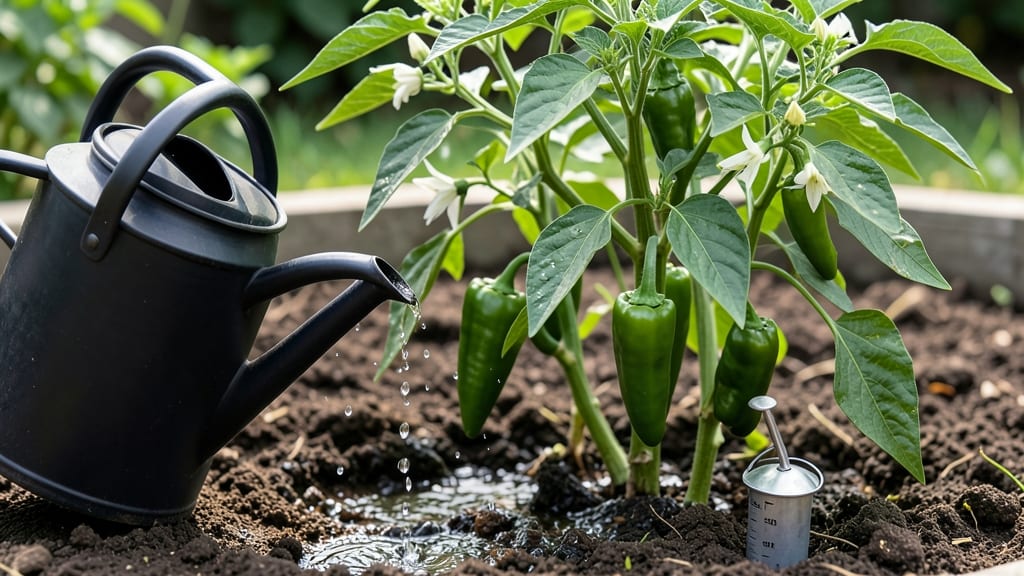
Watering your jalapeño plants 🌶️ the right way—1–2 times per week—is the difference between a bumper crop and sad, shriveled peppers.
Struggling to grow healthy, high-yielding jalapeños? The secret lies in mastering watering frequency—too much or too little can kill your harvest before it even starts.
Most gardeners guess, but jalapeños need consistent moisture without soggy roots. In Zone 6, that means checking soil depth before each watering and adjusting for heat waves or clay soil.
Below, I break down the exact schedule by growth stage, the foolproof soil test, and how to spot when you’re over- or underwatering—so you can grow peppers that pack heat and flavor.
Jalapeño watering schedule by growth stage: seedlings to fruit production
Mastering the jalapeño watering schedule is the key to growing bold, flavorful peppers. Unlike many vegetables, jalapeños demand consistent moisture but hate soggy roots. The right approach changes at every growth stage—from delicate seedlings to heavy fruit production.
I’ve grown jalapeños for 10 years, and I’ve learned that overwatering kills faster than underwatering during critical phases.
Your watering strategy must adapt as your plants mature. Seedlings need gentle hydration to prevent damping off, while flowering plants require balanced moisture to support pollination. During fruiting, deep, infrequent watering prevents blossom-end rot—the enemy of pepper growers.
Let’s break down the exact schedule for each stage, including my foolproof soil dry test to avoid guesswork.
🌱 PRO TIP: Always water in the early morning (before 10 AM) to reduce fungal risks and evaporation. Never water at night—this invites disease and weakens roots.
During the germination stage, your jalapeño seeds need a humid microclimate. I use a clear plastic dome or spray bottle to mist seeds twice daily until sprouts appear. Overwatering here causes seeds to rot—so always check for mold or mushy soil.
Once seedlings emerge, shift to light, frequent watering (every 2-3 days) to prevent damping off, a fungal disease that turns stems black.
When transplanting, give your jalapeños a deep soak 3 days in a row. This helps roots establish quickly in their new home. After transplanting, reduce frequency to every 3-4 days and let the top 2 inches of soil dry slightly between waterings.
This encourages deeper root growth, which supports larger peppers later.
The flowering stage is where many growers make mistakes. Jalapeños need balanced hydration—not too much, not too little—to set fruit.
I water mine every 4-5 days, always in the morning, and avoid wetting leaves to prevent mildew. Stress from uneven watering causes flowers to drop, wasting your harvest potential.
Once peppers appear, enter the fruiting stage, where consistent moisture is non-negotiable. Let the top 2-3 inches of soil dry between waterings to prevent blossom-end rot—a calcium deficiency triggered by uneven water.
I’ve seen entire harvests ruined by this; it’s why I always mulch with straw to keep soil moisture steady.
Container-grown jalapeños need more frequent watering than in-ground plants. Small pots dry out faster, so check soil moisture daily in summer.
If the top inch feels dry, water deeply until it drains from the bottom. Never let containers sit in standing water—root rot will kill your plants before they produce peppers.
🌶️ MY SECRET: Use a soil moisture meter or stick your finger 1-2 inches deep. If it feels dry, water thoroughly. If it’s still damp, wait another day. This simple test saves 90% of watering mistakes I’ve made over the years.
The perfect jalapeno soil dry test: when to water for maximum pepper size
Mastering the jalapeño soil dry test is the key to growing plump, flavorful peppers. Unlike many plants, jalapeños need consistent moisture without soggy roots—so knowing when to water makes all the difference.
I’ve learned the hard way that overwatering causes blossom-end rot, while underwatering stunts growth. The solution? A simple 1-2 inch soil check that saves time and boosts yields.
Start by sticking your finger 1-2 inches deep into the soil near your plant’s base. If the soil feels dry and crumbly, it’s time to water. If it’s still moist but cool, wait another day.
This method works for both in-ground and container-grown jalapeños, but container plants dry out faster—so check them daily in hot, sunny weather. Remember, clay soil holds moisture longer than sandy soil, so adjust your schedule accordingly.
⚠️ callout warning ⚠️
- Watering on a schedule instead of checking soil—leads to over/under-watering.
- Letting soil dry completely between waterings—causes stress and blossom-end rot.
- Ignoring pot size—small containers dry out in half the time of in-ground beds.
- Watering at night—promotes fungal diseases like powdery mildew.
Pro Tip: Use a moisture meter for accuracy, especially in sandy or rocky soil.
Your jalapeño’s growth stage also affects watering needs. During seedling phase, keep soil lightly moist but not soggy—use a spray bottle for gentle hydration. Once plants are established and flowering, aim for 1-1.5 inches of water per week, delivered deeply to encourage root growth.
In fruiting stage, maintain consistent moisture to prevent peppers from becoming bitter or shriveled. If your peppers start drooping in the afternoon, they’re thirsty—water immediately.
Weather plays a huge role in your watering routine. In hot, dry summers, jalapeños may need watering every 1-2 days, while cooler spring or fall might only require weekly deep watering. After a heavy rain, skip watering entirely—soggy soil suffocates roots.
And if you’re using mulch, it’ll slow evaporation, so reduce watering slightly. Always water at the base of the plant, not the leaves, to avoid disease spread.
For container-grown jalapeños, size matters. A 5-gallon pot may need watering every 1-2 days in summer, while a 10-gallon pot can go 3-4 days between waterings. If your plant’s leaves curl or yellow, it’s a sign of water stress.
On the flip side, mushy stems or yellowing lower leaves mean you’re overwatering. Adjust based on these visual cues—your peppers will thank you with bigger, juicier harvests.
Here’s my foolproof routine: Check soil daily at 1-2 inches deep, water deeply in the morning, and mulch to retain moisture. By mid-summer, my jalapeños produce plump, glossy peppers instead of shriveling up.
The secret? Consistency and attention to soil conditions—not guesswork. Try this method, and you’ll see the difference in just a few weeks!