
Watering
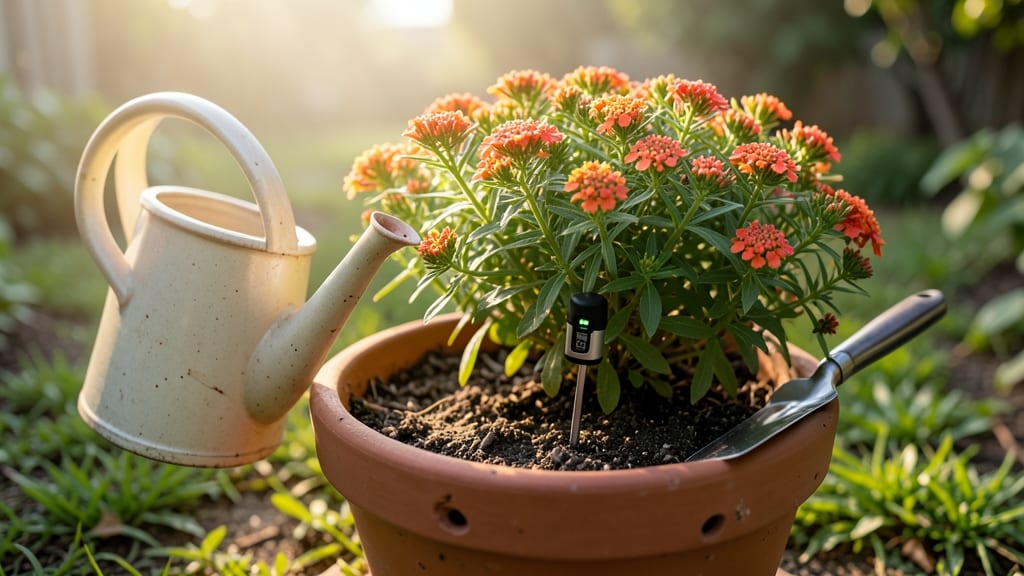
Watering your potted lantana 🌸 every 2-3 days keeps it thriving without drowning its roots—if you know the finger-dip test and adjust for heat or humidity.
Struggling to keep your potted lantana blooming while avoiding the dreaded root rot? The secret lies in mastering the finger-dip watering method—where timing, soil type, and climate all play critical roles.
Most gardeners guess and end up either underwatering (leaving it crispy) or overwatering (turning the soil into a swamp). The good news? Lantana’s drought tolerance means you can skip the daily check—but only if you’ve got the right soil mix and pot.
In this guide, I’ll break down the exact seasonal watering schedule, how to read your plant’s signals, and why terracotta pots save you 30% less watering than plastic. No more guesswork—just happy, blooming lantana.
Lantana watering schedule by season: the exact finger-dip test method
Mastering the lantana watering schedule in pots starts with understanding your plant's seasonal needs. Unlike in-ground plants, potted lantana dries out faster due to limited soil volume and heat exposure. The key? A simple finger-dip test that tells you exactly when to water—without guessing or risking root rot.
Lantana thrives on consistent moisture in spring and summer but becomes drought-tolerant in fall and winter. The finger-dip method adapts perfectly to these changes, giving you a precise, hands-on way to check soil moisture at the right depth.
For potted lantana, this means inserting your finger 1-2 inches deep—the ideal zone where roots actively absorb water.
Here’s the game-changer: Seasonal adjustments can change your watering frequency by up to 50%. In scorching summer heat, you might water daily, while winter’s chill slows evaporation to once every 10 days. The finger-dip test makes these shifts effortless, ensuring your lantana stays lush without soggy roots.
| Season | Finger-Dip Depth | Watering Frequency | Soil Feel | Notes |
|---|---|---|---|---|
| Spring | 1-2 inches | Every 3-4 days | Slightly dry | Active growth phase |
| Summer | 1-2 inches | Every 2-3 days (daily in heatwaves) | Dry top layer | Increase morning watering |
| Fall | 1-2 inches | Every 5-7 days | Moist but not soggy | Reduce frequency gradually |
| Winter | 1-2 inches | Every 7-10 days | Dry but not cracked | Minimal watering needed |
Let’s break down the finger-dip test step by step. First, gently insert your finger into the soil—never force it. If the top 1-2 inches feel dry, it’s time to water.
For small pots (6-10 inches), check daily in summer; for larger pots (12+ inches), every other day suffices. Pro tip: Morning is best—watering early prevents fungal growth from evening moisture.
Watch for visual cues that confirm your finger-dip results. Wilting leaves or soil pulling away from pot edges means underwatering, while yellowing leaves or a musty smell signals overwatering.
Adjust your schedule weekly based on these signs—lantana is forgiving but hates soggy roots. In extreme heat (90°F+), increase watering by 30% to compensate for rapid evaporation.
Pot size and material also influence your watering routine. Terracotta pots dry faster than plastic, so check soil moisture daily in summer if using them. For larger containers (14+ inches), roots have more space to access moisture, reducing frequency to every 4-5 days in summer.
Always ensure pots have drainage holes—this prevents root rot and keeps your lantana thriving.
One common mistake is watering on a schedule rather than checking soil moisture. Lantana in pots doesn’t follow a rigid calendar—it responds to your climate and pot conditions. For example, a shady spot may require watering every 5 days in summer, while full sun demands daily checks.
Use the finger-dip test as your decision-making tool to avoid both underwatering and overwatering.
In fall and winter, your lantana enters a dormant phase, slowing water needs by up to 70%. During these months, focus on keeping soil lightly moist—never soggy.
A light misting every 7-10 days is often enough, especially in cooler climates. This minimal approach prevents root rot while keeping your lantana healthy until spring.
Remember, the finger-dip test is your best friend for potted lantana. It’s free, accurate, and adaptable to any season or climate. By mastering this simple technique, you’ll keep your lantana blooming without the stress of guesswork.
Start testing today—your thriving potted lantana will thank you with vibrant flowers all season long!
Signs your potted lantana needs water (or too much!): Common mistakes to avoid
Your potted lantana communicates its thirst through subtle but unmistakable signals. Drooping leaves by midday aren't always a cry for water—sometimes they signal overwatering or root stress. The key is learning to read these cues before they become irreversible.
I've made the mistake of watering based on a rigid schedule, only to watch my lantana's vibrant blooms fade into sad, wilted stems.
Start by checking the soil moisture with your finger. Insert it 1-2 inches deep—if it feels dry, your lantana needs water.
But if it's damp or sticky, you're overdoing it. Dark, soggy soil is a red flag for root rot, while light, crumbly soil means it's time to hydrate.
The weight of the pot also tells the story: a light pot screams for water, while a heavy pot warns you to hold off.
How Often to Water Lantana in Pots
- Check soil moisture 1-2 inches deep before watering
- Water deeply until drainage occurs at the bottom
- Use well-draining soil with perlite or sand
- Water in the morning to reduce evaporation
- Adjust frequency by season (daily in summer, weekly in winter)
- Water on a fixed schedule without checking soil
- Let the pot sit in standing water for hours
- Use heavy clay soil that retains moisture
- Water at night (increases fungal risk)
- Ignore yellowing leaves or mushy stems
Pro Tip: Lantana in small pots dry out 3x faster than larger containers. Always check soil before watering!
Watch for leaf color changes—yellowing leaves often signal overwatering, while brown, crispy edges mean underwatering. New growth should be vibrant green; dull or grayish leaves indicate stress.
I once thought my lantana was thirsty because the leaves curled, but it turned out to be salt buildup from tap water. Switching to filtered or rainwater revived it within days.
Pot size matters more than you think. A 6-inch pot may need watering every 2-3 days in summer, while a 12-inch pot can go 5-7 days between waterings. Always ensure your container has drainage holes—lantana roots need air as much as water.
If you're unsure, lift the pot: if it feels lighter than expected, it's time to water.
Adjust your routine based on climate and humidity. In dry, hot conditions, your lantana might need daily watering, while humid or rainy seasons can stretch that to weekly. I learned this the hard way when my patio lantana nearly drowned during a sudden downpour.
Now, I always move pots to shelter during heavy rain and check soil moisture afterward.
Finally, don't ignore the blooms. Healthy lantana produces abundant, colorful flowers—if they're sparse or falling off, it's often a sign of water stress. A quick soil check and adjustment can bring back those vibrant clusters.
Remember, consistency is key: lantana thrives on balanced moisture, not extremes. With these cues, you'll keep your potted lantana happy and blooming all season long. 🌸