
Watering
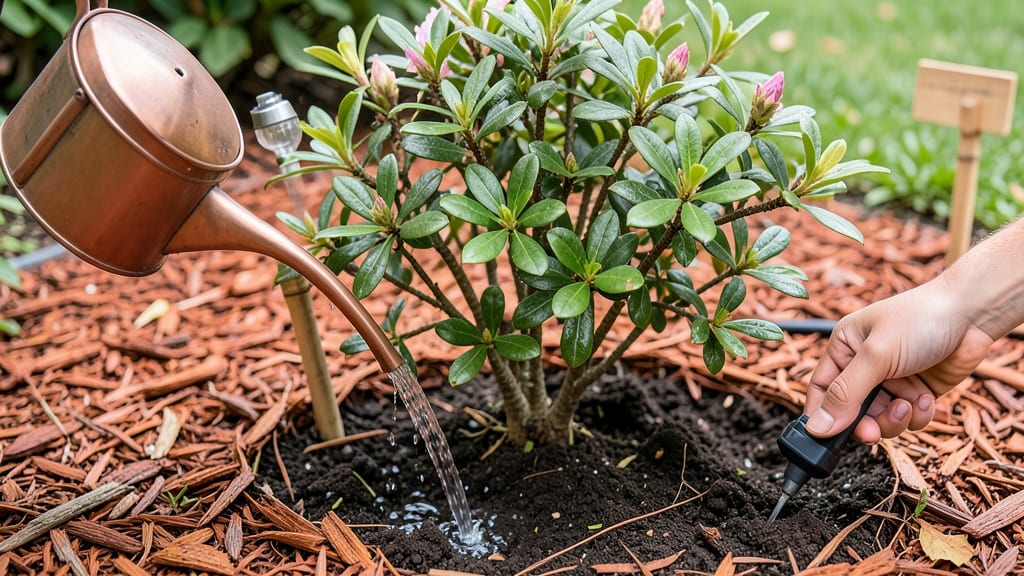
The 1-Week watering schedule for new azalea roots
The first week after planting your azalea is the most critical for root establishment. Root growth slows dramatically without proper hydration, while excessive water can suffocate roots and invite fungal diseases. Azaleas need consistent moisture during this period to bridge the gap between their old roots and new soil.
Think of it like a transplant recovery—too little, and they struggle; too much, and they rot.
Azaleas thrive in acidic, well-draining soil with a pH of 4.5-5.5. When newly planted, their roots are vulnerable to both drought stress and waterlogging.
The key is to mimic their natural moist forest floor environment—kept damp but never soggy. This schedule ensures your azalea gets the perfect balance without guesswork.
Why 7 days? Azalea roots take about this long to begin exploring their new soil. During this time, they rely entirely on your watering routine. Transplant shock occurs when roots can't adapt quickly enough, often leading to wilting or yellowing leaves. A structured watering plan prevents this by keeping the soil consistently moist at the root zone.
Your watering approach should change based on weather conditions, soil type, and container vs. ground planting. For example, clay soil holds moisture longer than sandy soil, while container-grown azaleas dry out faster. Adjustments are key to avoiding both overwatering and underwatering.
On Day 1, water your azalea immediately after planting with 1 gallon of water to settle the soil around roots. This initial soak helps eliminate air pockets that can strangle new growth. Mulch heavily (2-3 inches) to retain moisture and regulate soil temperature.
Organic mulch like pine bark also mimics azaleas' natural acidic environment.
From Days 2-3, switch to light waterings every 24 hours—about ½ gallon each time. Use your finger to check soil moisture 1-2 inches deep. If it feels dry, water again.
Avoid letting the top layer dry out completely, as this creates a moisture barrier that roots can't penetrate. Morning watering is ideal to reduce evaporation and prevent fungal diseases.
By Days 4-5, increase watering to every 48 hours with ¾ gallon per session. Watch for early signs of stress, like slight wilting or yellowing leaves. These indicate your azalea needs more frequent watering.
If rain occurs, skip scheduled waterings to avoid over-saturation. A simple rule: if it rained, wait until the soil feels slightly dry before watering again.
On Days 6-7, return to deep watering every 72 hours with 1 gallon. This final push encourages roots to spread deeper into the soil. By the end of the week, your azalea should have established a strong root network.
After this critical week, you can gradually reduce frequency to every 5-7 days, depending on weather and soil type.
Watch for warning signs like yellowing leaves (overwatering) or crispy edges (underwatering). Azaleas are sensitive to both extremes, so adjust your schedule based on these cues. With this routine, your azalea will transition from a vulnerable transplant
How to check soil moisture without a guesswork disaster
Testing azalea soil moisture isn't about guessing—it's about using your hands and eyes to read your plant's thirst signals. Clay soil holds water like a sponge, while sandy soil drains faster than a sieve.
Both require different watering approaches, and skipping this step means risking root rot or dehydration in your newly planted azaleas. Start by sticking your finger 1-2 inches deep into the soil near the plant's base.
For clay-heavy soil, press gently—if moisture lingers on your fingers, hold off on watering. In sandy soil, the moisture will vanish instantly, signaling it's time to hydrate. Visual cues like wilting leaves or dry mulch also scream for attention.
Remember, morning watering is always better than evening—it gives roots time to absorb moisture before nightfall humidity sets in.
Morning vs. Evening Watering for Azaleas
Morning Watering
- Pros: Reduces fungal risk, lets roots absorb moisture
- Cons: Requires early wake-up for large gardens
Evening Watering
- Pros: Convenient timing for work schedules
- Cons: Encourages fungal growth, increases evaporation
When adjusting your watering schedule, consider your local climate. In hot, dry summers, check moisture daily, while cooler months may only need weekly checks. Newly planted azaleas need consistent moisture—they shouldn't feel soggy or bone-dry.
Aim for soil that's damp like a wrung-out sponge but not swimming in water. This balance prevents transplant shock while encouraging root growth.
Another trick? Lift a small handful of soil—if it crumbles easily, it's dry. If it sticks together, it's too wet. Azaleas hate soggy roots, so never let water pool around the base.
For sandy soil, water deeply every 2-3 days, while clay soil may only need water every 5-7 days. The key is consistency—your azalea's roots will thank you with lush, vibrant foliage.
Don't forget about mulch—a 2-3 inch layer helps retain moisture while keeping roots cool. Check the mulch's depth too; if it's dry, it's time to water. Evening watering might seem convenient, but it's a recipe for disaster—fungal spores thrive in damp leaves overnight.
Stick to mornings, and you'll give your azaleas the best chance to thrive without the guesswork.
With these simple soil moisture checks, you'll become a watering pro in no time. Your azaleas will reward you with bold blooms and healthy growth, proving that a little attention to soil moisture makes all the difference. Happy gardening! 🌸