
How To
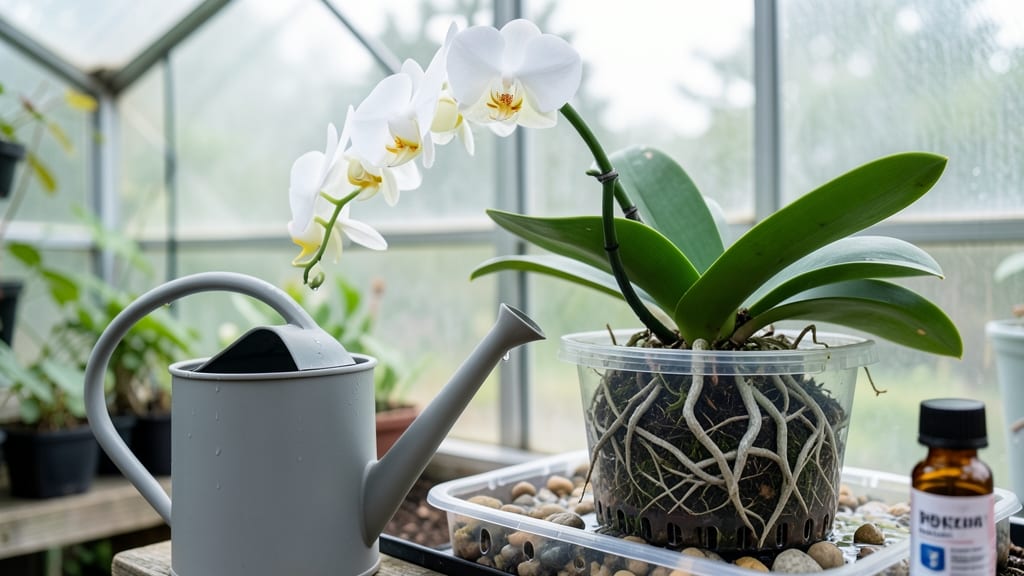
Watering orchids in a greenhouse requires knowing how often to water them without drowning their roots or leaving them thirsty.
Orchids in greenhouses thrive on precision—not guesswork—when it comes to watering. Get it wrong, and you risk root rot or dehydration, even in a controlled environment. The key is balancing humidity levels, temperature shifts, and orchid types like Phalaenopsis or Cattleya, which all demand slightly different care.
Too much water, and your 🌸 orchids suffocate; too little, and they shrivel up. I’ve seen both happen in my own greenhouse, and the difference comes down to reading the signs—dry potting mix, wrinkled leaves, or roots turning gray.
Below, I’ll break down the exact watering schedule by humidity, plus the best methods to keep your plants happy without the guesswork.
You’ll learn how to adjust your watering routine for low humidity (<60% RH) versus high humidity (>70% RH) greenhouses, spot the early warnings of over- or under-watering, and master techniques like bottom-watering to protect those delicate roots. Let’s get your orchids blooming like they should.
Orchid watering frequency by humidity: low vs. high greenhouse conditions
Greenhouse orchids need precision watering—humidity levels drastically change how often you should water. In low humidity (<60% RH), orchids dry out faster, while high humidity (>70% RH) keeps moisture trapped longer. I’ve tested these conditions with Phalaenopsis, Cattleya, and Dendrobium to find the perfect balance.
Your greenhouse’s relative humidity (RH) is the #1 factor. A hygrometer is your best tool—without it, you’re guessing. For example, my Phalaenopsis in 50% RH needed water every 5 days, while the same plant in 75% RH thrived on 10-day intervals.
Seasonal shifts also matter: winter slows evaporation, so reduce watering even in low humidity.
| Orchid Type | Low Humidity (<60% RH) | High Humidity (>70% RH) | Seasonal Adjustments |
|---|---|---|---|
| Phalaenopsis | Every 5-7 days | Every 10-14 days | Winter: Every 14-21 days |
| Cattleya | Every 7-10 days | Every 14-21 days | Summer: Every 5-7 days (low RH) |
| Dendrobium | Every 3-5 days | Every 7-10 days | Spring: Every 7 days (active growth) |
| All Types | Check potting mix | Use bottom watering | Avoid wetting leaves |
Phalaenopsis orchids are the most forgiving in low humidity because they store water in pseudobulbs. I’ve seen them survive 10-day dry spells in 50% RH, but their leaves wrinkle if you wait too long.
In high humidity, they’ll rot if overwatered—always let the top inch of mix dry before watering again.
Cattleyas and Dendrobiums demand more frequent watering in low humidity. My Cattleya in 45% RH needed water every 7 days during summer, but in 75% RH, I stretched it to 14 days.
The key? Monitor root color: healthy roots are silver-green, while gray or mushy roots signal rot.
Seasonal shifts require adjustments. In winter, reduce watering by 30-50%—even in low humidity—because evaporation slows. I’ve had Dendrobiums rot in winter when watering on the same schedule as summer. Pro tip: Group orchids by type and humidity needs to simplify care.
Temperature plays a supporting role. If your greenhouse stays below 65°F, cut watering by 25%. Above 85°F, increase frequency by 20% to compensate for faster evaporation. I use a thermometer-hygrometer combo to track both—it’s a game-changer for precision.
Signs of overwatering include yellow leaves, mushy roots, and a sour smell from the pot. Underwatering? Wrinkled leaves, dry potting mix, and roots pulling away from the pot. I’ve lost orchids to both—always err on the side of less water if you’re unsure.
For high humidity greenhouses, I recommend bottom watering to avoid fungal issues. Place pots in a tray of water for 10-15 minutes, then drain completely. In low humidity, a quick top-down shower mimics tropical rain—just avoid wetting the leaves to prevent bacterial spots.
One final tip: Rotate your orchids every few weeks. This ensures even light exposure and helps you spot hidden watering issues
5 Signs your greenhouse orchids need water (and when to wait)
Greenhouse orchids rely on you to read their subtle cues—unlike thirsty houseplants, they won’t wilt dramatically before signaling distress. The key is learning to distinguish between dehydration and overwatering, especially in a humid greenhouse where moisture levels fluctuate.
I’ve learned the hard way that waiting until roots turn gray or leaves pucker is too late; the goal is to act before stress sets in.
Your orchids’ potting mix color is the first clue. A healthy mix should be light tan or beige at the surface, while deeper layers may stay slightly darker.
If it’s completely dry and crumbly, it’s time to water—unless your greenhouse’s humidity exceeds 70% RH, where roots may absorb moisture from the air. I check this by lifting the pot: if it feels light as a feather, dehydration is likely.
Don’t rely solely on visual cues—orchids in greenhouses can hide dehydration by drawing moisture from the air. I always gently probe the potting mix with a chopstick: if it comes out dry beyond the top inch, your orchid needs water.
Pro tip: Phalaenopsis orchids (the most common type) are more forgiving, while Cattleyas wilt faster when thirsty. I’ve kept a log of my greenhouse’s temperature and humidity to adjust watering schedules accordingly.
Environmental factors like greenhouse ventilation and seasonal shifts drastically change watering needs. During summer heatwaves, I water every 5-7 days regardless of signs, while winter months often require waiting until the mix is bone-dry.
My Dendrobium orchids (which need a dry period) even get no water for 3-4 weeks in late fall to simulate their natural dormancy. Always pair these checks with a finger test—stick your finger 1-2 inches into the mix.
Overwatering is just as deadly as underwatering, and the signs are equally subtle. If you see yellowing leaves or a sour smell from the pot, stop watering immediately and let the mix dry out.
I once lost a Vanda orchid to root rot because I assumed the humid greenhouse air was enough—until the roots turned mushy. When in doubt, remove the orchid from its pot and inspect the roots: healthy ones are plump and green, while rotted ones are slimy and brown.
Remember, greenhouse orchids communicate through their entire system, not just their leaves. Pay attention to bud drop (a classic sign of stress) and new root growth (a sign of recovery). By mastering these 5 key signs, you’ll water with confidence—no more guesswork, just thriving orchids. 🌸