
Watering
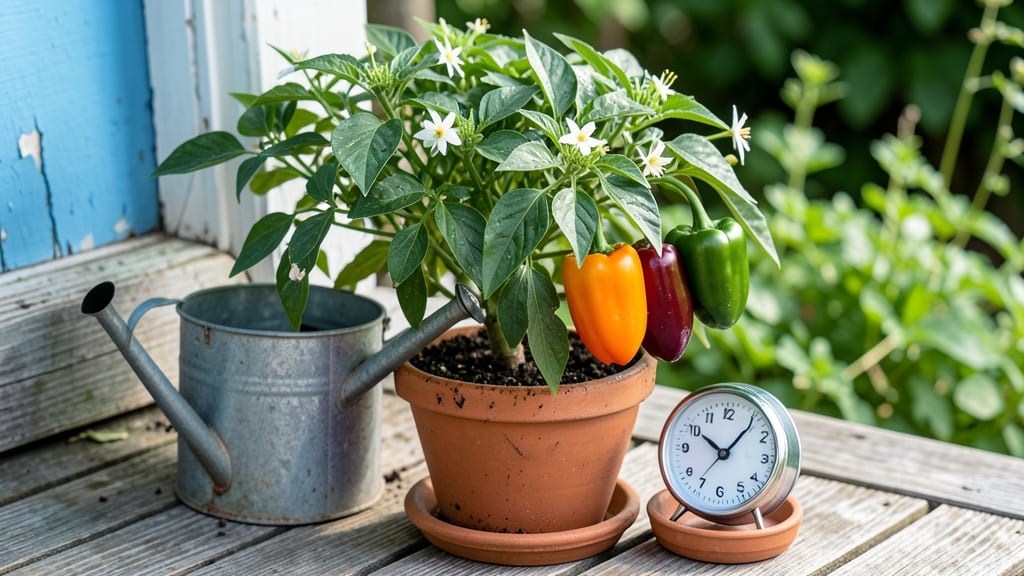
Watering pepper plants in pots the right way means checking soil moisture every 2-3 days—not on a calendar, but with your fingers—to keep roots happy without drowning them.
Overwatering kills more pepper plants than drought—yet most gardeners guess instead of measuring, risking soggy soil or wilted leaves. The finger-dip test reveals the exact watering schedule your potted 🌶️ peppers need to thrive, saving you from both root rot and stunted growth.
In 6a zones, spring and fall call for deeper soaks every 3-5 days, while summer heat demands daily checks. Pot size, soil type, and even your local humidity play a role—so we’ll break down how to adjust without overcomplicating things.
By the end, you’ll know when to water, how much to give, and the 3 telltale signs your peppers are thirsty or drowning. No more guesswork, just healthy plants and a bumper crop.
Pepper plant watering schedule by pot size and season
Potted pepper plants thrive on consistent moisture but drown in soggy soil—especially in 5-10 gallon containers where roots have limited space. Unlike in-ground plants, container-grown peppers dry out 30-50% faster due to exposed soil and heat absorption. The key?
Adjusting your watering frequency by pot size, season, and growth stage (seedlings vs fruiting). My 5-gallon jalapeños needed water every 2 days in July, while my 10-gallon bell peppers held moisture 1 day longer in the same heat.
Seasonal shifts matter too. Spring’s moderate temperatures mean peppers drink half as much as they do in summer’s 90°F+ afternoons. Even fall’s cooler air changes the game—your 7-gallon habaneros might only need water every 5-7 days when nights dip below 60°F.
Ignore these rhythms, and you’ll either watch leaves curl from thirst or rot from root suffocation.
Here’s the science: A 5-gallon pot holds ~4.5 quarts of soil, which dries out 1-2 inches deep in 24 hours under full sun. A 10-gallon pot retains moisture 24-48 hours longer because its deeper root zone (6+ inches) shields soil from evaporation.
Use this root zone dryness chart below to match your pot’s depth to the right watering interval.
| Pot Size | Root Zone Depth | Spring (50-70°F) | Summer (75-95°F) | Fall (40-60°F) | Watering Notes |
|---|---|---|---|---|---|
| 5 gallons | 4-6 inches | Every 3-4 days | Daily (morning) | Every 5-7 days | Use 1-1.5 cups per watering; seedlings need daily checks. |
| 7 gallons | 6-8 inches | Every 4-5 days | Every 2 days | Every 6-8 days | Fruiting plants need extra potassium—water at soil level to avoid fruit rot. |
| 10 gallons | 8-10 inches | Every 5-6 days | Every 3 days | Every 7-10 days | Largest pots can skip watering if top 2 inches stay dry. |
💧 Pro Tip: Always water until 10% runs out drainage holes—this ensures even moisture to the root tips.
Growth stages demand different hydration. Seedlings (first 4-6 weeks) need light, frequent watering—let the top ½ inch dry between sessions. Once they flower (6-8 weeks), increase to deep watering every 2-3 days in summer.
During fruiting, peppers double their thirst: my 10-gallon ghost peppers went from 3-day intervals to daily when red peppers started swelling. Stop watering 3 days before harvest to concentrate flavor.
Humidity throws a wrench into the schedule. In dry climates (like Denver or Phoenix), containers dry out 2x faster—check soil moisture daily in summer. In humid zones (e.g., Miami or Seattle), soil stays damp longer; skip watering if the top 1 inch feels cool.
I once overwatered my cayennes in Portland’s muggy June, leading to moldy stems—a mistake I fixed by adding perlite to improve drainage.
Pot material matters too. Terracotta pots wick moisture away 20% faster than plastic, so water 1 day earlier in summer. Fabric grow bags retain moisture longer but need weekly aeration—stick a bamboo skewer in the soil to create air pockets.
My black plastic pots absorb heat, so I water them twice daily in 90°F+ weather to prevent root burn.
Watch for seasonal telltales: Wilting leaves by 10 AM mean underwatering, while yellowing lower leaves signal overwatering. Adjust by
The finger-dip test: how to check soil moisture like a pro
I’ve learned the hard way that guessing your pepper plants’ water needs leads to either sad, wilted leaves or worse—root rot from overwatering. The finger-dip test is my go-to method for accurate moisture checks because it’s free, foolproof, and works for any pot size.
Unlike moisture meters, this technique tells you exactly where your plant’s roots are thirstiest.
Start by cleaning your hands and fingers—dirty soil gives false readings. Then, insert your index finger into the soil about 1-2 inches deep for seedlings or 2-3 inches deep for mature peppers.
This mimics the depth where most roots absorb water. If the soil feels dry and crumbly, it’s time to water. If it’s cool and damp, wait another day or two.
Soil type changes everything. In sandy soil, water drains fast, so you’ll need to check daily during heatwaves. But in clay soil, moisture lingers longer—wait until your finger comes out completely dry before watering again. Pro tip: Morning is best for testing because evening moisture can trick you into thinking soil is drier than it is.
Step-by-Step Finger-Dip Test
- 🌱 Step 1: Wash your hands – Remove dirt or oils that could skew readings.
- 👆 Step 2: Insert finger 1-2 inches deep for seedlings, 2-3 inches for mature plants.
- 💧 Step 3: Feel for moisture – Dry = water now; damp = wait 1-2 days.
- ⏳ Step 4: Adjust for soil type – Sandy soil dries faster; clay holds moisture longer.
- ☀️ Step 5: Test in morning – Avoid evening moisture confusion.
- ✅ Step 6: Water deeply until water runs out drainage holes—no shallow sips!
Avoid these common mistakes that throw off your test: Testing surface soil (top inch is always dry) or watering on a schedule instead of checking. I once killed a jalapeño plant by sticking to a "every other day" routine—until I realized the pot’s drainage holes were clogged.
Always pair the finger-dip test with a quick check of your pot’s drainage.
For container-grown peppers, frequency shifts with seasons. In summer heat, you might test twice daily—once in the morning and again in the evening. In fall or winter, reduce checks to every 3-4 days.
Pay attention to your plant’s leaves too: slightly wilted in the afternoon is normal, but crispy edges mean you’re underwatering, while yellowing leaves signal overwatering.
Mastering the finger-dip test saved my bell pepper harvest last year. Now, I adjust watering based on what the soil tells me, not a calendar. Give it a try—your peppers (and your sanity) will thank you. 🌶️