
How To
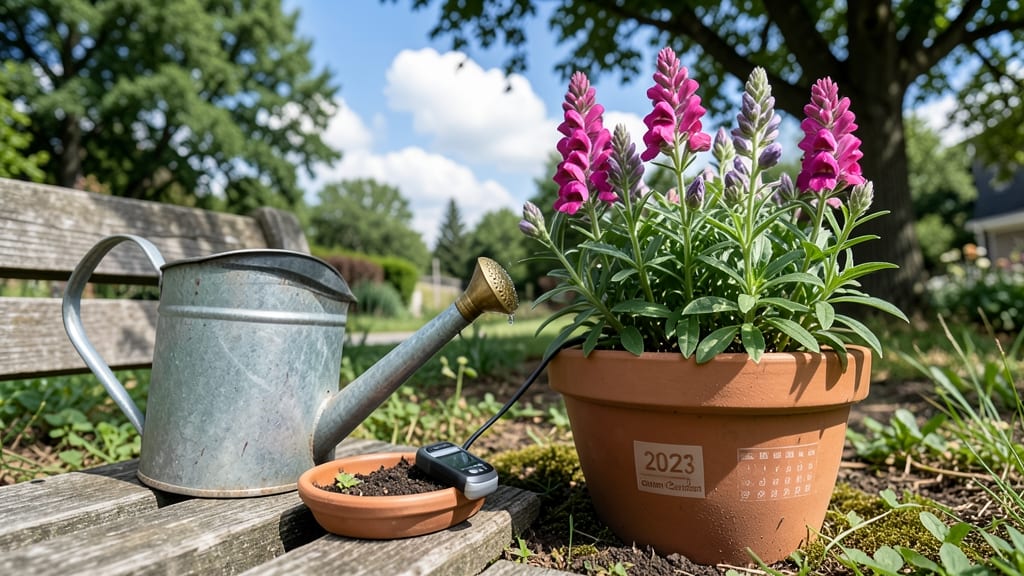
Watering snapdragons the right way keeps them blooming all season — once or twice a week in spring and fall, daily in summer heat, and only when the soil feels dry in winter.
Struggling to keep your snapdragons blooming? Overwatering or underwatering can turn vibrant flowers into wilted disappointment—here’s the science-backed watering schedule that works.
These sun-loving plants 🌱 need consistent moisture, but soggy soil is just as deadly as dry. The key is checking the top inch of soil before watering—skip the guesswork and learn how to read your plants’ thirst cues.
In this guide, you’ll discover the exact watering routine for each growth stage, how to adjust for pots vs. garden beds, and how to spot the subtle signs of over- or under-watering before it’s too late.
Snapdragon watering schedule by season: when and how much
Snapdragons thrive with consistent moisture, but their water needs shift dramatically across seasons. In spring and fall, cooler temperatures slow evaporation, while summer heat demands daily attention. Winter care drops to minimal watering unless you're growing snapdragons as perennial plants in mild climates.
The key is monitoring soil moisture—never letting roots dry out completely but avoiding soggy soil that invites disease.
Container-grown snapdragons dry out 2-3x faster than in-ground plants due to limited soil volume.
If your snapdragons are in pots, check moisture daily during summer, while in-ground varieties can often go 2-3 days between waterings. Humidity levels also play a role: in dry climates, you may need to water more frequently, while humid regions can stretch watering intervals slightly.
Here's your seasonal watering guide with specific targets for soil moisture and frequency:
| Season | Watering Frequency | Soil Moisture Target | Adjustments |
|---|---|---|---|
| Spring | Every 2-3 days | Top 1-2 inches moist | Increase if windy/dry |
| Summer | Daily (morning) | Top 1 inch moist | Mulch heavily to retain moisture |
| Fall | Every 2-3 days | Top 1-2 inches moist | Reduce as temps drop |
| Winter | Every 7-10 days | Top 2 inches slightly dry | Only water if no frost |
During summer's peak heat, snapdragons need 1-1.5 inches of water weekly, delivered in the early morning to prevent fungal issues. I water mine at 7 AM when temperatures start rising—this gives foliage time to dry before evening humidity sets in.
For container plants, I use the weight test: if the pot feels light, it's time to water.
In spring and fall, focus on deep watering every 2-3 days rather than light daily sprinkles. This encourages strong root development. I use a soaker hose for in-ground plants, which delivers water slowly at the base where roots need it most.
For potted snapdragons, I water until water runs freely from the drainage holes—this ensures thorough saturation.
Drought tolerance varies by snapdragon variety, but most standard types wilt quickly when thirsty. If you notice lower leaves yellowing or buds dropping, it's often a sign of inconsistent watering.
My dwarf snapdragons handle dry spells slightly better, but they still need weekly attention during summer. Always prioritize even moisture distribution—uneven watering causes weak stems that flop over.
Humidity adjustments matter too. In low-humidity zones, increase watering by 20-30% and use pebble trays under pots. If your snapdragons are in high-humidity areas, reduce frequency slightly and ensure proper drainage to prevent root rot.
I've found that well-draining soil with added perlite helps maintain the perfect moisture balance year-round.
For newly planted snapdragons, water daily for the first week to help roots establish. After that, follow seasonal guidelines but monitor closely. If your snapdragons are struggling to bloom, inconsistent watering is often the culprit—stress from drought diverts energy from flowers to survival.
My secret? Consistency is king—stick to your schedule even when it rains occasionally.
Remember: Mulch is your best friend for snapdragons. A 2-3 inch layer of mulch retains moisture, regulates soil temperature, and suppresses weeds. I use straw mulch because it breaks down slowly and adds organic matter.
Apply it after watering to lock in moisture and keep roots cool during summer's hottest days.
Adjust your watering based on visual cues rather than a rigid schedule. Healthy snapdragons have vibrant foliage and sturdy stems, while overwatered plants develop yellow leaves and mold. Underwatered snapdragons show crispy edges and wilting—don't wait until you see these signs to act.
With this seasonal approach, your snapdragons will reward you with continuous blooms from spring through fall.
The finger-dip test: how to check soil moisture like a pro
Mastering the finger-dip test is my go-to trick for keeping snapdragons thriving without guesswork. This simple method reveals whether your plants are getting just the right amount of water—or too much or too little.
Unlike relying on a watering schedule, this hands-on approach accounts for soil type, weather shifts, and even container size. Let’s dive into how to use it like a seasoned gardener.
Start by choosing a dry day after your last watering session. Stick your index finger about 1-2 inches deep into the soil near your snapdragon’s base. This depth mirrors where most root systems thrive.
For container-grown snapdragons, check slightly deeper since pots dry out faster. Pay attention to how the soil feels—this is where the magic happens.
Step-by-Step Finger-Dip Test
- Step 1: Insert your finger 1-2 inches deep into soil near plant base.
- Step 2: Check soil texture: clumpy = too dry, soggy = overwatered.
- Step 3: Dry but crumbly = ideal moisture; water lightly.
- Step 4: Wet or sticky = hold off; bone-dry = water deeply.
- Step 5: Adjust watering frequency based on results—daily in summer, every 3 days in cooler months.
If your finger comes out with dry soil that crumbles easily, your snapdragons are thirsty. Water until moisture reaches 6 inches deep—this encourages roots to grow downward. For sandy soil, which drains quickly, you may need to water more frequently.
On the flip side, if the soil feels cool and damp or smells musty, you’re overwatering, which can lead to root rot and yellow leaves.
Pay close attention to the soil texture around your snapdragons. Clay soil holds moisture longer, so you’ll water less often, while loamy soil strikes the perfect balance. Add organic matter like compost to improve drainage if your soil feels compacted.
Mulching with straw or shredded leaves helps retain moisture while preventing soil crusting that can suffocate roots.
Use this test morning and evening during extreme weather. In hot summers, snapdragons may need watering twice daily—once in the early morning and again in the late afternoon. In winter, reduce watering to once every 7-10 days unless you’re in a frost-free zone.
Always water at the base of the plant to avoid wetting the leaves, which can cause fungal diseases.
Watch your snapdragons respond within 24-48 hours after adjusting your watering routine. Perky leaves and vibrant blooms mean you’ve nailed the moisture balance. If leaves curl or droop, it’s a sign of underwatering, while yellowing or mushy stems signal overwatering.
With practice, you’ll develop an intuition for what your snapdragons need—no fancy tools required!