
Watering
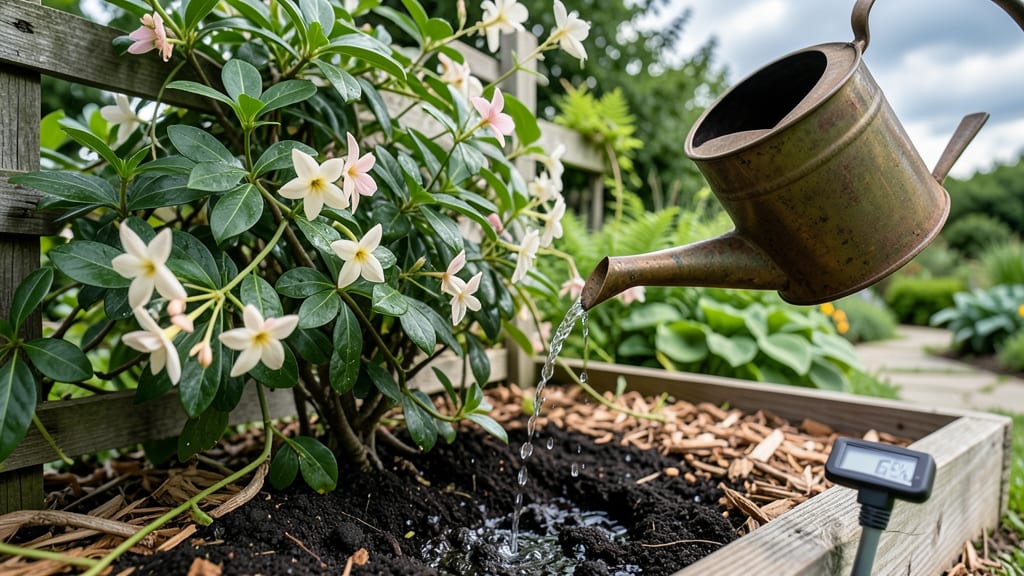
To water star jasmine properly, aim for deep soaks every 3-5 days—but that number changes with heat, pots, and soil.
Picture this: your 🌸 star jasmine vines, once lush and fragrant, now wilting or sporting yellow leaves. The culprit? Either too much water drowning the roots or too little stressing the plant. The key is balance—and it’s easier than you think.
This guide cuts through the guesswork with a simple finger test, seasonal adjustments, and the exact signs to watch for overwatering or thirst. Whether your star jasmine climbs a trellis or sprawls in a pot, you’ll learn how to keep it thriving without drowning it.
We’ll cover the 1-2-3 finger method, how climate shifts your schedule, and why mulch can save you watering time. No more dead zones—just vibrant, blooming vines that reward your effort.
Star jasmine watering schedule: the 1-2-3 finger test method
Mastering the star jasmine watering schedule is all about reading your plant’s thirst—not guessing. This fragrant vine thrives on consistency, but too much or too little water will stunt its growth or invite pests.
The 1-2-3 finger test simplifies soil moisture checks, ensuring you water when your star jasmine truly needs it. Unlike succulents or tropicals, star jasmine prefers even moisture without soggy roots, making this method perfect for beginners and pros alike.
Before diving into the finger test, note that seasonal adjustments are key. In summer heat, your star jasmine may need daily checks, while winter dormancy could stretch watering intervals to every 10-14 days.
Even pot size and climate zones (dry vs. humid) shift the schedule. For example, a 5-gallon container in Arizona will dry faster than an in-ground vine in Seattle. Let’s break it down step by step.
How to Water Star Jasmine: The 1-2-3 Finger Test
- Step 1: Wait for the Right Time
Check soil moisture early morning (6–8 AM) when the soil is cool. Avoid testing after rain or watering to get an accurate reading. - Step 2: Insert Your Finger
Gently push your index finger 1–2 inches into the soil near the plant’s base. For containers, check 2–3 inches deep since they dry faster. - Step 3: Assess Moisture
- Dry (1 inch): Soil feels powdery or crumbly. Water deeply until water runs out drainage holes (for pots).
- Moist (1–2 inches): Soil sticks slightly but isn’t soggy. Wait 1–2 days and retest.
- Wet (2+ inches): Soil is damp or sticky. Skip watering to prevent root rot.
- Step 4: Adjust for Conditions
Condition Action Hot/Dry Climate Water every 2–3 days; mulch to retain moisture. Humid/Shady Water every 5–7 days; avoid overhead watering. Potted Star Jasmine Water when top 1 inch is dry; use saucers for drainage. In-Ground Vine Water when 2 inches is dry; deep water 1–2 times per week. - Step 5: Seasonal Tweaks
- Spring: Increase frequency as new growth appears (every 3–4 days).
- Summer: Water daily in extreme heat; monitor for wilting.
- Fall: Reduce to every 5–7 days as growth slows.
- Winter: Water bi-weekly or when soil is completely dry.
Pro tip: Pair the finger test with visual cues. Healthy star jasmine leaves are dark green and glossy, while underwatered vines show slight curling or dull foliage.
Overwatered plants, however, develop yellowing leaves or mushy stems—a red flag for root rot. If you spot these signs, adjust your schedule immediately and improve drainage.
For potted star jasmine, container size matters. A small pot (1–3 gallons) may need watering every 2–3 days in summer, while a large planter (10+ gallons) can go 5–7 days between waterings. Always use pots with drainage holes and elevate them to prevent soggy roots.
If your vine is in ground soil, mulch with 2–3 inches of organic matter (like shredded bark) to lock in moisture and regulate temperature.
Don’t let climate zones throw you off. In USDA Zones 8–10 (warm climates), star jasmine may need daily watering in peak summer, while Zones 6–7 (cooler regions) can stretch watering to every 4–5 days even in summer.
Pay attention to your local rainfall patterns—if you’ve had 1+ inches of rain in a week, skip the finger test and wait for the soil to dry slightly.
Consistency is your best friend when watering star jasmine. Stick to the 1-2-3 finger test and adjust based on your vine’s response. Over time, you’ll develop a feel for its needs. Remember, deep watering (soaking the root zone) is better than light, frequent drinks, which encourage shallow roots.
With this method, your star jasmine will reward you with lush growth and fragrant blooms all season long.
🌿
Common star jasmine watering mistakes and how to fix them
Your star jasmine (Trachelospermum jasminoides) might be sending you SOS signals without you realizing it. Yellow leaves or drooping vines often point to watering issues—but how do you tell if it's too much or too little?
Let’s decode the warning signs and fix them fast before your vine turns into a sad, leggy shadow of its former self.
Overwatering is the silent killer of star jasmine. When roots sit in soggy soil for too long, they suffocate, leading to root rot and yellowing leaves. The plant may also develop mushy stems or wilt despite being watered.
On the flip side, underwatering causes crispy leaf edges, bud drop, and vines that look like they’ve been stretched on a rack. Both extremes stress the plant, but the fixes couldn’t be more different.
⚠️ callout warning
Star jasmine thrives on a 1-2-3 finger test: Stick your finger 1-2 inches deep into the soil. If it feels dry, water deeply until it drains from the bottom. In pots, water every 2-3 days; in ground, every 5-7 days. Adjust for heat—daily checks in summer, bi-weekly in winter.
💧 Pro Tip: Morning watering prevents fungal growth and mimics natural rainfall cycles.
If your star jasmine shows yellow leaves with green veins, it’s likely overwatered. The first step is to stop watering immediately and let the top 2-3 inches of soil dry out.
Repot the plant if it’s in a container with poor drainage, using a mix of well-draining potting soil and perlite. For ground-planted jasmine, improve drainage by adding organic matter like compost or mulch around the base—but avoid piling it against the stem.
For underwatered star jasmine, the fix is simpler: deep watering. Soak the soil until water runs out the drainage holes (for potted plants) or seeps 6 inches deep into the ground. After that, let the top layer dry slightly before watering again.
If you’ve missed too many waterings, the plant may need a few deep soaks to recover, but avoid overcompensating—consistency is key.
Watch for bud drop during hot, dry spells—this is your star jasmine’s way of conserving water. To prevent it, water early in the morning and mulch heavily to retain moisture.
If buds are already dropping, focus on shade protection (like a light cloth) and increased humidity around the plant. A quick misting can help, but avoid wetting the flowers themselves.
Remember, star jasmine is drought-tolerant once established, so err on the side of underwatering rather than overdoing it. The goal is moist but never soggy soil. With these fixes, your vines will bounce back, and you’ll be rewarded with fragrant blooms all season long. 🌸