
Flowers
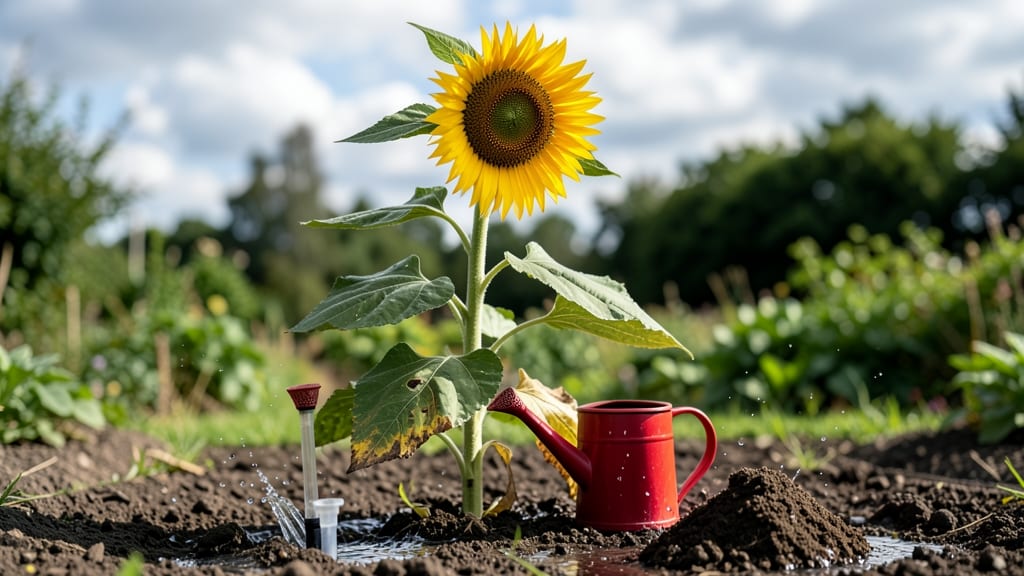
To water sunflowers the right way means giving them 1–2 inches of water per week—not too much, not too little—so their roots grow deep and sturdy for those 10-foot stems.
Picture this: you’ve just planted your 🌻 sunflower seeds in Zone 6a, and you’re eager to watch them grow. But water too often, and you’ll drown the roots; water too little, and those towering blooms will flop like sad balloons.
The secret? A simple soil-dry test and a few pro tips to keep your sunflowers thriving from seedling to harvest.
Sunflowers are surprisingly drought-tolerant once established, but they need consistent moisture during their first few weeks. That’s when the roots are still shallow, and the stakes are high—skimp on water, and you’ll stunt growth; overdo it, and you risk rot.
The key is checking the soil 1 inch deep before each watering, adjusting for your climate and container size.
In this guide, I’ll break down the exact watering schedule for every growth stage—from tiny sprouts to sun-soaked blooms—plus how to spot overwatering or underwatering before it’s too late. Ready to grow sunflowers that reach for the sky?
The soil-dry test: how deep and when to water sunflowers at every growth stage
Sunflowers need consistent moisture to grow their massive stems and vibrant blooms, but overwatering can suffocate roots while underwatering stunts growth. The soil-dry test is my go-to method to balance hydration—stick your finger 1-2 inches deep (for seedlings) or 3-4 inches deep (for mature plants) to check moisture levels.
If the soil feels dry at these depths, it’s time to water.
Watering needs shift dramatically as sunflowers grow. Seedlings require frequent, shallow watering, while mature plants develop drought tolerance but still need deep soaks.
Below, I break down the exact watering schedule for each growth stage, including how deep to test soil moisture and how often to water based on your climate.
During the seedling stage (first 3 weeks), sunflowers need frequent watering to establish roots. I water mine every 2-3 days in full sun, using just enough to moisten the top 1-2 inches of soil. Overwatering now leads to fungal diseases like damping-off, so I avoid soggy soil at all costs.
Once sunflowers hit the vegetative stage (3-6 weeks), they crave deep watering to fuel rapid stem growth. Test soil moisture at 2-3 inches deep—if it’s dry, give them a 1-gallon soak. This encourages roots to grow deeper, making them more drought-resistant later.
At the flowering stage (6-10 weeks), sunflowers need balanced hydration. Water deeply every 5-7 days, testing soil at 3-4 inches. Too much water now causes bud drop, while too little leads to wilting petals.
I adjust based on rain—skipping watering if we’ve had 1 inch of rain in the past week.
In the seed-setting stage (10+ weeks), focus shifts to seed development. Water deeply every 7-10 days, testing soil at 4 inches deep. Mature sunflowers are drought-tolerant, but consistent moisture ensures plump seeds. In dry climates, I reduce frequency to every 10-14 days once seeds form.
Container-grown sunflowers dry out faster than in-ground plants. I water mine every 2-3 days in summer, using 1-2 gallons per watering to mimic deep soil moisture. Add mulch (straw or wood chips) to retain moisture and reduce evaporation.
Climate plays a huge role. In hot, dry regions, I water sunflowers daily during seedling stage and every 3-5 days afterward. In humid climates, I reduce frequency to every 7-10 days
5 Signs your sunflowers are overwatered or underwatered (and how to fix it)
Sunflowers may look tough, but their deep taproots and thick stems can’t handle watering mistakes. Overwatering drowns roots, while underwatering causes wilting—both lead to stunted growth or drooping blooms.
Learn to spot these 5 key signs before it’s too late, and I’ll show you how to revive your plants fast.
First, check the soil moisture with your finger. Stick it 2–3 inches deep—if it’s damp, you’re likely overwatering. If dry, your sunflowers need a deep drink. The leaf color and stem firmness are your next clues.
Yellowing leaves with mushy stems? That’s a red flag for root rot. Meanwhile, crispy edges or drooping foliage scream for water.
For overwatered sunflowers, let the soil dry out completely before watering again. Move potted plants to a shadier spot and improve drainage by adding perlite or sand to the soil. If mold appears, trim affected leaves and apply neem oil to prevent spread.
For underwatered plants, water deeply until it drains from the bottom of the pot or flows from the soil.
Mulching is your best friend here. Apply a 2-inch layer of straw or wood chips around the base to retain moisture and regulate soil temperature. This trick reduces evaporation and keeps roots happy.
For emergency revival, submerge the pot in water for 10–15 minutes if the soil is bone-dry. Repeat until the soil feels evenly moist but not soggy.
Remember, sunflowers are drought-tolerant once established, but they still need consistent moisture during their first 6–8 weeks. Adjust your watering based on your climate and soil type.
Sandy soil drains fast, while clay holds moisture longer. Always water in the morning to let foliage dry before nightfall and prevent fungal growth.
Watch your sunflowers bounce back in just a few days with the right care. A happy plant means bigger blooms and taller stems—worth the effort! 🌻