
Watering
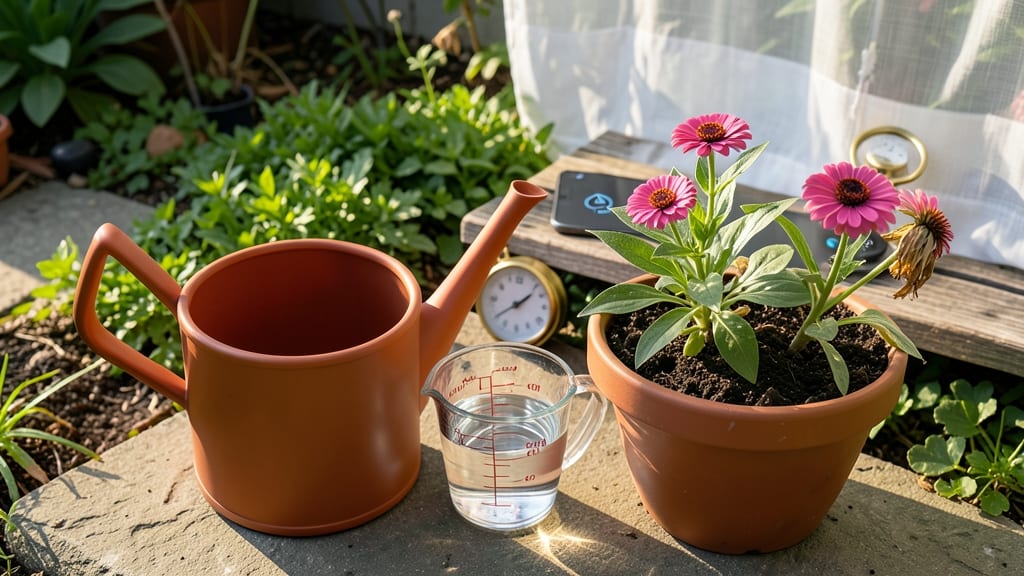
Watering zinnias in pots every 1-2 days keeps them thriving with bold blooms 🌼—but skip this rule if your soil stays damp, and you’ll smother their roots.
Picture this: you’re deadheading spent flowers, only to watch your zinnias droop by afternoon. That’s the classic sign of inconsistent watering—too much or too little—and it’s easier to fix than you think.
Pot size, summer heat, and soil type all change how often you should water. A 5-inch pot may need daily checks in July, while a 12-inch container could stretch to every other day.
Below, I’ll break down the 1-2 finger test, seasonal tweaks, and the one mistake that turns your zinnias into a sad, leggy mess—so you can keep those blooms popping all season.
The 1-2 finger test: perfect watering frequency for potted zinnias
Mastering the watering schedule for your potted zinnias starts with understanding their moisture needs. Unlike in-ground plants, container-grown zinnias dry out faster due to limited soil volume. The 1-2 finger test gives you an instant read on when to water—no guesswork required.
This method works year-round but needs slight adjustments for summer heat or spring rains.
Before diving into the test, know that pot size matters most. A 5-inch pot may need watering daily in summer, while a 12-inch container could go 2-3 days. Always water in the morning to prevent fungal growth and let foliage dry before nightfall.
Now, let’s break down the foolproof steps to keep your zinnias perfectly hydrated without drowning their roots.
How to Use the 1-2 Finger Test for Potted Zinnias
For smaller pots (under 6 inches), I recommend watering every 1-2 days in summer, even if the soil feels damp. These containers dry out rapidly in full sun, and zinnias are thirsty bloomers that need consistent moisture to produce vibrant flowers.
Always use room-temperature water to avoid shocking the roots.
In spring and fall, your watering frequency can stretch to every 2-3 days. During these cooler months, zinnias grow more slowly, and the soil retains moisture longer. Pay attention to rainfall—if you’ve had consistent rain, skip the watering test entirely until the soil dries out.
Mulching with 1 inch of straw helps retain moisture and reduces evaporation.
One common mistake I see is watering on a schedule rather than checking soil moisture. Zinnias in larger pots (10+ inches) might only need watering every 3 days in spring, while the same plant in a small pot could wilt by afternoon.
Always adapt your routine based on the pot size and current weather.
If your zinnias start showing wilting leaves that don’t perk up after watering, it’s often a sign of root stress. This could mean either underwatering or overwatering. To troubleshoot, gently tug on a stem—if it pulls out easily, the roots are rotting from too much water.
If the soil is bone-dry, you’ve been underwatering. Adjust accordingly and monitor closely for a week.
Pro tip: Place your potted zinnias in a spot with morning sun and afternoon shade during peak summer. This reduces water evaporation by 30% while still providing the 6+ hours of sunlight they crave.
Pair this with the 1-2 finger test, and you’ll have zinnias blooming until first frost.
Remember, consistency is key. Zinnias thrive on predictable moisture, so stick to your testing routine. Over time, you’ll develop an intuition for when your plants need water—no more guesswork, just healthy, vibrant blooms all season long. 🌼
Zinnia watering schedule by season: what changes when temperatures rise
As temperatures climb, your potted zinnias need adjustments to their watering routine to prevent wilting or root rot. Spring starts with moderate moisture, but by summer, the heat demands more frequent hydration. Understanding these seasonal shifts ensures your zinnias stay vibrant and healthy throughout the growing season.
Environmental factors like sun exposure and humidity play critical roles. Zinnias in full sun lose moisture faster, while high humidity can slow evaporation. Below, I break down the monthly watering schedule tailored to your climate zone and pot size.
🌱 Tip: Always water in the morning to reduce evaporation and fungal risks. Avoid evening watering, which can leave foliage damp overnight.
During summer, zinnias in small pots (under 6 inches) dry out fastest. Use your finger test: Insert your finger 1 inch deep—if dry, water thoroughly. Larger pots retain moisture longer, so check soil moisture before watering.
Watch for signs of stress like drooping leaves or dry soil cracks. Adjust your schedule if your zinnias show wilting in the heat or yellowing leaves from overwatering. Mulching around pots helps retain moisture and regulate soil temperature.
As fall approaches, reduce watering frequency. Cooler temperatures and shorter days mean your zinnias need less hydration. By October, most zinnias will naturally slow growth, so cut back to every 2-3 days to prevent soggy soil.
Pro tip: Group potted zinnias together to create a microclimate that retains moisture longer. This works especially well in hot, dry climates where evaporation is rapid. 🌿