
Watering
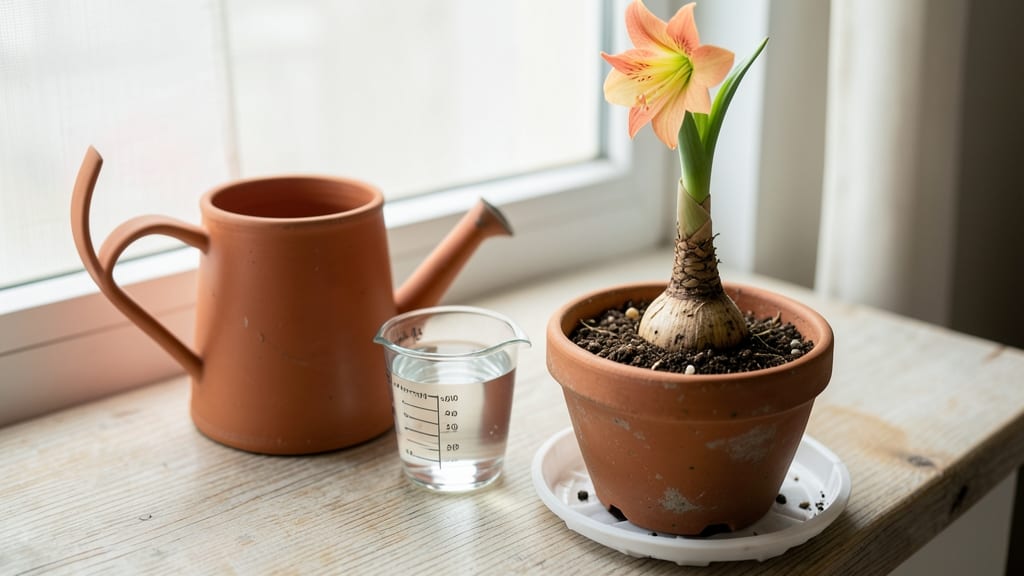
Watering an amaryllis bulb the right way—especially during its 2-week dormancy trick—is the secret to those showstopping blooms every spring.
You’ve probably seen your 🌷 amaryllis wilt or refuse to flower, and it’s almost always tied to watering. Too much, and the bulb rots; too little, and it skips its big bloom.
The balance isn’t just about frequency—it’s about knowing when to drown it in moisture and when to let the soil dry out completely.
In this guide, I’ll break down the exact schedule for active growth (spring/summer) vs. dormancy (fall/winter), plus how to spot the 5 signs your watering is off—before it’s too late. No guesswork, just science-backed steps to keep your bulb thriving for years.
Ready to master the rhythm? Let’s start with the weekly deep-watering rule that changes everything.
The exact watering schedule for amaryllis bulbs during active growth vs dormancy
Amaryllis bulbs thrive on a precise watering rhythm that shifts dramatically between their active growth and dormancy phases. During spring and summer, when your bulb is pushing up those stunning 6-inch flower stalks, deep watering once a week keeps roots happy without drowning them.
But here’s the secret: dormancy—that 2-week dry spell in fall—is where most gardeners go wrong. Skip this step, and your bulb may never bloom again.
Think of your amaryllis like a camel storing water—it needs consistent hydration during growth to build energy, but a forced drought in dormancy to trigger next year’s flowers. The key is testing soil moisture with your finger: if the top 2 inches feel dry, it’s time to water.
If it’s still damp, wait. Overwatering here is the #1 killer of amaryllis bulbs, causing rotten, mushy roots that smell like spoiled milk.
Here’s the science-backed breakdown: amaryllis bulbs store nutrients in their scaly tunics, and watering triggers growth hormones. Too much water = anaerobic conditions that suffocate roots. Too little during growth = stunted stalks and weak blooms.
But that 2-week drought? That’s what forces the bulb to reset its biological clock for next season’s showstopper flowers.
| Growth Phase | Watering Frequency | Soil Moisture Test | Key Signs | Pro Tip |
|---|---|---|---|---|
| Active Growth (Spring-Summer) | Weekly (deep soak) | Top 2" dry | Stalks elongating, leaves vibrant | Water at soil level, avoid wetting leaves |
| Post-Bloom (Early Fall) | Bi-weekly (reduce) | Top 3" dry | Leaves yellowing, stalks dying back | Let leaves naturally yellow before dormancy |
| Dormancy (Fall-Winter) | 2-week drought | Completely dry | Leaves crispy, no new growth | Store in cool (60°F), dark spot |
| Reblooming Prep (Late Winter) | Light watering | Top 1" moist | Root tips green, slight swelling | Move to bright light to trigger growth |
Let’s talk pot size—this changes everything. A 6-inch pot dries out faster than an 8-inch pot, so adjust your watering schedule accordingly. In smaller pots, check moisture every 5-6 days during active growth.
Pro move: use a moisture meter ($10 at garden centers) to avoid guesswork. Stick it in the soil—if it reads dry, water until it runs out the drainage holes.
Here’s my fail-proof method for dormancy: after blooming, let the soil dry completely for 2 weeks. Then, move your pot to a cool, dark closet (60°F is ideal). Check the bulb monthly—if it feels soft or shriveled, you’ve over- or under-watered.
A healthy dormant bulb should feel firm like a potato with no moisture inside the pot.
One common mistake? Watering based on a calendar instead of soil conditions. Your amaryllis might need water every 10 days in humid summers or every 4 days in dry air. Always stick your finger in the soil—that’s the only reliable test.
And never let water sit in the saucer under the pot—this is a fast track to root rot.
Ready to force blooms? Start reblooming prep in <
5 Signs your amaryllis is overwatered or underwatered (and how to Fix it)
Amaryllis bulbs are surprisingly resilient, but they send clear visual distress signals when their water needs aren't met. The most common mistakes? Overwatering during dormancy or underwatering during growth. Both can kill your bulb if ignored. Here's how to spot the problem before it's too late.
First, check your soil moisture with your finger—stick it 2 inches deep. If it's damp, hold off on watering. If it's bone dry, it's time to hydrate. The key is consistency without sogginess. Amaryllis roots need air, not a swampy environment.
- Active Growth (Spring-Summer): Water every 7-10 days when top 2" of soil is dry. Use room-temperature water to avoid shocking roots.
- Blooming Phase: Increase to weekly deep watering—soak until water drains from pot bottom. Never let bulbs sit in water.
- Dormancy (Fall-Winter): 2-3 weeks without water after foliage yellows. Test soil—if damp, wait longer. No water = forced rest.
- Emergency Fix: For overwatered bulbs, remove from pot, wrap in paper towels for 24 hours, then repot in dry, sterile soil.
- Underwatered Sign: If stems feel hollow when squeezed, soak pot in lukewarm water for 15 mins to revive.
Yellowing leaves are the #1 sign of overwatering, but don't assume it's always too much H₂O. Check the leaf texture—soft, mushy leaves mean rot, while crispy, dry edges signal thirst. Blackened stems at the base? That's a fungal infection from sitting in wet soil.
For underwatered amaryllis, the stems will shrink and wrinkle like a deflating balloon. The leaves may also curl inward to conserve moisture. If you catch this early, place the pot in a shallow tray of water for 30 minutes daily until the soil rehydrates. Avoid sudden soaking—gradual recovery prevents shock.
Here's my emergency recovery trick for bulbs in distress: Remove the bulb from its pot and gently wipe off old soil. Wrap it in paper towels (not fabric) and place it in a cool, dark spot for 24 hours.
This mimics natural drying cycles. After 24 hours, replant in fresh, well-draining mix and resume normal watering.
Remember, amaryllis bulbs store water in their thick, fleshy scales. They can survive weeks without water if healthy, but they cannot recover from prolonged soggy conditions. Adjust your schedule based on season and pot size—small pots dry faster than large containers.