
How To
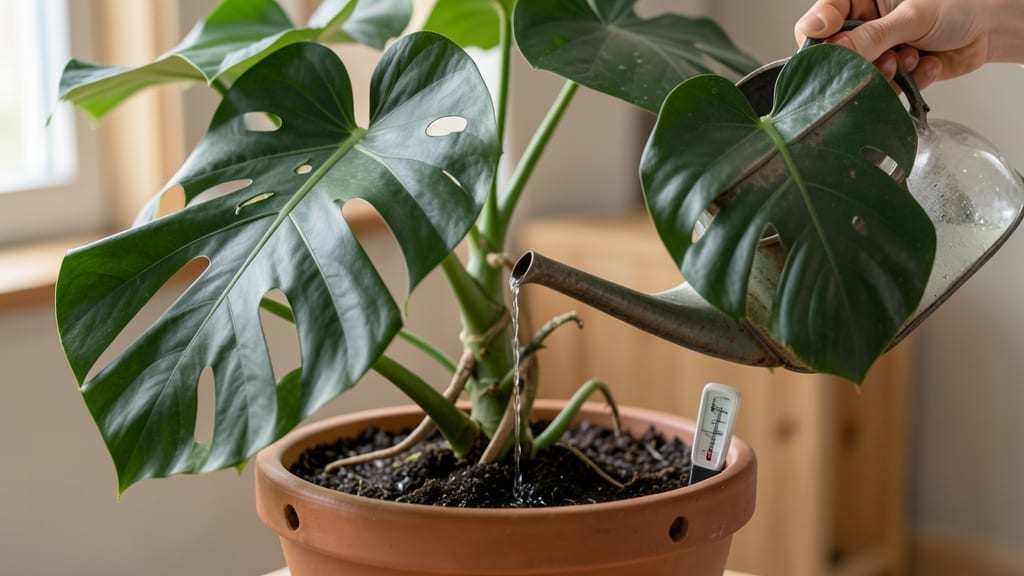
Watering a Monstera the right way keeps those iconic split leaves lush and vibrant 🌿 — but most people either drown the roots or leave the soil bone-dry.
You’ve probably noticed yellowing edges or drooping vines, and you’re not alone. The key to a thriving Monstera isn’t just about how often you water—it’s about reading the plant’s signals and adjusting for your home’s humidity and season.
In this guide, I’ll break down the ideal watering schedule, from weekly deep soaks in summer to bi-weekly checks in winter, plus how to spot overwatering before it’s too late.
By the end, you’ll know exactly when to reach for the watering can—and when to hold back for a perfectly moist soil balance.
Monstera watering schedule by season: indoor vs outdoor care
Your Monstera’s watering needs change dramatically between seasons and environments. Indoor plants in dry air need more frequent checks than outdoor Monsteras basking in humidity. The key is understanding how temperature, humidity, and light exposure affect moisture loss.
For example, a potted Monstera in a sunny window may need water every 5-7 days in summer, while the same plant outdoors might stretch to 10-14 days between waterings.
Seasonal adjustments are critical because Monsteras are tropical vines that respond to environmental cues. In winter, when indoor heating dries the air, I’ve seen roots suffer from overwatering simply because people don’t adjust their schedule.
The solution? A bi-weekly watering routine with deeper soil checks. Let’s break down the exact schedule you need for each season and environment.
| Season | Indoor Potted (5-10 gal pot) | Outdoor Potted (10+ gal pot) | Ground-Planted | Key Factors |
|---|---|---|---|---|
| Spring | Every 7-10 days | Every 10-14 days | Every 14-21 days | Increasing light, moderate humidity |
| Summer | Every 5-7 days | Every 7-10 days | Every 10-14 days | High heat, low humidity, rapid evaporation |
| Fall | Every 10-14 days | Every 14-21 days | Every 21-28 days | Cooler temps, stable humidity |
| Winter | Every 14-21 days | Every 21-28 days | Every 28-35 days | Low light, dry indoor air |
Spring is your Monstera’s wake-up call. As temperatures rise and daylight increases, your plant will drink more water. I recommend deep watering—soaking the soil until water runs out the drainage holes—rather than light, frequent sips.
This encourages strong root growth and prevents shallow roots that struggle in dry spells. For indoor plants, place the pot on a pebble tray with water to boost humidity and mimic outdoor conditions.
Summer demands the most attention. Outdoor Monsteras can handle more time between waterings because they benefit from natural humidity and rainfall. However, indoor plants in dry climates or near heating vents may need water every 5-7 days.
The trick is to check the soil’s moisture level with your finger: if the top 1-2 inches feel dry, it’s time to water. Avoid letting your Monstera sit in soggy soil, which can lead to root rot within days.
Fall slows down your Monstera’s growth, so you can ease up on watering. Outdoor plants benefit from natural rainfall, but indoor Monsteras still need monitoring. Reduce watering to every 10-14 days and cut back on fertilizer, which can stress the plant as it prepares for dormancy.
If you notice leaves yellowing, it’s often a sign of overwatering rather than underwatering during this season.
Winter is the easiest season for Monsteras because their growth slows dramatically. Indoor plants, however, suffer from dry air caused by central heating. I’ve found that using a humidifier near the plant or grouping it with other houseplants creates a microclimate that retains moisture.
Water only when the top 3 inches of soil are completely dry, and never let water sit in the saucer for more than an hour.
Outdoor Monsteras have a significant advantage in winter if you live in a humid climate. Ground-planted vines can go 4-6 weeks between waterings because the soil retains moisture better than pots.
For potted outdoor Monsteras, reduce watering to every 21-28 days unless you’re in a frost-prone area, where you’ll need to bring the plant indoors before temperatures drop below 50°F.
Pro tip: Adjust your watering schedule based on your Monstera’s pot size and drainage. Smaller pots dry out faster, while larger pots can hold moisture longer. If you’re unsure, always err on the side of underwatering—Monsteras are more forgiving when slightly dry than when sitting in waterlogged soil.
With these seasonal adjustments, your Monstera will stay lush and healthy year-round.
Leaf color chart: when to water your Monstera based on visual cues
Your Monstera deliciosa’s leaves tell a story about its hydration needs. Yellowing, brown edges, or drooping leaves aren’t just cosmetic—they’re SOS signals from your plant. Learning to read these leaf color cues helps you adjust your watering schedule before problems like root rot or leaf scorch set in.
Let’s decode the most common visual warnings and turn them into actionable care tips.
The key to healthy Monsteras lies in balance. Too much water causes yellow leaves and mushy stems, while too little leads to brown crispy edges and wilting. By matching leaf symptoms to their root causes, you’ll master the perfect watering rhythm for your plant’s specific environment.
Ready to become a leaf-reading expert? Let’s dive into the visual clues your Monstera uses to communicate.
🌿 Visual Guide: Monstera Leaf Symptoms & Solutions
| Symptom | Cause | Solution | Action |
|---|---|---|---|
| Yellow leaves (bottom to top) | Overwatering or poor drainage | Check soil moisture 1-2" deep | Water only when dry; repot if needed |
| Brown crispy edges | Underwatering or low humidity | Test soil dryness 2" down | Water deeply; increase humidity |
| Drooping leaves | Thirsty or root stress | Check soil moisture immediately | Soak pot thoroughly; check drainage |
| Black spots on leaves | Fungal infection (overwatering) | Remove affected leaves; reduce water | Use fungicide; improve airflow |
| Slow growth + pale leaves | Underwatering or nutrient deficiency | Test soil moisture weekly | Fertilize lightly; water consistently |
Start with the finger test—stick your index finger 1-2 inches into the soil. If it feels dry, your Monstera needs water. If it’s damp, wait another 3-5 days.
This simple check prevents both overwatering and underwatering mistakes. Remember, Monsteras prefer to dry out slightly between waterings, especially in cooler months.
Adjust your watering based on your home’s humidity levels. Dry air (common in winter) accelerates moisture loss, so you may need to water every 5-7 days instead of bi-weekly.
Place a humidity tray or mist leaves lightly to mimic tropical conditions. Your plant’s leaves will thank you with vibrant split patterns and glossy surfaces.
Pro tip: Rotate your Monstera occasionally so all leaves get even light exposure. Uneven growth or yellow patches on one side often signal light stress, not hydration issues. Pair this with consistent watering, and you’ll keep your Monstera thriving year-round. 🌱