
How To
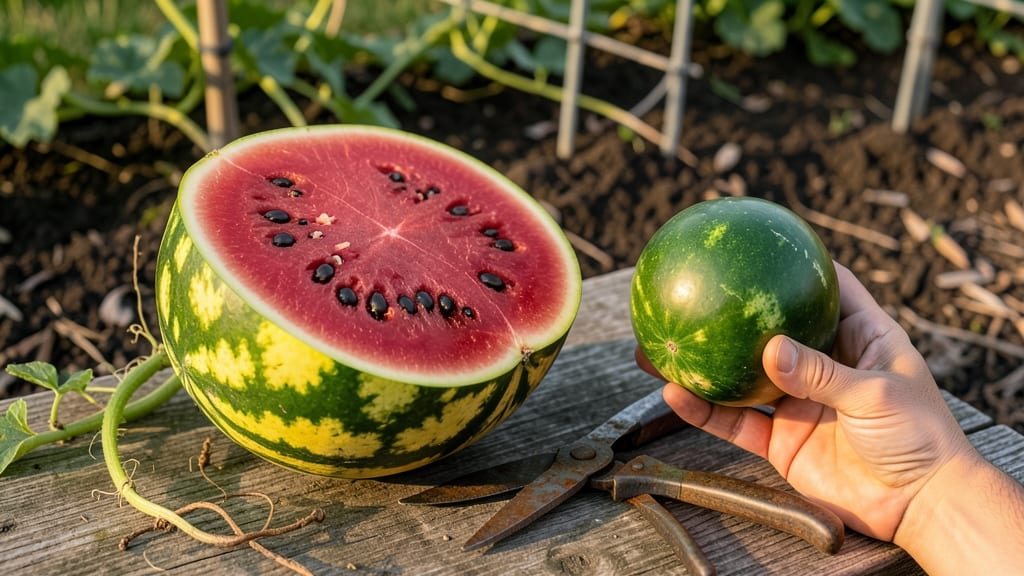
Determining if a watermelon is ripe by checking its field spot, thump, and stem is the fastest way to avoid a mushy or hard disappointment 🍉.
Picture this: you’ve spent weeks dreaming of that juicy, seed-spitting slice, only to cut into a watermelon that’s either rock-hard or mealy. The good news?
You don’t need a degree in agriculture to master the three foolproof tests that separate the winners from the duds—right there at the store or farm stand.
Most people assume a deep green rind means ripe, but that’s a myth. The real clues are hidden in the watermelon’s ground spot, the hollow sound when tapped, and the texture of its stem. These tricks—used by pros—will have you picking perfect melons every time, no guesswork required.
Below, I break down each test step by step, plus how to handle a watermelon that’s not quite ready (spoiler: it can still improve). Let’s make sure your next slice is the star of the picnic.

3 Proven field tests to check watermelon ripeness before buying
There’s nothing worse than slicing into a watermelon only to find it’s either rock-hard or mushy inside. The good news? You don’t need a degree in horticulture to spot a perfectly ripe watermelon.
These three field-tested methods—backed by science—will help you pick the sweetest, juiciest melon every time. Whether you’re at a farm stand or grocery store, these tricks work like magic.
The secret lies in understanding how watermelons mature. A ripe watermelon develops internal sugars and softens slightly as it nears peak ripeness. These tests tap into those natural changes, giving you foolproof results.
The best part? You can do them in seconds without any special tools. Let’s dive into the science behind each method so you’ll know exactly what to look (and listen) for.
-
1. Field-Spider Test
Look for a yellowish spot where the melon rested on the ground. This spot should be creamy yellow, not white or green. The larger and more defined, the riper! -
2. Thump Test
Tap the melon with your knuckles. A ripe watermelon produces a deep, hollow thud. If it sounds dull or flat, it’s underripe. Overripe melons may sound hollow but soft. -
3. Ground-Spot Inspection
Press your thumbnail into the yellow spot. If it leaves a slight dent, the melon is ripe. If the skin springs back, it’s too hard. If it’s mushy, it’s overripe.
The field-spider test works because watermelons develop a natural abscission layer where they touch the ground. This layer turns yellow as the fruit matures, signaling it’s ready to be picked. The larger and more vibrant the spot, the more sugars have developed inside.
I’ve seen watermelons with tiny yellow spots that were still hard and bland—always trust the size of the spot!
Next up, the thump test relies on the melon’s internal moisture content. A ripe watermelon has just the right balance of water and sugars, creating a hollow sound when tapped. Think of it like knocking on a door—if it sounds solid, it’s not ready.
If it sounds too hollow, it might be overripe. This test is especially useful for larger melons where the ground spot might be hidden.
The ground-spot inspection is my personal favorite because it combines touch and sight. When you press your thumbnail into the yellow spot, you’re testing the skin’s firmness. A ripe watermelon’s skin should give just a little, like pressing your finger into a ripe peach.
This method also helps avoid the common mistake of picking melons based on color alone—some watermelons stay green even when fully ripe!
Here’s a bonus tip: lift the watermelon off the ground before testing. A ripe watermelon feels heavy for its size because it’s packed with juice and seeds. If it feels light, it’s likely underripe.
I once bought a watermelon that looked perfect but felt surprisingly light—turns out it was mostly water and no flavor. Always trust your hands!
Now, let’s talk about what these tests aren’t. For example, the stem test (where you check if the stem is dry) only works if you’re picking from a vine. Store-bought melons often have their stems cut off, so skip this one unless you’re at a farm.
Also, avoid relying solely on size or weight—a watermelon can be huge but still taste bland if it’s not ripe.
If you’re still unsure after testing, here’s a quick tiebreaker: smell the stem end. A ripe watermelon has a sweet, earthy aroma near the stem.
If it smells musty or sour, it’s overripe. If there’s no smell at all, it’s underripe. This trick works surprisingly well and takes just a second.
Remember, these tests work best when the watermelon is at room temperature. If it’s been sitting in a cold display case, give it 30 minutes to warm up before testing. Cold temperatures can make the melon feel firmer than it actually is, leading to false results.
I learned this the hard way after buying a "perfect" watermelon that turned out to be rock-hard at home.
With these three tests in your toolkit, you’ll never second-guess your watermelon pick again. The next time you’re at the market, grab a melon, give it the once-over with these methods, and you’ll be slicing into sweet, juicy perfection in no time. Happy melon hunting!
How to spot common ripeness tricks used by sellers (and avoid them)
Sellers often use sneaky tricks to make watermelons look ripe when they're not. These deceptive tactics can leave you with a hard, tasteless or even overripe, mushy fruit. Learning to spot these red flags will save you from disappointment—and your wallet from wasted money.
One of the most common tricks involves fake ground spots. Sellers may paint yellow spots on the watermelon's underside to mimic the natural yellowing that occurs when a melon rests on the ground.
These painted spots are usually too bright or perfectly round, while real spots develop naturally and are often uneven or slightly faded.
⚠️ Watch Out for These Ripeness Tricks!
- Painted ground spots: Too bright or perfect—real spots are natural and uneven.
- Fake thump sounds: Tap the stem end; a ripe melon sounds hollow, not solid.
- Field spiders: Real spiders are tiny and harmless; fake spiders are often glued on.
Always check the stem end and skin texture for authenticity.
The thump test is another trick sellers exploit. Some may tap the watermelon hard to create a false hollow sound, making it seem ripe. To test this properly, tap the melon's blossom end (the flat side) with your knuckles.
A ripe watermelon should sound deep and hollow, while an underripe one will sound dull or solid. If the seller taps it for you, ask to try it yourself!
Don’t be fooled by field spiders either. Some sellers glue tiny spiders onto the watermelon to imply it came from a real field. Real field spiders are tiny, harmless, and often found near the stem end.
If you see larger or obviously placed spiders, the watermelon might be stored or transported rather than freshly harvested.
Another trick involves overly shiny skin. While watermelons should have a slight sheen from natural moisture, an unnaturally glossy surface often means the melon was washed with wax or sprayed to look fresh. Run your fingers over the skin—ripe watermelons feel slightly rough or waxy, never slippery.
Finally, watch for uneven weight. A ripe watermelon should feel heavy for its size, indicating high water content. If it feels light or hollow when lifted, it’s likely underripe or even partially spoiled.
Always pick up the melon before buying—your hands are the best tool for spotting tricks!