
Picking
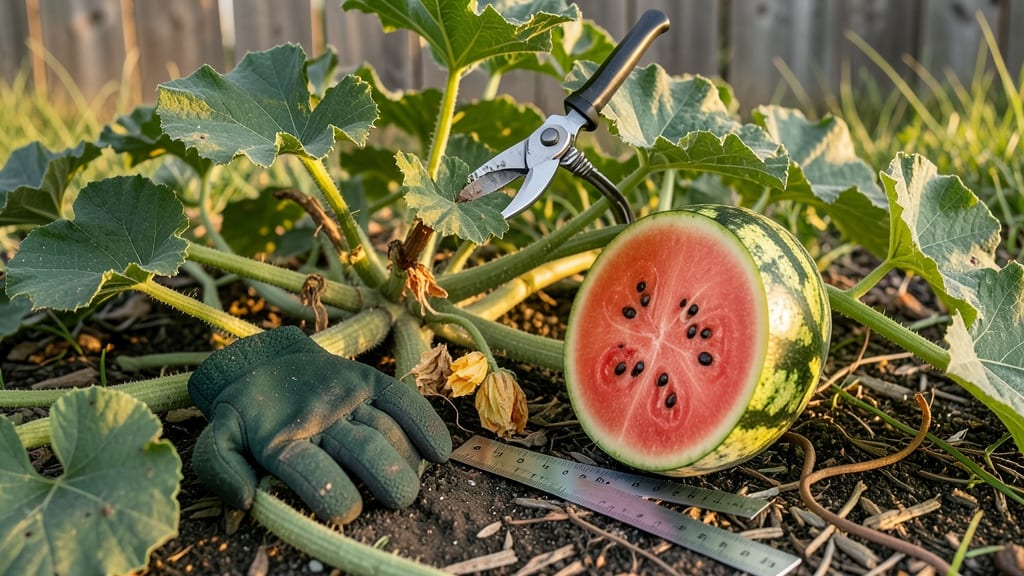
To tell when a watermelon 🍉 is ready to pick, you’ll need more than just a guess—it’s all about the rind’s color shift, the stem’s dry snap, and that satisfying thump.
Picture this: you’ve been waiting weeks for that first ripe watermelon, and now it’s time to decide. One wrong move, and you’re left with a mealy mess instead of a juicy prize.
That’s why knowing the field-tested tricks—like the thump test, the tap, and even the thumbprint—can save your harvest.
Beyond the classic methods, watermelons reveal ripeness through subtle clues: a creamy field spot, a glossy rind, and vines that’ve started to yellow. But here’s the catch—some cues are easier to spot than others, and missing one can mean the difference between a perfect slice and a disappointing bite.
In this guide, I’ll walk you through every step—from the science behind the thump to how to read the stem and rind like a pro—so you never second-guess your harvest again.

The science-backed ripeness tests for watermelons (thump, tap, and more)
Nothing beats the thrill of harvesting your own watermelons—except maybe the disappointment of biting into one that’s still rock-hard or mushy. The good news? Science-backed ripeness tests can help you predict perfection every time.
These methods, from the classic thump test to the overlooked thumbprint test, rely on the watermelon’s natural chemistry and physics. Let’s break down why they work and how to use them like a pro.
Watermelons mature by converting starches into sugars, which changes their internal structure and external cues. The field spot (the cream-colored patch where the melon rested on the ground) darkens as sugars develop, while the rind’s texture shifts from tough to slightly yielding.
These changes make tactile tests reliable—when done correctly. The key? Combine multiple tests for foolproof results, especially in hot or inconsistent climates where ripening speeds up or slows down.
Here’s the science: A ripe watermelon’s internal air spaces expand as sugars form, making it slightly hollow-sounding when tapped. Meanwhile, the rind’s cellulose fibers soften just enough to leave a thumbprint.
These physical changes are your shortcut to sweetness—no guesswork required. Let’s dive into the most trusted methods, ranked by effectiveness and ease.
| Test Name | How to Perform | What to Look For | Why It Works |
|---|---|---|---|
| Thump Test | Tap the melon with your knuckles and listen for a hollow sound. | Dull thud = underripe; hollow ring = ripe; deep boom = overripe. | Air pockets expand as sugars develop, creating resonance. |
| Thumbprint Test | Press your thumbnail into the field spot (cream patch). | Indent stays = ripe; bounces back = underripe; skin cracks = overripe. | Rind softens due to cellulose breakdown during ripening. |
| Tap Test | Tap the melon’s side with two fingers and feel for vibration. | Light vibration = ripe; no vibration = underripe; heavy vibration = overripe. | Internal moisture shifts create subtle vibrations at peak ripeness. |
| Stem Check | Inspect the stem where it meets the melon. | Dry, brown stem = ripe; green stem = underripe; blackened stem = overripe. | Stem dries as nutrients transfer to the fruit during maturation. |
| Field Spot Color | Check the cream-colored patch where the melon touched soil. | Yellow or orange = ripe; white = underripe; dark brown = overripe. | Pigments develop as sugars concentrate in that area. |
The thump test is the most famous, but it’s also the most misunderstood. Many gardeners think a loud thump means ripe, but in reality, a hollow ring is the sweet spot. A deep, booming sound? That’s overripe—your melon has turned to mush inside.
To perform it correctly, tap near the field spot (the cream patch) with your knuckles, not the flat of your hand. The difference in sound is subtle but critical.
For the thumbprint test, focus on the field spot again. Press your thumbnail firmly—if the skin stays indented for a second or two, your watermelon is ready. This test works because the rind’s cellulose fibers soften as sugars develop, making it easier to dent.
If the skin springs back immediately, the melon needs more time. And if it cracks under pressure? It’s past its prime.
The tap test is a hidden gem that requires a lighter touch. Use two fingers to tap the melon’s side and feel for a subtle vibration. A ripe watermelon will give a faint buzz, while an underripe one feels dead.
This method is especially useful for smaller varieties where the thump test might not be as reliable. Pair it with the thumbprint test for double confirmation.
Don’t overlook the stem check, which is often the easiest way to spot ripeness. A dry, brown stem signals that the melon has fully matured and nutrients have transferred from the vine. If the stem is still green, the melon isn’t ready—even if it looks big.
And if the stem is blackened or rotting? It’s been on the vine too long and may be seedy or bland. This test is your first line of defense against overripe melons.
Finally, the field spot color is a visual cue that’s often overlooked but incredibly reliable. The cream-colored patch where the melon rested on the ground will turn yellow or orange when ripe. This change happens because the sugars concentrate in that area, altering the pigment.
If the spot stays white, the melon isn’t ready; if it’s dark brown or black, it’s overripe. Combine this with the thumbprint test for a visual and tactile double-check.
Regional variations can throw off these tests, especially in hot climates where watermelons ripen faster or cool climates where they take longer. If you’re in a short growing season, start testing earlier—some varieties ripen
Watermelon ripeness indicators beyond the vine: color, shape, and stem clues
Before you even touch a watermelon, its visual cues can reveal whether it's ready to harvest. Start by examining the field stripes—those creamy yellow patches where the melon rested on the ground.
A ripe watermelon will show clear, well-defined stripes, while underripe ones remain dull or greenish. These stripes develop as the fruit matures and absorbs sunlight indirectly.
The rind texture also shifts dramatically as watermelons ripen. A ripe melon's skin will feel slightly waxy or dull rather than shiny or tough. Run your fingers gently over the surface—if it feels smooth but firm, it's likely ready.
Avoid melons with wrinkled or overly soft rinds, as these often signal overripeness or spoilage.
🌱
| Indicator | Ripe Watermelon | Underripe Watermelon |
|---|---|---|
| Field Stripes | Creamy yellow, well-defined | Dull green, faint or nonexistent |
| Rind Texture | Smooth, slightly waxy | Shiny, tough, or wrinkled |
| Stem Color | Brown, dry, detached easily | Green, moist, attached firmly |
| Sound When Tapped | Deep, hollow thump | Dull or flat sound |
| Size & Shape | Full-sized for variety | Small or uneven shape |
Pay close attention to the stem end of the watermelon, where it connected to the vine. A ripe melon will have a dry, brown stem that detaches easily with a slight twist. If the stem remains green and moist, the fruit likely needs more time on the vine.
This is one of the most reliable indicators, as it shows the melon has fully separated from its nutrient source.
The shape and size also provide clues. A ripe watermelon will have reached its expected size for its variety—consult your seed packet for guidance. Look for a uniform shape without flat spots or deformities, which can signal uneven growth or pest damage.
Varieties like 'Sugar Baby' stay small, while 'Charleston Gray' grows large, so compare apples to apples!
Finally, check the color consistency. While green-skinned watermelons (like 'Moon and Stars') may look different, their color should be even and deep—no patchy or pale areas. A ripe melon's color will be vibrant and true to its variety, not faded or dull.
If the rind has yellow or orange spots, it may be overripe or sunburned.
🌿