
How To
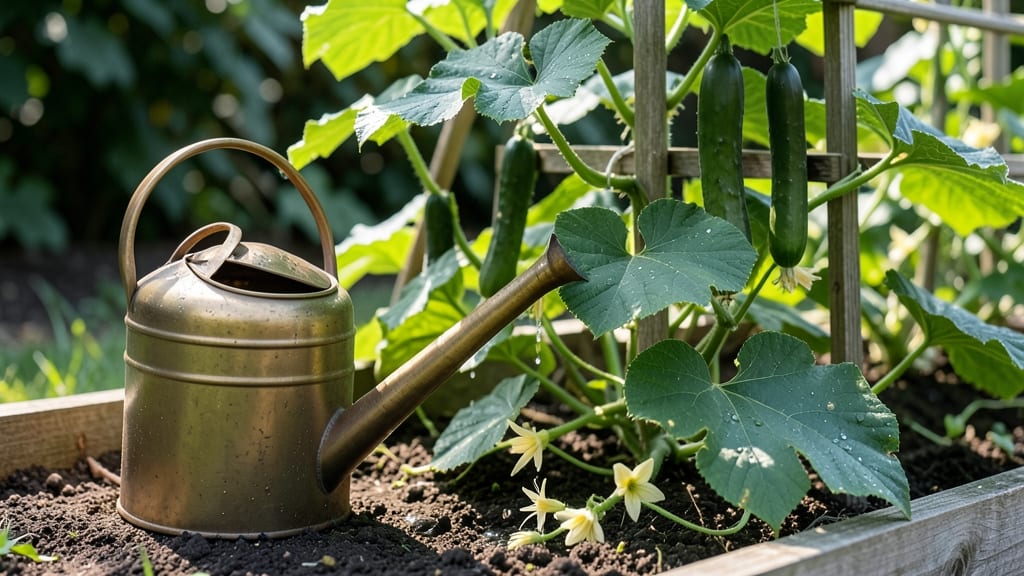
To water cucumbers properly means giving them 1 inch of moisture at the soil level every 2-3 days—the trick that keeps your 🥒 vines thriving without drowning their roots.
Picture this: you’re checking your plants midday, and the soil feels like a damp sponge, not a mud puddle. That’s the sweet spot. Too little water, and your cucumbers shrivel up before they even ripen.
Too much, and you’re staring at a sad, rotting mess. The good news? Mastering this balance is simpler than you’d think—and I’ll show you exactly how.
We’ll start with the 1-inch rule, the golden standard for cucumber hydration, and why timing (morning watering beats evening) makes all the difference. Then, we’ll tackle the best methods—drip irrigation for consistency, hand-watering for precision—and how to spot the warning signs of over- or under-watering before it’s too late.
By the end, you’ll know not just how to water cucumbers, but when to adjust for summer heatwaves, droughts, or even container gardening. Ready to turn wilting vines into a harvest of crisp, homegrown 🥒?
The 1-Inch watering rule: when, how much, and why it works for cucumbers
Cucumbers thrive on consistent moisture, but too much water can drown their roots while too little stunts growth. The 1-inch rule is your golden ticket—it ensures your plants get just enough water to grow strong without inviting diseases like powdery mildew or root rot.
This isn’t guesswork; it’s based on how deep cucumber roots need to drink to stay hydrated.
Here’s the secret: 1 inch of water per week is the sweet spot, but that changes with temperature, soil type, and rainfall. Sandy soil drains faster, so you might need to water daily in summer heat, while clay holds moisture longer.
The key is checking the soil—not just eyeballing your watering can.
To measure the 1-inch rule, stick a soil moisture meter or a wooden skewer into the soil near your cucumber plants. If the top 1 inch feels dry, it’s time to water.
Pro tip: Use a rain gauge to track rainfall—if you’ve gotten 1 inch of rain, skip watering that day to avoid overdoing it.
Cucumbers hate uneven moisture, so water at the base of the plant (not the leaves) to prevent fungal diseases. A drip irrigation system or soaker hose delivers water directly to the roots, saving time and keeping foliage dry.
If you’re hand-watering, aim for a slow, deep soak—this encourages roots to grow deeper, making your plants more drought-resistant.
Watch for crusting soil, a sign of uneven watering. If the surface dries out too fast, mulch with straw or shredded leaves to retain moisture and regulate temperature.
Mulch also blocks weeds, which compete with cucumbers for water. In containers, check soil moisture daily—potted cucumbers dry out faster than in-ground plants.
Overwatering is sneaky—yellowing leaves, mushy stems, or a foul smell from the soil are red flags. If your cucumbers wilt in the afternoon, it might be underwatering, but if they stay droopy even after watering, it could be root rot from soggy soil.
Adjust your schedule based on the season: summer heat demands more frequent watering, while fall coolness lets you space out sessions.
For bush cucumbers, stick to the 1-inch rule, but vining varieties may need slightly more water as they grow larger. Always water in the morning—this gives leaves time to dry, reducing the risk of powdery mildew. Avoid evening watering, as damp foliage overnight invites pests and diseases.
Remember, cucumbers are 95% water, so consistent hydration directly impacts fruit quality. A well-watered plant produces crisp, sweet cucumbers with fewer bitterness issues. Track your watering schedule for a few weeks to find the perfect rhythm for your garden’s conditions.
Start with the 1-inch rule, adjust as you observe your plants, and soon you’ll have vines bursting with cucumbers instead of struggling for survival. Happy growing! 🥒💧
Best watering techniques to prevent wilting and rot in cucumber vines
Cucumber vines need consistent moisture to thrive, but too much water leads to root rot while too little causes wilting. The key is using the right watering technique for your garden setup.
Whether you're growing in containers, raised beds, or in-ground plots, each method has pros and cons that impact your harvest.
I’ve tested these techniques in my own garden, and the difference between crisp, productive vines and sad, struggling plants comes down to timing, method, and soil conditions.
For example, morning watering reduces fungal risks, while drip irrigation saves time and water compared to hand-watering. Let’s break down what works best for your setup.
Watering Technique Comparison
Drip Irrigation
- Pros: Consistent moisture, saves water, reduces fungal diseases
- Cons: Initial setup cost, clogs if not filtered
Best for: In-ground plots and raised beds with multiple plants.
Hand-Watering
- Pros: Precise control, no equipment needed
- Cons: Time-consuming, uneven water distribution
Best for: Containers and small gardens where you can monitor closely.
Morning Watering
- Pros: Reduces fungal growth, allows foliage to dry
- Cons: Requires early schedule, not ideal for night shifts
Best for: All setups—especially humid climates.
Mulching
- Pros: Retains moisture, suppresses weeds, regulates soil temp
- Cons: Requires organic material, may attract pests if too wet
Best for: In-ground and raised beds—especially in hot climates.
For containers, I recommend hand-watering in the morning because it gives you direct control over soil moisture. Stick your finger 1 inch into the soil—if it’s dry, water until it’s damp but not soggy.
Containers dry out faster, so check daily during hot weather. A self-watering pot can help if you travel often, but avoid letting plants sit in standing water.
In raised beds, drip irrigation is a game-changer. Set up emitters to deliver 1 inch of water every 2-3 days, and mulch with straw to lock in moisture.
Watch for yellowing leaves or mold on foliage—these are red flags for overwatering. If you see these signs, let the soil dry out slightly before watering again.
For in-ground plots, combine drip irrigation with mulching for the best results. Water deeply in the morning to encourage root growth and reduce evaporation. Avoid wetting the leaves to prevent fungal diseases like powdery mildew.
If your soil feels compacted or crusty, it’s a sign you’re not watering deeply enough—aim for moisture 6 inches down.
One of my biggest mistakes was watering cucumbers in the evening, thinking it would keep them cool. Instead, it led to fungal infections because the leaves stayed wet overnight. Always water in the early morning so foliage has time to dry.
And if you’re dealing with a heatwave, increase watering frequency but reduce the amount per session to prevent runoff.
Finally, don’t ignore the signs of overwatering or underwatering. Drooping leaves that don’t perk up after watering? That’s underwatering. Yellow leaves with mushy stems?
That’s root rot from overwatering. Adjust your technique based on what you see, and your cucumber vines will reward you with a bountiful harvest. 🥒