
Watering
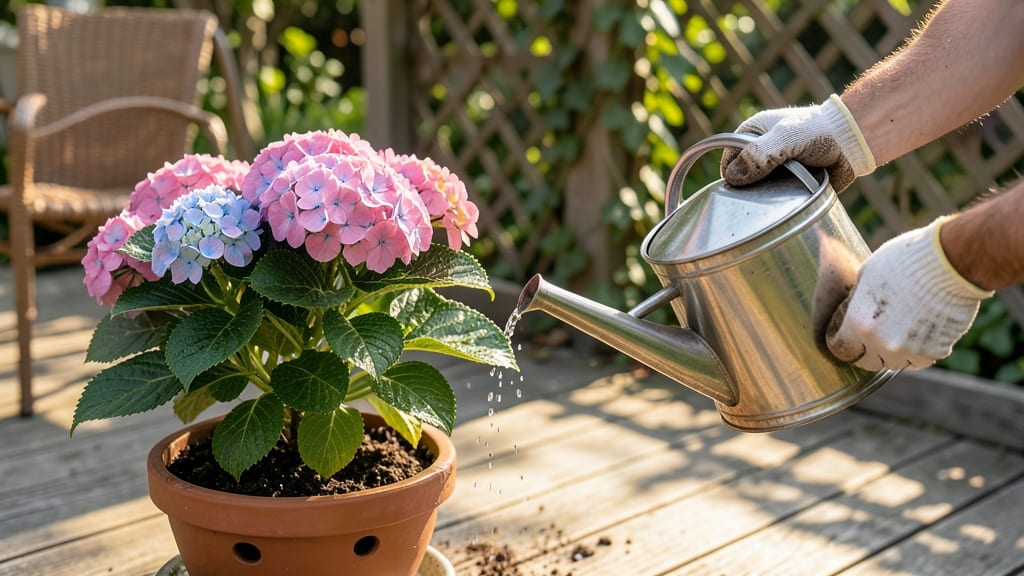
Watering hydrangeas in a pot the right way means giving them just enough moisture to thrive without drowning their roots—because too much or too little can turn your 🌸 blooms into a sad, wilted mess.
Struggling to keep your potted hydrangeas blooming without drowning their roots? Mastering the right watering technique is the secret to vibrant flowers and a thriving plant—without the risk of root rot.
Unlike their in-ground cousins, potted hydrangeas dry out fast in the heat, but they also hate soggy soil. The key is a deep soak every 2-3 days in summer, adjusted for your climate, plus a simple soil-dry test to avoid guesswork.
Below, I’ll walk you through the exact schedule, signs of over/under-watering, and container-specific tricks—so you can enjoy lush, healthy blooms all season long.
The perfect watering schedule for potted hydrangeas: when and how much
Potted hydrangeas are thirsty plants, but overwatering kills them faster than underwatering. The key lies in consistent moisture without soggy soil. Unlike in-ground plants, potted hydrangeas dry out 2-3 times faster due to limited root space and exposure to wind.
My go-to method? The finger test—a foolproof way to check soil moisture before watering.
Seasonal changes dramatically affect your watering routine. In summer heat, I water my potted hydrangeas daily or every other day, while in winter dormancy, I cut back to every 7-10 days.
The soil type also matters—peat-based mixes stay moist longer than sandy blends. Let’s break this down into a simple, actionable routine.
How to Water Potted Hydrangeas: Step-by-Step
- Step 1: Choose the Right Time – Water in the early morning (6-9 AM) to allow foliage to dry before evening. Avoid night watering to prevent fungal diseases like powdery mildew.
- Step 2: The Finger Test – Stick your finger 1-2 inches deep into the soil. If it feels dry, it’s time to water. If damp, wait 1-2 more days.
- Step 3: Deep Watering – Pour water until it flows from the drainage holes at the pot’s bottom. This ensures roots get full hydration, not just surface moisture.
- Step 4: Adjust for Season –
- Spring/Fall: Every 2-3 days
- Summer: Daily or every other day (check soil twice daily in extreme heat)
- Winter: Every 7-10 days (reduce to 50% of summer volume)
- Step 5: Monitor Soil Type – Peat-heavy mixes hold moisture longer; sandy soils dry out faster. Amend with perlite or coconut coir for better drainage if needed.
- Step 6: Check for Signs – Wilting leaves or yellowing edges mean underwatering. Mushy stems or soggy soil signal overwatering. Adjust immediately!
Timing matters just as much as how much you water. I’ve learned the hard way that evening watering leads to fungal issues in humid climates. Morning watering gives leaves time to dry out, reducing the risk of bacterial infections.
Pro tip: Place your pot on a drip tray to catch excess water and prevent root suffocation.
Pot size plays a huge role in watering frequency. A 5-gallon container will dry out faster than a 15-gallon pot. For small pots (3 gallons), I water every 1-2 days in summer, while larger pots may only need watering every 3-4 days.
Always prioritize drainage holes—without them, roots suffocate in compacted, waterlogged soil.
Soil temperature affects water absorption too. In hot weather, soil can repel water if it’s too dry. To fix this, soak the pot for 10-15 minutes to encourage deep penetration.
If your hydrangea’s leaves feel crispy despite wet soil, it’s a sign of root stress—time to adjust your routine.
One common mistake I see is watering on a schedule instead of checking soil moisture. Hydrangeas in pots are not clock-driven plants. Heatwaves, humidity, and even indoor AC can drastically change their needs. Always test before watering—your plant will thank you with bigger, brighter blooms.
For container-specific tips, I recommend using a moisture meter for accuracy, especially in terracotta pots that dry out faster than plastic. If you’re traveling, group pots together and water deeply 24 hours before leaving—this buys you 3-5 extra days of moisture.
Mulch with orchid bark to slow evaporation and keep roots cool.
Remember: Hydrangeas in pots are high-maintenance divas, but with the right routine, they’ll reward you with showstopping blooms. Start with the finger test, adjust for season and pot size, and always water in the morning. Your hydrangea’s health—and your sanity—will improve instantly.
Signs of overwatering vs. underwatering: how to fix common mistakes
Potted hydrangeas 🌸 are sensitive to watering extremes—too much causes root rot, while too little leads to wilting stems. The key is learning their subtle signals. Yellowing leaves or a musty soil smell often mean you're overdoing it, while crispy edges or dry soil cracks scream for hydration.
Let's decode these clues and save your plant before it's too late.
Start by checking the soil moisture with your finger. Stick it 1-2 inches deep—if it feels damp, hold off on watering.
For underwatering, the top inch should be dry before you water again. Mulch helps retain moisture, but don't smother the plant; keep it 1-2 inches away from the stem to prevent rot.
🌱 PROS-CONS BOX 🌱
Overwatering vs. Underwatering Fixes for Potted Hydrangeas
Overwatering
- Signs: Yellow leaves, mushy stems, foul smell
- Fix: Stop watering, repot for drainage
- Emergency: Elevate pot, use paper towels to absorb excess
Underwatering
- Signs: Crispy edges, drooping leaves, dry soil
- Fix: Deep watering, add mulch
- Prevent: Use moisture-retentive soil mix
For overwatered hydrangeas, act fast. Move the pot to a shady spot and let the soil dry out completely. If roots look black or mushy, trim them with sterilized scissors and repot in fresh, well-draining mix. Perlite or orchid bark can help aerate the soil while retaining moisture.
Underwatered plants need deep hydration. Water until it drains from the bottom, then wait until the top 1-2 inches feel dry before repeating. In extreme heat, hydrangeas may need daily watering—check soil moisture every morning. A self-watering pot can help maintain consistency without guesswork.
Don't ignore leaf discoloration—it's your plant's SOS signal. Brown patches on leaf edges often mean underwatering, while yellowing between veins suggests overwatering. Adjust your routine based on these clues, and soon your hydrangea will reward you with bold blooms and lush foliage.
Pro tip: Use a moisture meter for accuracy, especially in fluctuating weather. Hydrangeas thrive on consistency, so stick to a schedule once you've mastered their needs. With these fixes, your potted hydrangea will stay happy and healthy all season! 🌿