
How To
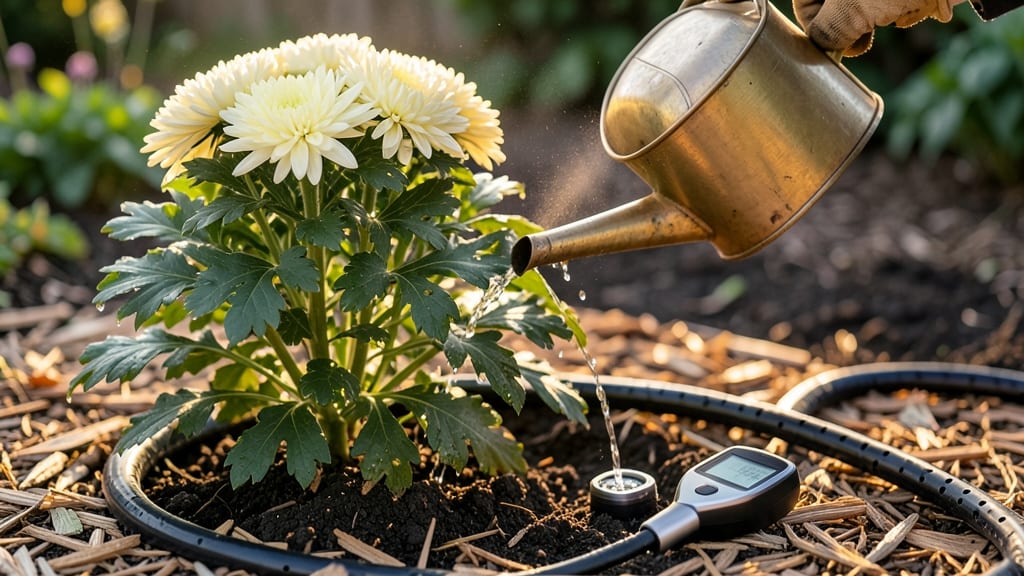
To water mums properly, check the soil 1 inch deep before adding water—this simple test prevents both soggy roots and thirsty plants.
Struggling to keep your 🌼 mums blooming all season? The secret isn’t just how often you water—it’s how deep you check the soil first. Too much or too little water can turn those vibrant blooms into a sad, wilted mess.
Most gardeners overwater by default, thinking mums need constant moisture. But these hardy plants actually prefer consistent dryness at the surface—think of it like a sponge that needs time to soak up water between drinks.
A quick finger test in the morning tells you exactly when to hydrate, saving you time and keeping your plants thriving.
Below, I’ll show you the exact steps to master this 1-inch rule, plus how to adjust for pots, clay soil, or scorching summer heat. By the end, your mums will stay perky, colorful, and blooming until the first frost.
The 1-Inch dry soil test: why it works for mum watering
When your mums (chrysanthemums) start wilting or dropping buds, you might assume they need more water—but you could be wrong. The key to keeping these fall favorites thriving lies in checking soil moisture just 1 inch deep.
This depth targets where chrysanthemum roots actively absorb water, preventing both overwatering (which causes root rot) and underwatering (which stresses plants).
Most gardeners water based on a schedule, but mums don’t follow a rigid timetable—they respond to soil conditions. A 1-inch test accounts for factors like evaporation rates, humidity levels, and even the type of soil (sandy vs. clay).
By ignoring surface moisture and focusing on this zone, you’re essentially reading your plant’s hydration needs in real time.
Here’s the science: Chrysanthemum roots typically spread 6-12 inches deep, but the most critical absorption happens in the top 1-2 inches. Watering when this layer is dry ensures roots get the moisture they need without drowning.
Plus, shallow checks prevent the fungal risks that come from keeping soil too wet at the surface.
Ready to try it? The 1-inch dry soil test is simple: stick your finger (or a moisture meter) into the soil near your mum’s base. If it feels dry, water deeply until moisture reaches 3-4 inches down.
If it’s still damp, wait another day. This method saves water, time, and your mums from stress.
Timing matters just as much as depth. Watering in the morning (between 6-10 AM) gives roots time to absorb moisture before the heat of the day. Evening watering can lead to fungal diseases like powdery mildew, which thrives in damp, cool conditions.
If you must water in the evening, do so at least 3 hours before sunset to allow foliage to dry.
For container-grown mums, the 1-inch rule still applies, but you’ll need to water more frequently—often every 2-3 days—since pots dry out faster. Check the soil at the edge of the pot, where roots often grow toward the container walls.
Pro tip: Use a moisture meter for containers to avoid guesswork, especially in hot climates.
Overwatering is the #1 killer of mums, and the 1-inch test prevents it by ensuring you’re not watering just because the surface feels dry. Soggy soil cuts off oxygen to roots, leading to yellowing leaves and stunted blooms.
Underwatering, on the other hand, causes buds to drop and leaves to wilt. The 1-inch method strikes the perfect balance, keeping your mums hydrated without drowning.
If your mums are already struggling, don’t panic. Adjust your watering routine immediately: skip a day if the soil is still damp at 1 inch, or water deeply if it’s bone-dry.
Within a week, you’ll see improved vigor and longer-lasting blooms. The secret to fall garden success isn’t complicated—it’s just paying attention to what’s happening 1 inch below the surface.
Start today with the 1-inch test, and you’ll enjoy healthier mums with fewer wilting leaves and more vibrant flowers. Your plants will thank you—one deep breath (and root) at a time. 🌼
Mum-specific watering schedule: adjusting for climate and soil type
Your mums thrive when you tailor their watering to your local climate and soil type. In sandy soil, water lightly every 2-3 days—it drains too fast.
In clay soil, wait until the top 2 inches feel dry, then soak deeply. Humid climates need less frequent watering, while arid regions demand daily checks in peak summer. Even partial shade mums adjust their needs based on these factors.
Seasonal shifts matter too. Spring is low-water for dormant plants, but summer calls for deep weekly watering (1-1.5 inches). Fall keeps the rhythm until frost. Overlooking these adjustments causes wilting or yellowing leaves—both signs your mums are stressed. Let’s break it down by your growing conditions.
In arid climates, like Arizona or California, mums need daily watering during summer heatwaves.
Use drip irrigation to deliver moisture slowly at the roots. Humid climates, such as Florida or the Pacific Northwest, require less frequent watering—wait until the top 1.5 inches of soil dry out. Temperate zones (like the Midwest) fall in between, needing weekly checks with adjustments for rain.
Partial shade mums in clay soil hold moisture longer, so reduce watering to every 6-8 days. But if your garden gets full sun, increase frequency to every 4-5 days in summer. Always water deeply—shallow puddles encourage weak roots. For container mums, check soil moisture daily; pots dry out 3x faster than ground soil.
Watch for wilting leaves by midday—this means underwatering. Yellowing leaves with brown edges signal overwatering. Leaf drop in fall is normal, but sudden brown spots mean fungal issues from soggy soil.
Adjust your schedule monthly to match your region’s rainfall patterns and temperature shifts. A little flexibility keeps your mums vibrant all season.
Pro tip: Mulch with 2-3 inches of organic material (like straw) to retain moisture and regulate soil temperature. This reduces your watering needs by 30% in both sandy and clay soils. Mulch also prevents soil crusting, which blocks water absorption.