
Watering
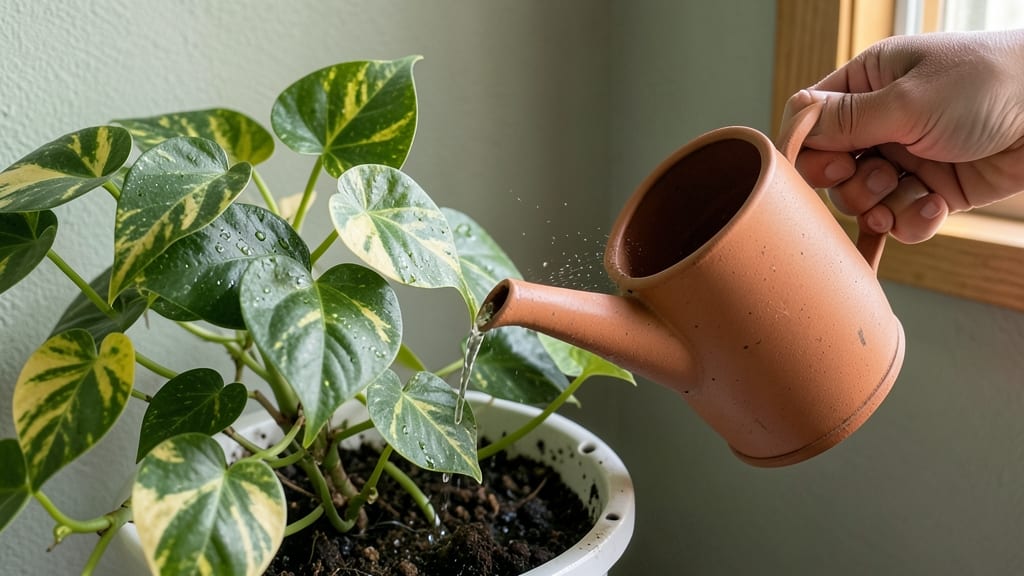
To water pothos plants the right way, stick your finger in the soil—if it’s dry 1 inch down, it’s time. This simple trick saves 90% of the guesswork and keeps your 🌿 thriving.
Struggling to keep your pothos plant alive? Overwatering or underwatering can quickly turn those lush vines into crispy brown leaves—here’s the foolproof method to get it right every time.
Most people water on a schedule, but pothos plants care more about soil moisture than days on the calendar. A quick finger-dip test beats the clock every time, and it’s the key to avoiding root rot or wilting leaves.
Below, I’ll walk you through the exact steps for the finger-dip method, how to adjust for humidity, and what to do when your plant’s leaves start telling you it’s thirsty or drowning.
The perfect pothos watering schedule: when and how often to water
As someone who’s nursed more than a few pothos plants back to life, I can tell you: watering consistency is the #1 factor separating thriving vines from sad, droopy ones.
Pothos plants are famously forgiving, but even they’ll protest with yellow leaves or brown tips if you overdo or neglect their hydration. The key? Understanding your plant’s unique water needs based on its environment and using the finger-dip test to avoid guesswork.
Most pothos owners water on a fixed schedule—like every Monday—but that’s a recipe for disaster. Instead, think about soil moisture, seasonal changes, and even your home’s humidity levels.
For example, my pothos in the sunny kitchen window needs water every 5-7 days in summer, while the one in my dim office can go 10-14 days without a drink. The solution? A science-backed approach that adapts to your plant’s signals, not a calendar.
Let’s start with the gold standard for pothos watering: the finger-dip test. This foolproof method tells you exactly when your plant is thirsty—no overwatering, no underwatering. Stick your finger about 1 inch deep into the soil. If it feels dry to the touch, it’s time to water.
If it’s still slightly damp, wait another day or two. Pro tip: Test the soil in multiple spots—pots can have dry pockets even if the surface looks moist.
| Condition | Watering Frequency | Soil Moisture Test | Visual Cues |
|---|---|---|---|
| Spring (Indoors) | Every 7-10 days | Top 1 inch dry | New growth appears |
| Summer (Indoors) | Every 5-7 days | Top 1 inch dry | Leaves may droop slightly |
| Fall (Indoors) | Every 10-14 days | Top 1.5 inches dry | Growth slows naturally |
| Winter (Indoors) | Every 2-3 weeks | Top 2 inches dry | Dormant phase begins |
| Outdoor (Spring-Summer) | Every 3-5 days | Top 1 inch dry | Faster growth rate |
| ⚠️ Overwatering Warning: If soil stays soggy for more than 2 days, reduce frequency immediately. | |||
Your pothos’s soil type plays a huge role in how often you need to water. If you’re using a fast-draining mix (like cactus soil), the roots dry out quicker, so you’ll water more frequently.
On the flip side, peat-heavy mixes hold moisture longer, meaning you might only need to water every 12-14 days. I always mix in orchid bark or perlite to improve aeration—this helps prevent root rot while keeping the roots happy.
Seasonal shifts are another game-changer. During winter months, when indoor air is dry from heating, your pothos might need water less often—sometimes as little as every 3 weeks. But in summer, with AC running and higher humidity, you’ll likely water every 5-7 days.
Pay attention to your home’s microclimate: A pothos near a humidifier stays moist longer than one in a dry corner.
Here’s a pro move: Bottom-watering your pothos reduces the risk of fungal issues. Simply place the pot in a tray of water for 10-15 minutes until the soil is evenly moist. This method ensures water reaches the roots without soaking the leaves, which can lead to brown tips.
I do this every other watering session, and my pothos thrives without the risk of overhead moisture causing problems.
Watch for these visual cues to adjust your watering routine: Yellowing leaves often mean overwatering, while crispy brown edges signal underwatering. Drooping vines? Check the soil—it might be thirsty. But if the leaves feel mushy, you’ve likely overdone it. The key is to adapt based on
Step-by-step guide to the finger-dip test for pothos
The finger-dip test is my go-to method for determining when your pothos plant needs water. Unlike guesswork, this simple technique helps you check soil moisture accurately, preventing both overwatering and underwatering.
Pothos thrives in slightly moist soil, but soggy roots can lead to root rot, while dry soil causes wilting. Let’s dive into how to do it right.
First, understand that pothos soil should feel like a wrung-out sponge—not bone-dry or muddy. The test works best when the soil is at room temperature and hasn’t been recently watered.
Avoid testing right after watering, as the soil will be artificially moist. Instead, wait 1-2 days before checking again to get an accurate reading.
How to Perform the Finger-Dip Test
- Step 1: Choose the Right Depth
Insert your finger about 1-2 inches into the soil. This mimics the plant’s root zone, where moisture matters most. - Step 2: Check Soil Texture
Gently squeeze the soil between your fingers. If it feels dry and crumbly, it’s time to water. - Step 3: Assess Moisture Level
- Dry: Soil clings to your finger like sand—water immediately.
- Moist: Soil feels slightly damp but not soggy—wait 1-2 more days.
- Wet: Soil is cool and clumps together—hold off on watering.
- Step 4: Observe the Roots (Optional)
If your pothos is in a clear pot, peek at the roots. Healthy roots are white or pale, while black or mushy roots signal rot. - Step 5: Adjust for Season
In summer, soil dries faster—test every 5-7 days. In winter, reduce to bi-weekly checks.
One of the biggest mistakes I see is testing only the surface of the soil. The top layer can feel dry while the roots below are still damp. Always check 1-2 inches deep for an accurate reading.
Another common error is watering on a schedule instead of checking the soil. Pothos plants don’t follow calendars—they respond to their environment.
If your pothos has yellow leaves or drooping vines, the finger-dip test will reveal whether it’s overwatered (soggy soil) or underwatered (dry soil). For overwatered plants, let the soil dry out completely before watering again.
For underwatered pothos, give it a deep drink and monitor the soil closely for the next few days.
Pro tip: Keep a garden journal to track your pothos’s watering needs. Note when you water, how the soil feels, and any changes in the plant’s appearance. Over time, you’ll recognize patterns based on your home’s humidity and temperature.
This method saved my first pothos from root rot and has become my trusted routine ever since!
Remember, the finger-dip test is all about observation and consistency. With practice, you’ll develop an instinct for when your pothos needs a drink—no guesswork required. Happy growing! 🌿