
Orchid Care
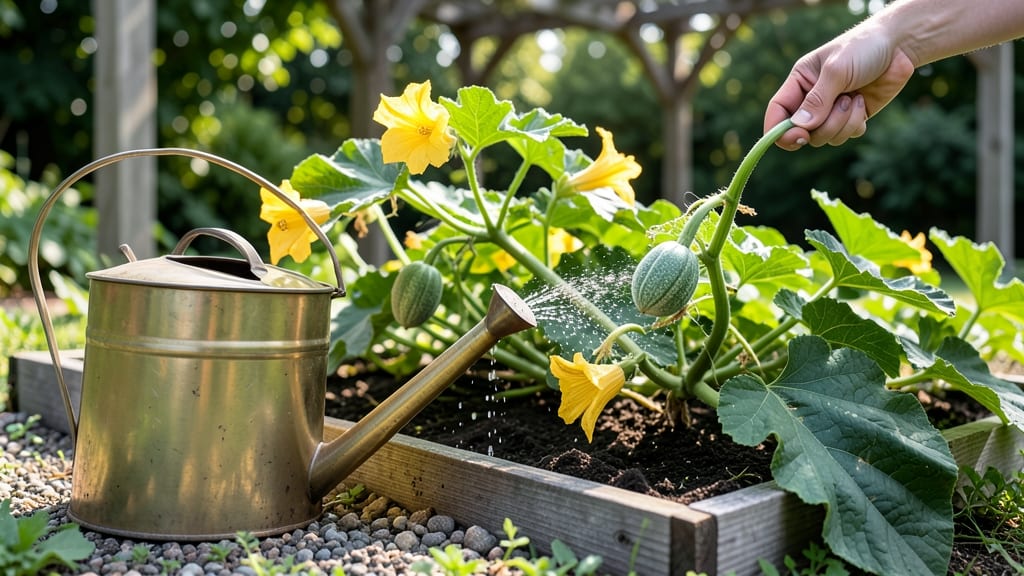
To water squash properly means deep, consistent soaks at the base 🎃 — the difference between a thriving vine and a sad, wilted plant.
If you’ve ever watched your squash leaves droop by midday or seen blossoms fall before they set fruit, you know how quickly things go wrong. The secret isn’t just how much you water—it’s when and how you do it.
Squash plants in Zone 6a need 1-2 inches of water every 3-5 days, but that changes when they’re flowering or fruiting. Too little, and your harvest shrinks; too much, and fungal diseases move in.
Here’s the step-by-step schedule—plus the signs to watch for—so you can keep your squash happy from seedling to harvest.
The perfect watering schedule for squash plants by growth stage
Squash plants are heavy drinkers—literally! Without the right watering routine, your vines will struggle to produce those sweet, plump fruits you’re craving. The key lies in matching your watering schedule to your plant’s growth stage, from delicate seedlings to fruit-loaded vines.
Too little water stunts growth, while too much invites disease. Let’s break it down so you can keep your squash thriving from start to harvest.
First, understand that squash roots run deep—up to 2 feet—but they’re shallow at first. Seedlings need gentle moisture, while mature plants demand deep soaks to keep their sprawling vines hydrated. The biggest mistake?
Shallow watering that only wets the top inch of soil. This leads to weak roots and poor fruit development. Instead, aim to moisten the soil to 6-8 inches deep at each watering.
| Growth Stage | Watering Frequency | Water Amount | Key Tips |
|---|---|---|---|
| Seedlings (0-4 weeks) | Every 2-3 days | ½ inch per watering | Use a spray bottle; keep soil evenly moist but not soggy |
| Vegetative Growth (4-6 weeks) | Every 3-4 days | 1-1½ inches per watering | Water at soil level to avoid wetting leaves |
| Flowering (6-8 weeks) | Every 2-3 days | 1½-2 inches per watering | Increase frequency in hot weather; mulch to retain moisture |
| Fruiting (8+ weeks) | Every 1-2 days (daily in heat) | 2 inches per watering | Prioritize morning watering to reduce fungal risk |
During the seedling stage, your squash plants are tiny but fragile. Water lightly every 2-3 days, using a spray bottle to avoid disturbing the soil. Overwatering now can cause damping-off disease, where seedlings rot at the base.
Instead, aim for consistent moisture—think of it like giving your plants a daily shower, but not a flood. A good trick? Stick your finger 1 inch deep into the soil; if it’s dry, it’s time to water.
Once your squash plants hit the vegetative growth stage (around 4-6 weeks), they’ll start putting on serious leaf and vine growth. This is when you can graduate to deeper waterings—1-1½ inches per session.
Focus on watering at the base of the plant, not the leaves, to prevent fungal diseases like powdery mildew. Early morning is ideal because it gives foliage time to dry out during the day. Pro tip: Use a soaker hose or drip irrigation to deliver water slowly and evenly.
The flowering stage is critical because squash plants need steady moisture to set fruit. Here’s where most gardeners make mistakes—either underwatering and causing flowers to drop, or overwatering and inviting rot. Water every 2-3 days, increasing frequency during heatwaves.
If your soil feels dry just 1 inch down, it’s time to water. Mulch heavily with straw or grass clippings to lock in moisture and keep roots cool.
This stage is also when you’ll notice male and female flowers—watering consistently helps female flowers (with tiny squash at their base) develop properly.
When your squash plants enter the fruiting stage, they’re working overtime to produce those heavy vines and fruits. This is peak watering season! Aim for 2 inches of water every 1-2 days, or daily in extreme heat (think temperatures above 90°F).
The goal is to keep the soil evenly moist but never waterlogged. A simple test: Lift a vine gently—if it feels limp, it’s thirsty. If the soil is soggy, wait a day.
During this stage, drip irrigation is a game-changer, as it delivers water directly to the roots without wetting the leaves.
One common pitfall is assuming all squash varieties have the same water needs. Bush varieties (like bush butternut squash) need slightly less water than sprawling vining types (like zucchini or spaghetti squash). Vining squash have longer roots and larger canopies, so they’ll drink more.
Adjust your schedule based on your variety and local climate. In humid regions, you might need to water less frequently because moisture lingers in the air. In arid climates, you’ll need to water more often or use mulch to retain moisture.
Finally, don’t forget that weather conditions dictate your watering schedule. After a heavy rain, skip your planned watering session. If a heatwave hits, increase frequency and consider shade cloth to protect your plants.
Always water in the early morning (between 6-9 AM) to minimize evaporation and reduce the risk of fungal diseases. Evening watering can leave leaves damp
Signs of overwatering and underwatering in squash plants (and how to fix them)
Squash plants are sensitive to water stress, and both overwatering and underwatering can ruin your harvest. Yellowing leaves, wilted vines, or stunted growth often signal trouble—but knowing the exact cause helps you fix it fast.
Let’s break down the key symptoms and solutions so your squash thrives from seedling to harvest.
First, underwatered squash shows clear warning signs like crispy leaf edges and drooping foliage by midday. The soil around the roots feels dry even just an inch below the surface. If ignored, the plant may abort flowers or produce small, misshapen fruit.
On the flip side, overwatered squash often develops mushy stems, yellowing lower leaves, and a soggy soil smell near the base.
⚠️ How to Water Squash Correctly
Deep watering is key—aim for 1-2 inches of water per week, delivered directly to the soil base (never the leaves). Use a moisture meter or stick your finger 1-2 inches deep; if it’s dry, water again. Morning watering reduces fungal risks, and mulch helps retain moisture. Avoid shallow puddles, which drown roots.
For underwatered squash, water deeply immediately and mulch to slow evaporation. Focus on early morning or late afternoon to minimize stress.
If the soil is bone-dry, soak the area for 10-15 minutes to revive the roots. Drip irrigation is ideal here—it delivers water slowly and consistently, mimicking natural rainfall.
Overwatered squash needs urgent action: reduce frequency and let the top 2-3 inches of soil dry out between waterings. If the soil is saturated and smelly, improve drainage by adding compost or sand to heavy clay soils. Prune any mushy or discolored leaves to prevent rot from spreading to healthy growth.
Watch for blossom-end rot, a classic sign of calcium deficiency triggered by uneven watering. To fix it, apply crushed eggshells or calcium-rich fertilizer and keep soil moisture consistent.
This condition often appears on young fruit and can spread if ignored, so act fast with balanced watering and soil amendments.
Prevent future stress by monitoring soil moisture daily during heatwaves and adjusting your schedule. Container-grown squash dry out faster—check pots every 2-3 days in summer. With the right balance, your squash plants will reward you with vibrant vines and plump fruit all season long.