
Companion Plants
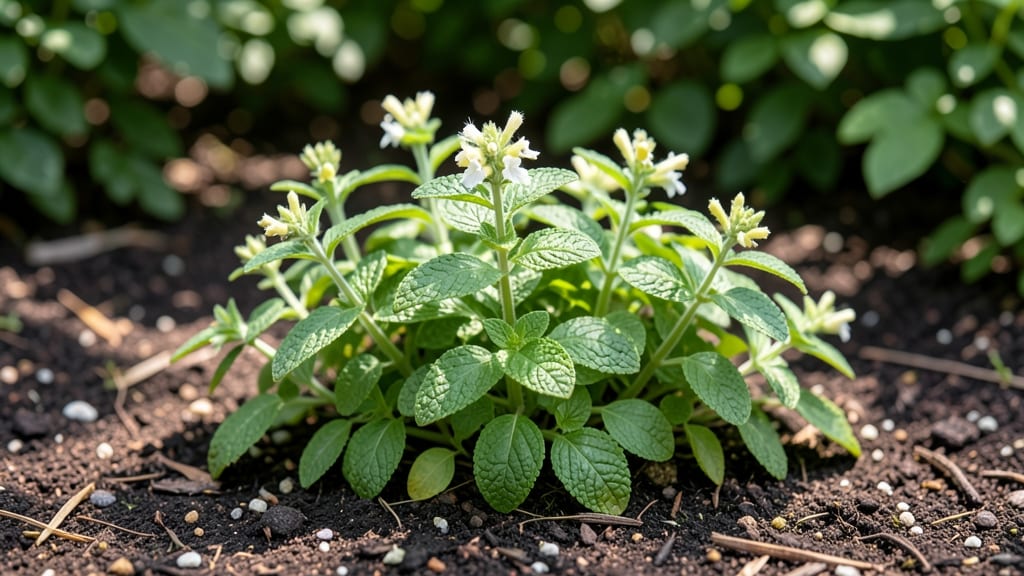
Lemon balm is a perennial herb that returns each growing season, though its foliage dies back completely in winter before sprouting fresh growth from its hardy underground roots in spring. With the right care, it can flourish for many years across USDA zones 3 through 9.
This hardy herb's perennial nature comes from its deep, fibrous root system that stores energy during winter dormancy. 🌱 What makes lemon balm unique is how it "resets" each year—after winter's frost, the roots send up new shoots that grow vigorously once temperatures rise.
Unlike annuals that must be replanted, lemon balm's persistent root system means you'll get fresh harvests annually with minimal effort. The key to long-term success is protecting those roots during winter with proper mulching and avoiding over-pruning in late summer.
Many gardeners are surprised to learn that lemon balm's winter dieback isn't a sign of failure—it's part of its natural survival strategy. The plant's ability to regenerate from its root crown makes it one of the most resilient herbs for gardeners in cold climates.
For best results, I recommend dividing established clumps every 2-3 years to prevent overcrowding while maintaining the plant's vigor.
💡 In This Article
- Lemon Balm’s Perennial Growth Cycle Explained
- How to Maximize Lemon Balm’s Longevity as a Perennial
Lemon balm’s perennial growth cycle explained
The botanical secret behind lemon balm's perennial status lies in its rhizomatous root system, which spreads horizontally just below the soil surface. These fibrous roots store carbohydrates and nutrients during winter, allowing the plant to survive sub-zero temperatures down to -25°F in USDA zone 3.
When spring arrives, the roots detect rising soil temperatures (around 40-45°F) and trigger new shoot growth through a process called vernalization, where cold exposure actually signals the plant it's safe to regrow.
What's fascinating is how lemon balm's growth cycle differs from true annuals. While annuals complete their entire life cycle in one season, lemon balm's herbaceous stems die back completely in winter, but the roots remain alive and dormant.
This winter dormancy isn't hibernation—it's an active metabolic state where the plant conserves energy at 5-10% of its summer growth rate. The root crown (where stems emerge) contains meristematic cells that can produce new shoots within 2-4 weeks of spring thaw, even if the above-ground plant looks completely dead.
In warmer climates (zones 7-9), lemon balm may continue growing year-round, though it often enters a semi-dormant state during winter's mildest months.
The plant's ability to regenerate from just 1-inch root segments makes it incredibly resilient—even if you accidentally dig up a clump, it can regrow from small root fragments left in the soil.
This explains why lemon balm often spreads aggressively in ideal conditions, forming dense patches through both seed production and root division.
Zone-specific behaviors reveal interesting adaptations: In colder zones (3-5), lemon balm's roots develop thicker insulation layers, while in warmer zones (8-9), the plant focuses more on rapid spring regrowth to take advantage of longer growing seasons.
The key difference between zones is the timing of dormancy—northern plants may stay dormant for 4-6 months, while southern plants might only slow growth for 1-2 months during winter's coldest periods.
What most gardeners don't realize is that lemon balm's winter dieback is actually beneficial. The frost acts like a natural pruning, removing old growth and redirecting the plant's energy toward producing fresh, more vigorous shoots in spring.
This annual reset prevents the plant from becoming woody or leggy, which is why established lemon balm plants often produce 20-30% more leaves in their second year compared to their first.
For visual evidence, observe how lemon balm's leaves emerge in a basal rosette pattern—low to the ground before stretching upward. This growth habit protects young shoots from late frosts while maximizing sunlight capture.
The plant's light green to yellow-green foliage also contains high levels of volatile oils that provide natural frost protection by lowering the plant's freezing point slightly.