
Flowers
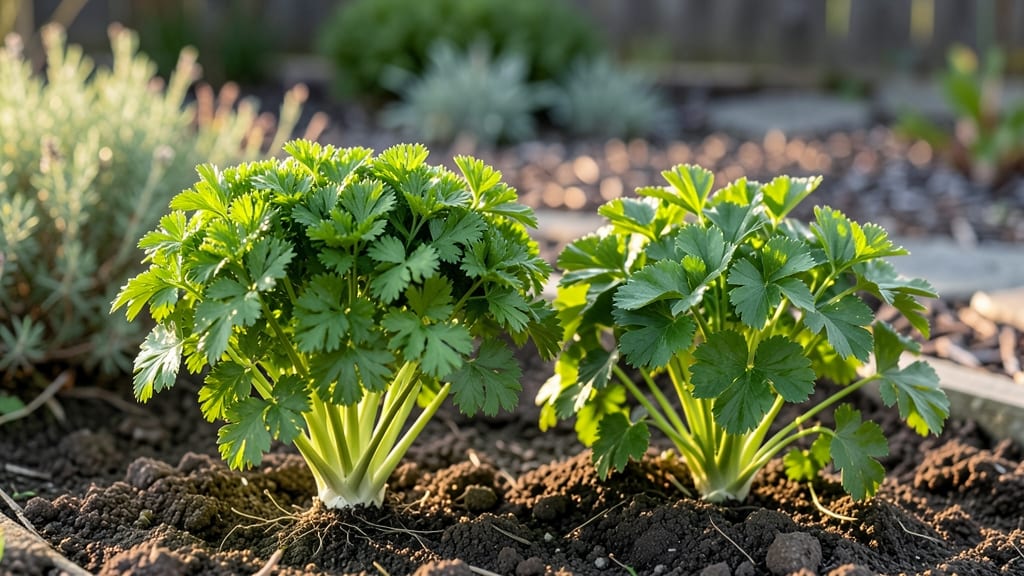
Parsley is classified as a biennial herb rather than a true perennial, though it can sometimes regrow for up to two years in mild winter climates before eventually bolting or dying back.
While parsley doesn't qualify as a true perennial, its ability to persist across seasons in frost-free zones creates that illusion. 🌱 The key lies in its cold tolerance—flat-leaf varieties often handle winter better than curly parsley, and proper mulching can shield roots from temperature swings.
Many gardeners mistakenly assume parsley will return year after year, only to discover it's actually following a two-year life cycle before needing replacement. Understanding this distinction helps set realistic expectations for planting and harvest cycles.
What truly determines parsley's longevity is winter hardiness combined with proper care. In USDA zones 7-10, parsley frequently survives winters without protection, while colder regions require strategic overwintering techniques like heavy mulching or container growing.
The plant's biennial nature means its second year produces flowers and seeds rather than edible leaves, which is why gardeners often replace it annually even when it appears perennial.
💡 In This Article
- Why Parsley Acts Like a Perennial in Some Climates
- Extending Parsley’s Lifespan: Overwintering Tips for Gardeners
Why parsley acts like a perennial in some climates
Parsley's botanical classification as a biennial means it follows a two-year life cycle: the first year focuses on leaf growth, while the second year produces flowers and seeds before dying.
However, in mild climates (USDA zones 8-10), parsley can appear perennial because its roots survive winter dormancy and regrow in spring. This persistence occurs because the plant's energy reserves in the root system allow it to push through mild winters without complete die-off, creating the illusion of perennial behavior.
The key difference between parsley's behavior and true perennials lies in its cold tolerance thresholds. Flat-leaf parsley (Petroselinum crispum var. neapolitanum) typically handles colder temperatures better than curly parsley (neapolitanum var. crispum), with roots surviving down to 15°F when properly mulched.
True perennials like thyme or oregano can regenerate from the same root system year after year, while parsley's root system weakens after two seasons, making it more accurate to describe it as a short-lived perennial rather than a true one.
What makes parsley particularly confusing is its bolting tendency—when exposed to cold followed by warm temperatures, it quickly transitions to flowering.
This process is triggered by hormonal changes in response to temperature fluctuations, which is why gardeners in zone 7 often see parsley survive winter only to bolt prematurely in spring.
The plant's natural defense mechanism prioritizes seed production over leaf growth when it senses environmental stress, which explains why even "perennial" parsley eventually declines after two years.
Climate plays a massive role in this behavior. In frost-free zones like coastal California or Florida, parsley can continue producing leaves for 3-4 years because the lack of freezing temperatures prevents the stress response that triggers bolting.
The plant's growth pattern shifts from its typical biennial cycle to a more extended leaf production phase when winter conditions remain mild. This is why many gardeners in these regions treat parsley as a perennial—it simply doesn't experience the same seasonal stress signals that trigger its natural life cycle.
Another factor is the root system development. Parsley establishes a robust taproot in its first year that stores carbohydrates, allowing it to regrow in spring. However, this root system doesn't have the same regenerative capacity as true perennials.
When temperatures drop below 20°F for extended periods, even the hardiest parsley varieties will suffer root damage, leading to reduced regrowth or complete die-off. This is why gardeners in colder regions must take active steps to protect parsley during winter.
Consider this comparison: While parsley might persist for multiple seasons in ideal conditions, true perennials like asparagus or rhubarb can live for decades from the same root system. Parsley's "perennial-like" behavior is more about its ability to survive winter dormancy than true perennial regeneration.
The plant's life cycle is fundamentally different—it's designed to complete its reproductive cycle in two years, not to establish long-term growth like true perennials.
The bottom line is that parsley's persistence across seasons is a climate-dependent illusion. In mild winters, it behaves like a perennial, but its biological classification remains biennial.
This distinction matters for gardeners planning long-term herb beds—parsley will eventually need replacement, even if it appears to return year after year. 🌱