
Flowers
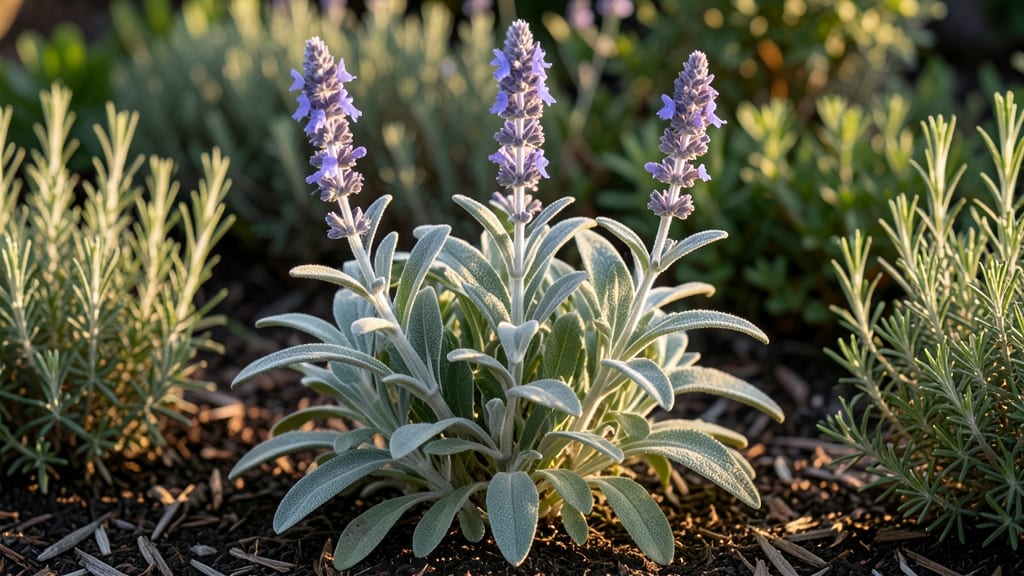
Yes, sage is a perennial herb that thrives through multiple growing seasons, though it often dies back to the ground in colder climates before regrowing from its root system each spring. Its ability to persist depends on the specific variety and local winter conditions.
Sage's perennial nature comes from its deep, woody root system that stores energy for regrowth. 🌱 Unlike annual herbs that complete their life cycle in one season, sage conserves nutrients underground, allowing it to rebound when temperatures rise.
This dieback cycle actually protects the plant from harsh winters while maintaining its long-term survival.
Most gardeners notice this behavior in late fall when sage leaves turn brown and drop, only to see fresh green shoots emerge by spring. The key to keeping your sage thriving year after year lies in proper winter care—like mulching—and selecting cold-hardy varieties that match your USDA zone.
What sets sage apart from other perennials is its resilience. Even after years of growth, it maintains its aromatic qualities and compact form, making it both a practical kitchen herb and a beautiful garden addition.
The secret to its longevity? A combination of good drainage, full sun exposure, and minimal winter stress.
💡 In This Article
- How Sage’s Root System Ensures Year-Round Survival
- Best Practices for Growing Sage as a Perennial
How sage’s root system ensures year-round survival
Sage's perennial survival hinges on its deep, woody root system that can extend 3-5 feet underground. These roots store carbohydrates and nutrients like starches and sugars during the growing season, creating an energy reserve that fuels regrowth in spring.
Unlike annual herbs that complete their life cycle in one season, sage's roots remain dormant but alive through winter, a process called geophyte dormancy.
When temperatures drop below 20°F, most sage varieties enter a protective dieback phase. The above-ground stems and leaves brown and wither, but the root crown—where new growth emerges—remains insulated by the soil. This adaptation prevents frost damage to the critical growth center.
The root system's ability to regenerate is why sage can live for decades with proper care, unlike annual herbs that must be replanted yearly.
The regeneration process begins when soil temperatures rise above 50°F in spring. New shoots emerge from the root crown, drawing on stored nutrients to produce fresh leaves. This cycle explains why gardeners often see sage "come back from the dead" each year.
The plant's aromatic oils, concentrated in the leaves, actually serve as a natural antifreeze, protecting cellular structures during cold snaps.
What makes sage unique among perennials is its self-pruning mechanism. As winter approaches, the plant naturally sheds its top growth, redirecting energy to root development. This contrasts with other perennials like lavender, which may require manual pruning to survive winter.
Sage's natural dieback reduces winter stress while maintaining its signature pine-like fragrance and culinary value.
For gardeners in colder climates (USDA zones 5-6), this dieback behavior is crucial. Without proper winter protection, the root system can suffer from freeze-thaw cycles.
The key difference between sage's survival and that of annual herbs lies in its ability to photosynthesize underground during brief warm spells, maintaining energy reserves even when snow covers the ground.
Consider this comparison: Annual basil dies completely after frost, requiring replanting, while sage's roots remain viable for years. The secret lies in its secondary growth—the ability to produce new cells in the root system throughout its lifespan, a trait shared with trees but rare in culinary herbs.
This biological advantage makes sage both a practical garden perennial and a resilient kitchen staple.
Understanding this root system explains why sage thrives in well-drained soil—poor drainage can cause root rot, disrupting the energy storage process. The plant's ability to regenerate from just a few inches of remaining root crown demonstrates its remarkable adaptability to seasonal changes.