
Flowers
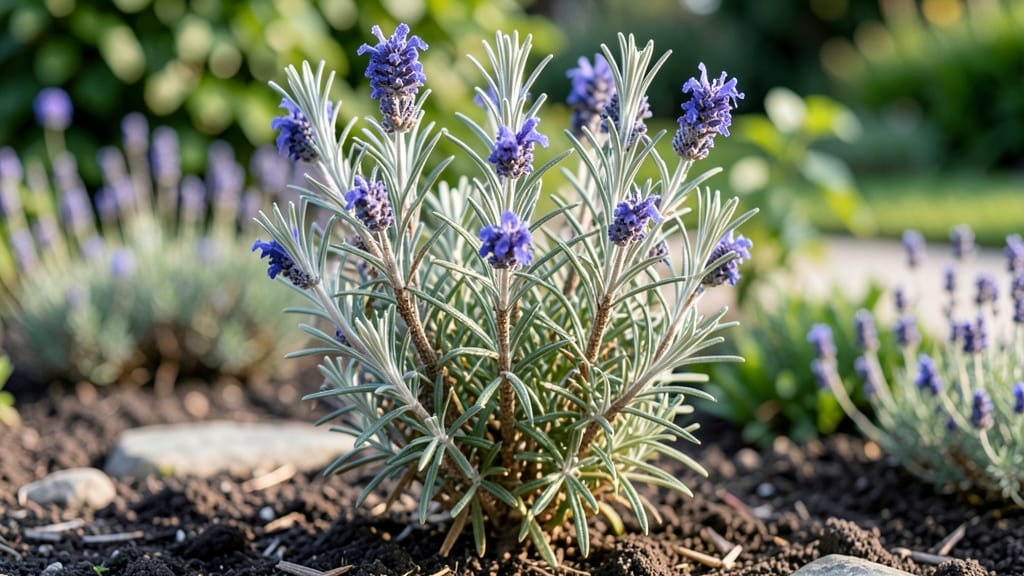
Salvia is a perennial plant that comes back each year from its root system, though many varieties go dormant in winter by losing their foliage before regrowing in spring. Hardy salvias survive winters in USDA zones 5-9, while tender types may require winter protection or annual replanting in colder areas.
Most gardeners assume perennials stay green year-round, but salvia proves that's not always the case. 🌱 The key lies in its root system, which stores energy like a natural battery during dormancy.
Hardy salvias (like Salvia nemorosa) retreat underground in winter, only to burst back with vibrant blooms when temperatures rise. Tender varieties, however, need extra care—think of them as perennial annuals that require winter protection to survive.
This dieback cycle explains why some salvias appear to "die" only to return stronger each season.
Understanding this cycle helps you plan your garden smarter. For instance, you can prune back dead foliage in late winter to encourage fresh growth, while mulching protects tender roots from freezing. The real secret? Salvia's resilience comes from its deep roots, which anchor it through harsh conditions.
Whether you're growing purple sage or Mexican bush sage, treating it as a perennial with seasonal adjustments will reward you with years of vibrant blooms.
💡 In This Article
- How Salvia Perennials Survive Winter Dieback
- Caring for Salvia Perennials Through Seasons
How salvia perennials survive winter dieback
Salvia's perennial nature hinges on its sophisticated root system, which functions like an underground energy reserve. During winter, hardy varieties (like Salvia officinalis or Salvia nemorosa) enter dormancy, where their roots continue metabolizing stored carbohydrates—sugars and starches produced during the growing season.
These stored nutrients fuel regrowth when temperatures rise above 50°F. The roots themselves may extend 2-3 feet deep, allowing them to access moisture and nutrients even when surface soil freezes.
What sets salvia apart is its foliage dieback strategy. Unlike evergreen perennials, many salvias completely shed their leaves in winter—a survival adaptation that conserves water and energy. 🌿 This process, called "deciduousness," isn't a sign of death but a calculated response to cold stress.
The roots remain active at temperatures as low as 32°F, while the aboveground growth halts. Tender varieties (like Salvia leucantha) can't tolerate freezing ground, which is why they're often grown as annuals in zones colder than USDA zone 8.
The biological mechanism involves hormonal shifts. As temperatures drop, salvia plants produce higher levels of abscisic acid—a plant hormone that triggers dormancy by closing stomata (leaf pores) and redirecting energy to roots.
This hormonal shift explains why pruning back dead foliage in late winter stimulates regrowth: it removes physical barriers that might otherwise block sunlight from reaching new shoots. Hardy salvias can withstand -10°F to -20°F temperatures, while tender types typically perish below 25°F.
Consider the contrast between Salvia nemorosa (hardy to zone 4) and Salvia microphylla (hardy to zone 8). The former develops thick, woody root crowns that act as insulation, while the latter has thinner roots that freeze without protection.
This structural difference explains why some salvias return reliably while others need winter blankets of mulch or row covers. The root system's depth also matters—deeper roots access unfrozen soil layers, maintaining metabolic activity during brief thaws.
What most gardeners miss is how salvia's dieback cycle mirrors that of bulbs. Like tulips, salvias store energy in their roots, but unlike bulbs, they don't produce underground storage organs (corms or tubers). Instead, their fibrous roots spread horizontally, creating a dense network that stabilizes the plant and stores nutrients.
This root structure explains why salvias often spread over time—each year's growth adds to the root system's capacity to survive drought or cold.
For visual learners, imagine salvia's winter survival as a three-phase process:
- Energy storage (summer/fall),
- Dormancy (winter), and
- Regrowth (spring). The key transition occurs when soil temperatures reach 55°F—this triggers root activity before shoots emerge.
Understanding this cycle helps explain why some salvias bloom earlier than others: their root systems wake up at slightly different temperature thresholds. 🌱