
Watering
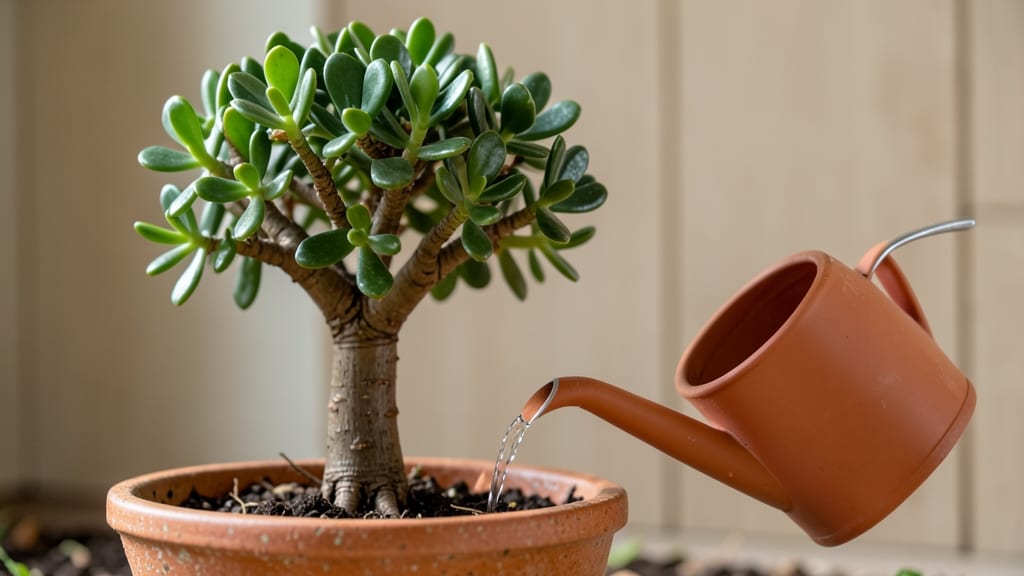
Watering a jade plant the right amount is the secret to keeping its plump leaves and avoiding root rot—most gardeners either drown or neglect these succulents.
Overwatering your jade plant is the #1 killer—yet many gardeners drown these succulents by following generic watering advice.
This guide cuts through the guesswork with a seasonal schedule, soil tests, and signs to watch for, so you never over- or underwater again.
You’ll learn how often to water, how to check soil moisture, and the best methods to keep your 🌿 jade plant thriving year-round, even in winter.
Jade plant watering schedule by season: how often to water for perfect growth
Your jade plant thrives on neglect—well, not total neglect, but it definitely doesn't need frequent watering like most houseplants. The key to keeping this succulent happy lies in understanding its seasonal water needs.
In spring and summer, your jade plant will drink more, while in fall and winter, it enters dormancy and needs far less. Let’s break down the exact watering schedule by season to avoid both underwatering and root rot.
First, always check the soil moisture before watering. Stick your finger about 1 inch deep into the soil—if it feels dry, it’s time to water. If it’s still damp, wait another week. This simple test prevents overwatering, which is the #1 cause of jade plant death.
For small pots (4-6 inches), water every 2-3 weeks in summer, while larger pots (8+ inches) can go 3-4 weeks between waterings.
Here’s your seasonal watering guide, including adjustments for humidity and temperature fluctuations. Use this table as your go-to reference, and you’ll keep your jade plant looking plump and vibrant year-round.
In spring, your jade plant wakes up from its winter dormancy and starts growing again. This is when you’ll see new leaves and stems. Water every 2-3 weeks, but always check the soil first.
If your home has low humidity (common in winter with indoor heating), your jade plant may need water slightly more often. A quick fix? Place a pebble tray near the pot to add moisture to the air without overwatering.
During summer, your jade plant is at its peak growth phase. However, avoid the mistake of watering it like a thirsty houseplant. Overwatering in summer leads to root rot, which is nearly impossible to reverse. Instead, water deeply but infrequently.
Let the top 1-2 inches of soil dry out completely before watering again. If your jade plant is outdoors in partial shade, it may need water every 2 weeks, but if it’s in full sun, reduce to every 3 weeks.
As fall arrives, your jade plant’s growth slows down, and its water needs drop significantly. This is the time to reduce watering by 50%. Check the soil 2 inches deep—if it’s still damp, wait another week.
If your jade plant is in a terracotta pot, it will dry out faster than in plastic, so adjust accordingly. A good rule of thumb: if the leaves start to wrinkle slightly, it’s time to water.
In winter, your jade plant is essentially in dormancy, especially if you’re in a cooler climate. Water every 4-6 weeks, or even less if your home is cool and humid. The goal is to mimic its natural environment, where rainfall is minimal during colder months.
If you notice shriveled leaves or a lightweight stem, it’s a sign of underwatering. But if the leaves feel soft or mushy, you’ve overdone it. At this point, stop watering and let the soil dry out completely.
Pro tip: If you’re unsure whether to water, always err on the side of underwatering. Jade plants store water in their leaves and stems, so they can handle brief dry spells. Overwatering, on the other hand, is a silent killer.
If you’ve accidentally overwatered, don’t panic—simply stop watering and let the soil dry out. In most cases, your jade plant will bounce back if the roots aren’t severely damaged.
For <
5 Signs your jade plant needs water (and 5 signs you're overwatering)
Jade plants (Crassula ovata) are masters of survival, storing water in their thick stems and leaves. But even these drought-resistant beauties need your attention. The key is learning to read their silent signals—wrinkled leaves, lightweight pots, or mushy stems.
I’ve learned the hard way that overwatering is the #1 cause of jade plant death, but underwatering can stunt growth just as badly. Let’s decode these visual cues so you can keep your plant perfectly hydrated.
First, check the soil moisture with your finger. Stick it about an inch deep—if it feels completely dry, your jade plant is thirsty. But here’s the trick: succulents like jade plants prefer bone-dry soil between waterings.
If the top layer feels damp, wait another week. This simple test saves countless plants from root rot every year. I’ve seen gardeners drown their jades just because they mistook thirst for wilting!
Jade Plant Watering: Pros & Cons
- 🌱 Plump leaves (healthy water storage)
- 🌿 Firm stems (no soft spots)
- 💧 Bright green foliage (no yellowing)
- ✅ Root growth (not mushy)
- 💀 Root rot (black, smelly roots)
- 🌧️ Yellow leaves (nutrient leaching)
- 🪴 Mushy stems (collapsing growth)
- 🚫 Fungal growth (white mold)
- 🤏 Wrinkled leaves (like a shriveled apple)
- 🪴 Lightweight pot (feels empty)
- 🌡️ Dry soil (cracks appear)
- ⏳ Slow growth (stunted new leaves)
- 💧 Soggy soil (stays wet for days)
- 🌿 Drooping leaves (even when dry)
- 🪴 Heavy pot (waterlogged)
- 🟡 Brown leaf tips (burn from excess)
Your jade plant’s leaves are its water storage system. When they start looking wrinkled or shriveled, it’s a clear cry for hydration. I once had a jade plant with leaves so wrinkled they looked like crumpled paper—turns out, it hadn’t been watered in 6 weeks!
A quick soak revived it in days. But here’s the catch: don’t water just because the leaves look dry. Test the soil first—sometimes the wrinkling is from low humidity or direct sunburn.
Next, grab your plant and lift the pot. If it feels unusually light, the soil is bone dry and your jade plant is parched. I use this trick every time because it’s foolproof—no guessing games.
Pro tip: terracotta pots dry out faster than ceramic, so adjust your watering schedule accordingly. And if your jade plant is in a hanging basket, check the soil more often—drying out happens quicker in elevated containers.
Now, let’s talk stem thickness. A healthy jade plant has thick, sturdy stems. If you notice them feeling soft or hollow, overwatering is likely the culprit. I’ve seen stems collapse like overcooked spaghetti when roots rot from excess moisture.
The fix? Stop watering immediately and repot in fresh, well-draining soil. Trim any mushy roots with sterilized scissors, and give your plant a dry spell to recover.
If your jade plant shows signs of overwatering, act fast. Remove it from its pot and inspect the roots—healthy roots are firm and white, while rotten ones are brown and mushy.
Trim the bad roots, let the plant dry out for a few days, and repot in a mix of cactus soil and perlite. I’ve revived plants that looked doomed by following this method. The key is patience: don’t water again until the soil is completely dry.
Remember, jade plants are succulents first, so they’d rather go thirsty than drown. Stick to the soil test, watch for those visual cues, and adjust your watering schedule by season. With these signs mastered, your jade plant will thrive for years—plump, green, and happy. 🌱