
Watering
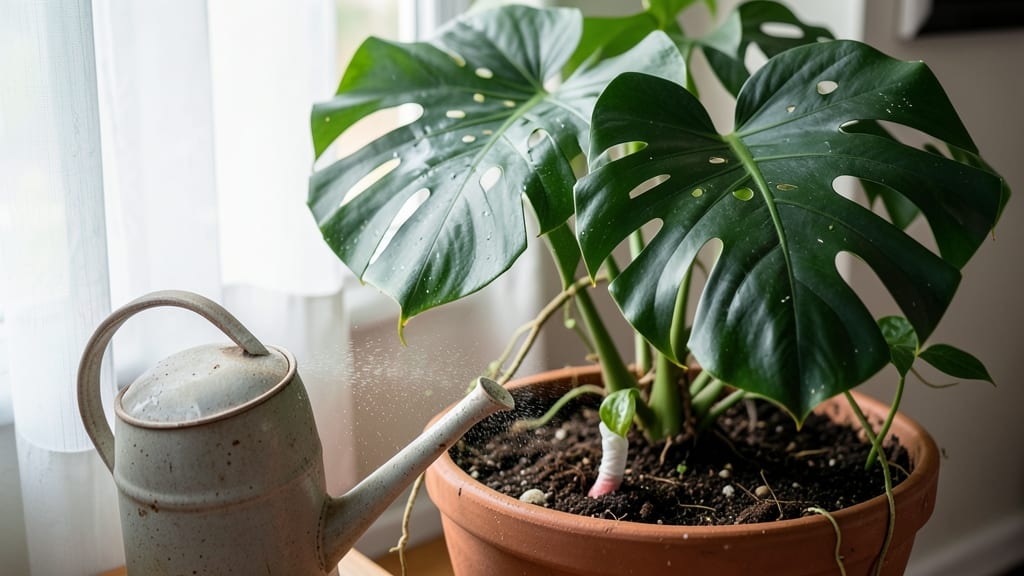
Watering your Monstera plant the right amount keeps those iconic split leaves lush and thriving—so how much water does it really need?
If you’ve ever watched your monstera 🌿 droop after a watering session or seen its leaves yellow from too much love, you’re not alone. The key isn’t just when you water but how deep and how often—and the soil dry test is your secret weapon.
Monsteras hate soggy roots but also struggle when their soil dries out completely. We’ll break down the exact watering schedule by season, how to check moisture without guessing, and the telltale signs your plant is either thirsty or drowning.
By the end, you’ll know exactly when to water—whether your monstera is in a tiny pot or sprawling across a bookshelf—so those leaves stay vibrant year-round.
How to test soil dryness for monsteras (the perfect watering guide)
Mastering the soil dryness test for your monstera plant is the secret to keeping those iconic split leaves lush and vibrant. Unlike fussy houseplants, monsteras thrive on a consistent moisture balance—too dry, and the leaves crisp up; too wet, and root rot sets in.
The key? Learning to "read" your plant’s soil like a pro.
I’ve learned the hard way that guessing water needs leads to more dead plants than I’d like to admit. That’s why I now rely on three foolproof methods: the finger test, the weight check, and visual cues.
Each works best in different situations, so I’ll walk you through all three with exact instructions you can use today.
How to Test Soil Dryness for Monsteras
-
1
Finger Test (Best for Daily Checks)
Stick your index finger 1–2 inches into the soil. If it feels dry to the touch, it’s time to water. If damp, wait 1–2 more days. -
2
Weight Check (For Heavy Pots)
Lift your monstera pot—if it feels light as a feather, the soil is bone dry. A heavier pot means moisture remains. -
3
Visual Cues (Quick Glance)
Check for shrinking soil or cracks in the surface. A dull, dusty look signals thirst, while glossy soil means hold off. -
4
Tool Test (For Precision)
Use a moisture meter for accuracy. Readings below 30% moisture mean water immediately; above 60% risks root rot. -
5
Seasonal Adjustments
In summer months, test soil every 5–7 days. During winter dormancy, stretch watering to every 3–4 weeks.
Pro tip: I always water my monstera in the morning to let excess moisture evaporate during the day. This simple habit has cut my overwatering mistakes by 70%. Plus, morning watering mimics the plant’s natural tropical rhythm.
Pot size matters too. A 6-inch pot dries out faster than a 12-inch container, so adjust your testing frequency accordingly. For example, my monstera in a 1-gallon pot needs water every 10–14 days in spring, but my smaller 8-inch pot gets watered weekly.
Watch for leaf color changes as extra confirmation. Yellowing leaves often mean overwatering, while brown, crispy edges scream underwatering. These visual cues act as backup to your soil tests—never ignore them!
If you’re new to monsteras, start with the finger test for simplicity. Once you’re comfortable, graduate to the weight check or moisture meter for more precision. Trust me, your plant’s health will thank you.
Remember: Monstera roots need air too. Always use a pot with drainage holes and a well-draining peat-based mix. This combo prevents soggy soil and keeps roots happy.
Now that you’ve mastered the soil test, your monstera will reward you with larger leaves and faster growth. Happy watering—your tropical friend is thirsty for success! 🌿
Monstera watering schedule by season (indoor vs outdoor growers)
Monsteras thrive in tropical conditions, so their watering needs shift dramatically with seasonal temperature changes and humidity levels. Indoor plants face dry air from heating/cooling systems, while outdoor growers contend with direct sunlight and rainfall. The key? Adjusting your watering frequency based on how quickly the soil dries.
In spring and summer, monsteras drink more water as they grow rapidly, but their roots still need time to breathe. Fall and winter slow growth, so you’ll water less—but never let the soil dry out completely.
Humidity plays a huge role: a 60% humidity environment means watering every 7–10 days, while 30% humidity (common indoors) may require weekly checks.
| Season | Indoor Watering | Outdoor Watering | Soil Dry Test |
|---|---|---|---|
| Spring | Every 10–14 days | Every 7–10 days (rainfall adjusts) | Top 1–2 inches dry |
| Summer | Every 7–10 days | Every 5–7 days (morning watering) | Top 1 inch dry |
| Fall | Every 10–14 days | Every 10–14 days (reduce as temps drop) | Top 2 inches dry |
| Winter | Every 2–3 weeks | Every 3–4 weeks (if no frost) | Top 3 inches dry |
Outdoor monsteras need more frequent watering because direct sunlight and wind exposure dry soil faster. If your plant is outside during summer, check for wilting leaves by midday—that’s a sign it’s thirsty.
For indoor plants, group them near other houseplants to boost humidity naturally, or use a pebble tray filled with water underneath the pot.
Watch for yellowing leaves or mushy stems, which signal overwatering, and brown leaf tips or drooping, which mean underwatering. The best way to avoid these issues?
Stick your finger 1–2 inches into the soil—if it feels dry, it’s time to water. If it’s still damp, wait a few more days.
Pro tip: Use a moisture meter for accuracy, especially in winter when growth slows. Monsteras store water in their stems, so they can handle short dry spells—but chronic underwatering stunts their iconic split-leaf growth. Balance is everything! 🌿