
Picking
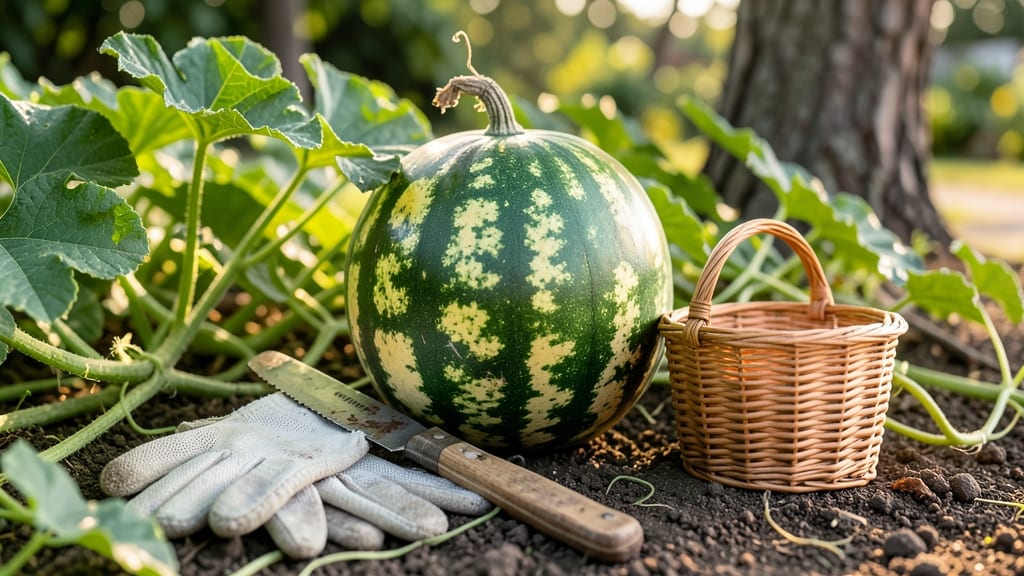
Recognizing the signs of a ripe watermelon 🍉 is the key to juicy, sweet success—whether you're shopping at the store or harvesting from your own garden.
Picture this: you've waited all summer for that perfect slice of watermelon, only to cut into one that's mealy and underwhelming. It happens to the best of us, but there's a better way.
From the classic thumb test to the surprising sound a ripe melon makes when tapped, I’ll walk you through the foolproof methods gardeners use to nail the harvest every time.
By the end, you'll know exactly when to pick—so you can enjoy watermelons that are bursting with flavor, not disappointment.

How to identify a ripe watermelon using the thumb test & rind color
Nothing beats the satisfaction of biting into a perfectly ripe watermelon—juicy, sweet, and bursting with flavor. But how do you know when that melon is truly ready?
The thumb test and rind color are two of the most reliable methods to determine ripeness, whether you're shopping at the market or harvesting from your own garden. Let’s break down these foolproof techniques so you never guess again.
The thumb test focuses on the field spot, that yellowish patch where the watermelon rested on the ground. When ripe, this spot should yield slightly to gentle pressure. Here’s how to do it right: press your thumb firmly into the field spot.
If it gives just a little, the melon is ripe. If it feels rock-hard, it’s underripe. If it’s too soft, it might be overripe or spoiled.
Rind color is another key indicator. While watermelons come in many varieties, the general rule applies: the rind should be fully colored—whether that’s deep green with dark stripes, solid dark green, or even yellow or orange for heirloom types. Look for a cream-colored or white field spot (not yellow), which signals peak ripeness. Avoid melons with green spots on the field spot or uneven coloring.
Now, let’s dive into a quick reference guide to help you spot a ripe watermelon every time. This summary-table breaks down the key signs to look for:
| Ripe Watermelon Sign | What to Look For | What to Avoid |
|---|---|---|
| Field Spot Color | Cream or white (not yellow) | Green or uneven spots |
| Thumb Test | Slightly soft when pressed | Rock-hard or overly mushy |
| Rind Color | Fully colored (no green patches) | Uneven or dull coloring |
| Stripe Pattern | Dark, defined stripes (if striped) | Faded or blurred stripes |
| Weight | Heavy for its size | Light or hollow-sounding |
One common mistake is assuming a yellow field spot means ripeness—it doesn’t. A ripe watermelon’s field spot should transition from yellow to cream or white. This color change indicates the melon has fully matured on the vine.
For striped varieties like Crimson Sweet, the stripes should be deep and well-defined, not faded or washed out.
Pro tip: Combine the thumb test with a visual inspection. If the rind is fully colored, the field spot is cream-colored, and it yields slightly to pressure, you’ve found your winner.
This method works for both store-bought and homegrown watermelons. For gardeners, pay extra attention to the tendril near the stem—it should turn brown and dry up when the melon is ready.
If you’re still unsure, give the watermelon a gentle tap. A ripe one will sound dull and hollow when knocked near the field spot. This is another layer of confirmation that the fruit is ready to eat. Avoid melons that sound sharp or high-pitched, as they’re likely underripe.
Remember, watermelons don’t ripen further after picking, so timing is everything. The sooner you harvest a ripe melon, the better the flavor and texture. Store-bought melons are often picked early for shipping, so these tricks are even more critical when shopping.
Next time you’re at the market or checking your garden, trust these signs to pick a watermelon that’s perfectly ripe. Your taste buds—and your summer snacks—will thank you!
The sound check method: what a ripe watermelon sounds like when tapped
One of the most reliable ways to test a watermelon's ripeness is the sound check method. This simple tap test reveals whether the fruit has reached its prime sweetness or is still underripe.
The science behind it lies in the internal seed cavity development—when fully ripe, the seeds and pulp create a hollow resonance.
To perform the test, gently tap the blossom end (the smaller, flat side where the stem attaches) with your knuckle. A ripe watermelon will produce a deep, hollow thud that echoes slightly, almost like knocking on a wooden door.
This sound confirms the seed cavity is fully developed and the fruit is ready to eat.
The sound frequency changes dramatically based on ripeness. A deep hollow indicates the internal cavity is fully developed with mature seeds and juicy pulp. In contrast, an underripe watermelon sounds dull because its seed cavity is still small and undeveloped.
This method works best when combined with other ripeness indicators like rind color and field spot changes.
For the most accurate results, test the watermelon when it's at room temperature. Cold melons from the fridge may muffle the sound. Also, avoid testing near the stem end, as this area often produces inconsistent sounds due to its natural density.
The blossom end provides the clearest acoustic signal about internal ripeness.
Pro tip: If you're harvesting from your own garden, combine the sound test with the tendril test. A ripe watermelon will have a brown, dried tendril near the stem and produce that satisfying hollow thud when tapped. This two-step verification gives you 95% accuracy in determining perfect ripeness.
Remember, the sound check method isn't foolproof for overripe watermelons, which may develop a flat, dead sound as they begin to spoil. Always combine this test with visual inspections of the rind texture and field spot color for the best results.