
Watering
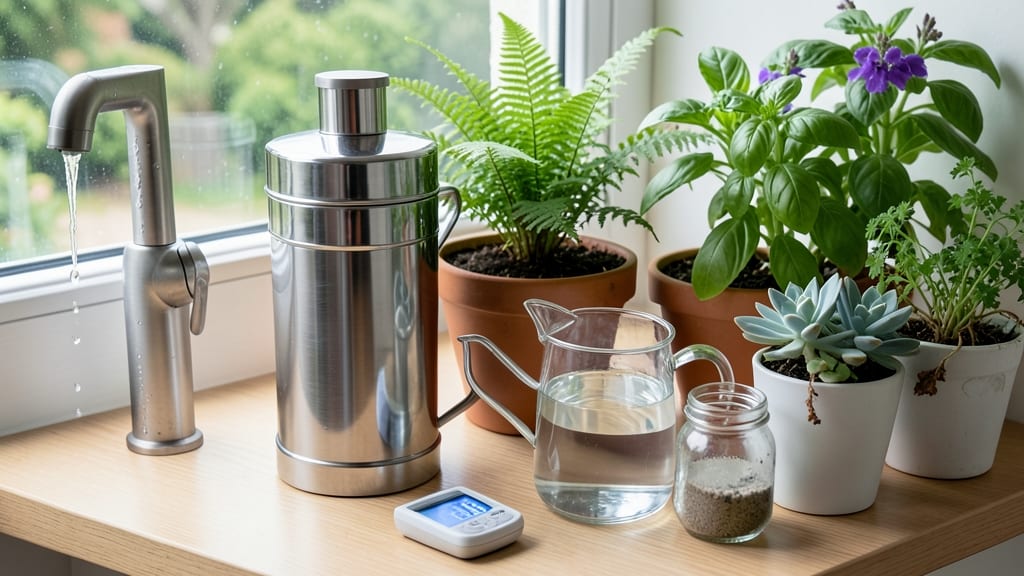
Using RO water for plants can harm growth due to its lack of essential minerals like calcium, magnesium, and potassium, though it raises soil pH over time by leaching nutrients. Always remineralize or mix with tap water for balanced plant health.
Reverse osmosis (RO) water strips out minerals that plants need to thrive, like calcium and magnesium, which act as building blocks for cell walls and nutrient transport. 🌱 Without these, plants show signs of weakness—yellowing leaves, stunted growth, or even blossom-end rot in tomatoes. The good news?
Adding a pinch of Epsom salt (magnesium sulfate) or a diluted liquid fertilizer can restore balance. I’ve seen dramatic improvements in my basil and peppers after switching to a 50/50 mix of RO and tap water—just be sure to test your soil first!
What’s more, RO water’s low mineral content makes it slightly acidic, which can raise soil pH over time. This shift affects nutrient availability—plants may struggle to absorb iron or manganese, even if you’re fertilizing regularly.
For container gardens or hydroponics, this is less critical, but for vegetables and flowering plants, it’s worth monitoring. A simple pH test kit (under $10) can save you from costly mistakes down the line.
💡 In This Article
- How RO Water Alters Soil Chemistry and Plant Nutrition
- Safe Ways to Use RO Water for Houseplants and Gardens
How RO water alters soil chemistry and plant nutrition
Reverse osmosis (RO) water undergoes a rigorous filtration process that removes 90-99% of dissolved minerals, including calcium, magnesium, and potassium—critical nutrients plants rely on for growth. These minerals aren't just trace elements; they're the building blocks for cell walls, enzyme function, and nutrient transport systems.
For example, calcium deficiency causes blossom-end rot in tomatoes, while magnesium shortages lead to yellowing between leaf veins (a classic sign of chlorosis). 🌱 Without these, plants can't photosynthesize efficiently or develop strong root structures.
The absence of these minerals also creates a domino effect in soil chemistry. RO water has a near-neutral pH (6.5-7.5), but as it leaches nutrients from the soil, it can raise pH levels over time by removing cations like calcium and magnesium that help buffer acidity.
This shift makes other nutrients—like iron and manganese—less available, even if they're present in the soil. For instance, tomatoes and peppers, which thrive in slightly acidic soil (pH 6.0-6.8), may develop iron deficiency (yellowing new leaves) if the soil becomes too alkaline from prolonged RO water use.
Micronutrients like zinc, copper, and boron are equally vulnerable. These elements are needed in tiny amounts but play outsized roles—zinc aids in growth hormones, copper helps with photosynthesis, and boron strengthens cell walls. RO water strips these away, leaving plants vulnerable to diseases and poor structural development.
In hydroponic systems, where plants rely entirely on waterborne nutrients, this becomes a critical issue. A study from the University of Florida found that plants grown with RO water alone showed 30% slower growth compared to those with remineralized water, even when fertilizers were added.
Here’s what’s happening at the cellular level: Plants absorb minerals through their roots via a process called active transport, which requires energy. Without essential minerals, this process becomes inefficient, and plants expend more energy trying to compensate.
Over time, this leads to stunted growth, weak stems, and reduced yields. For example, lettuce grown with RO water may develop hollow stems due to calcium deficiency, while basil might show crinkled leaves from magnesium shortages. 💫
One often-overlooked factor is the cation exchange capacity (CEC) of the soil. Minerals like calcium and magnesium help maintain the soil’s ability to hold onto nutrients. When RO water removes these, the soil’s CEC drops, causing even added fertilizers to wash away more easily.
This is why gardeners using RO water often see fertilizer running straight through the soil instead of being absorbed by plant roots—a classic sign of nutrient imbalance.
To mitigate these effects, many growers add remineralizers like Epsom salt (for magnesium) or liquid fertilizers with a full spectrum of micronutrients. Even a 1 teaspoon of Epsom salt per gallon of RO water can restore magnesium levels, while a balanced fertilizer (like 10-10-10) replenishes nitrogen, phosphorus, and potassium.
However, the key is moderation—overdoing it can lead to salt buildup in the soil, which is just as harmful as mineral deficiency.
The bottom line? RO water isn’t inherently "bad" for plants, but its lack of minerals creates a hidden nutritional gap that can stunt growth if ignored. For container gardens or hydroponics, this is easier to manage with regular testing and supplementation.
But for backyard gardens, mixing RO water with tap water (even a 50/50 split) can provide a balanced solution that retains some of the purity of RO while preventing mineral deficiencies. 🌿