
Transplanting
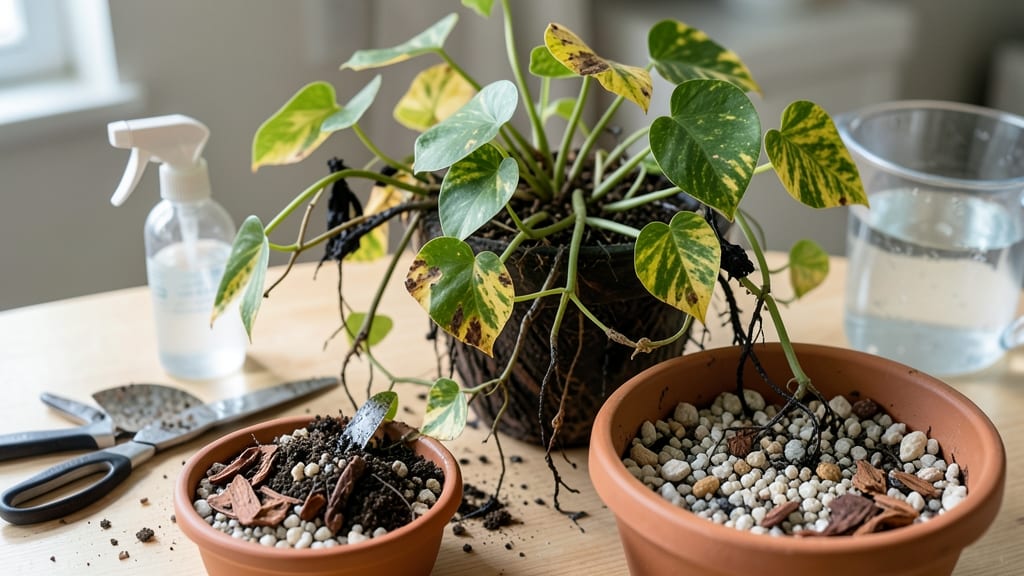
You should repot an overwatered plant when you notice root rot, foul-smelling soil, or persistent yellowing leaves—even after improving drainage. The process involves cleaning the roots, using fresh potting mix, and withholding water for 3-5 days to help recovery.
Overwatering creates a suffocating environment that drowns roots and invites fungal growth, making repotting essential for revival. 🌱 The key is acting fast—once roots turn black and mushy or the soil emits a sour odor, the plant is in distress.
I’ve seen many gardeners hesitate because they fear harming the plant further, but skipping repotting often means losing it entirely. Start by gently removing the plant, trimming away any dark, slimy roots with sterilized scissors, then replant in a container with drainage holes and a well-aerated mix.
After repotting, patience is critical. The first few days are about recovery, not immediate results. 💛 Avoid watering until the soil feels completely dry to the touch—this prevents repeating the same mistakes.
If your plant still looks weak after a week, consider adjusting its light exposure or humidity levels, as these factors often play a role in recovery.
💡 In This Article
- Signs Your Overwatered Plant Needs Repotting
- Step-by-Step Guide to Repotting an Overwatered Plant
Signs your overwatered plant needs repotting
Overwatering creates a toxic environment where roots suffocate from lack of oxygen, leading to anaerobic conditions that produce foul-smelling compounds like ethanol and hydrogen sulfide. 🌱 The first visual clue is black, mushy roots that crumble when touched—these are dead from fungal or bacterial rot.
Healthy roots should be firm with a white or light tan color, while rotten ones often emit a sour, almost rotting fruit aroma. Even if the topsoil looks dry, the lower layers may still be waterlogged, trapping harmful microbes.
Yellowing leaves that persist even after adjusting watering schedules are another red flag.
Unlike nutrient deficiencies (which often show as yellowing between veins), overwatering causes chlorosis—a uniform yellowing across the entire leaf—because roots can't absorb water or nutrients properly. 💛 Check the soil's texture: if it clumps together when squeezed or feels slick to the touch (like wet sand), it’s retaining too much moisture.
This is especially common in heavy clay pots or containers without drainage holes, where water pools at the bottom.
Wilting is a late-stage symptom, meaning the plant has already lost significant root function. Even when the soil feels dry at the surface, the root zone may still be waterlogged. 🌿 This is why many gardeners mistake overwatering for underwatering—they see drooping leaves and add more water, worsening the problem.
If you notice these signs, act quickly: the longer roots stay waterlogged, the harder it is for the plant to recover, even after repotting.
Don’t overlook subtle changes in growth patterns. Overwatered plants often produce fewer leaves or flowers, as their energy goes toward surviving rather than thriving. 🌸 Stunted growth combined with leaf drop is a clear signal that roots are struggling.
In severe cases, stems may develop a soft, spongy texture near the soil line—a sign of stem rot, which spreads from the roots upward.
If you press a finger into the stem and it leaves a deep indentation that doesn’t spring back, the plant is in critical condition and needs immediate repotting.
One often-missed indicator is mold or algae growing on the soil surface. These green or white fuzzies thrive in damp, low-light conditions—common in overwatered pots. 🍄 While they don’t directly harm the plant, they’re a sign the soil environment is unhealthy.
If you see these, it’s time to repot, as the soil’s microbial balance has shifted toward harmful pathogens. The good news? Fresh potting mix and proper drainage can reset this balance and give your plant a fighting chance.
Finally, consider your plant’s natural habitat. Many tropical plants (like ferns or calatheas) prefer consistently moist—but not soggy—soil, while succulents or cacti need dry periods between waterings. 🌵 If your plant is adapted to drier conditions but you’ve been watering on a strict schedule, it’s likely overwatered.
Matching the repotting process to the plant’s native growing conditions (like using a cactus mix for succulents) is key to long-term success.