
Watering
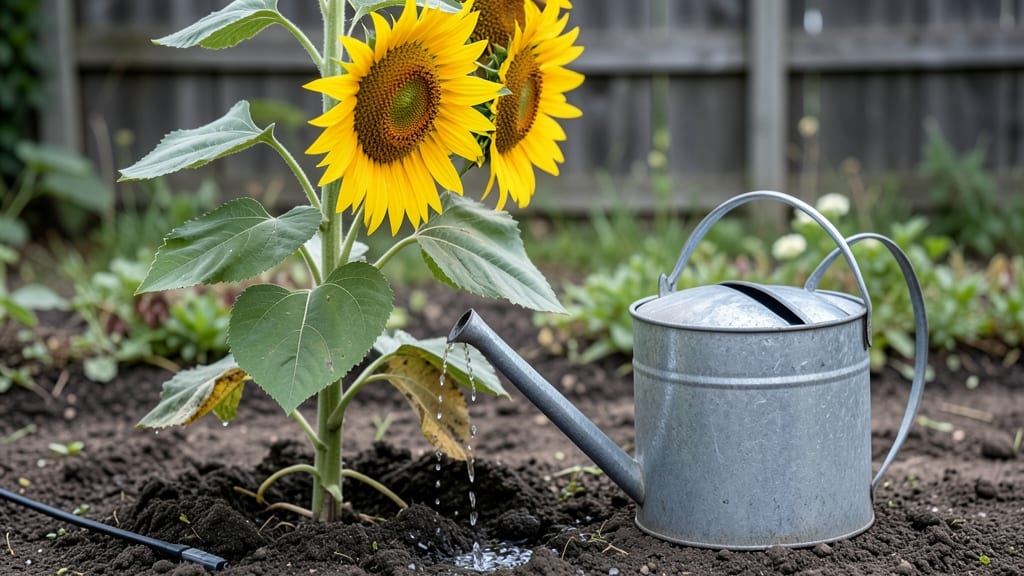
To keep your 🌻 sunflowers thriving, understanding their exact water needs is the difference between a 10-foot giant and a sad, stunted plant.
Sunflowers may seem low-maintenance, but watering them correctly is the secret to towering stems and vibrant blooms—get it wrong, and you’ll watch them wilt or bolt prematurely.
Most gardeners assume "water when the soil is dry," but sunflowers need deep, consistent moisture—especially during their rapid growth phase. Too little, and they’ll struggle to reach their full height; too much, and you risk root rot or early flowering.
Below, I’ll break down the exact schedule for each growth stage, plus the subtle signs that tell you when to adjust. No guesswork—just the right amount at the right time.
How much water do sunflowers need by growth stage?
Sunflowers thrive on consistency, but their water needs shift dramatically from seedling to seed development. Overwatering can drown tender roots, while underwatering triggers stress that stunts growth or causes premature bolting.
The key is matching your watering routine to each growth stage—here’s exactly how I adjust my schedule for sunflowers in USDA Zone 6a.
Newly sprouted sunflowers need gentle but frequent moisture to establish roots, while mature plants can handle longer dry spells once established. Even drought-tolerant varieties like 'Autumn Beauty' or 'Moulin Rouge' require strategic watering to reach their full height potential.
Let’s break down the three critical stages and the precise watering approach for each.
| Growth Stage | Water Frequency | Soil Moisture Target | Water Amount | Climate Adjustments |
|---|---|---|---|---|
| Seedling (0-3 weeks) | Every 2-3 days | Top 1-2 inches moist | ½ cup per plant | Increase to daily in heatwaves |
| Vegetative (3-8 weeks) | Every 3-5 days | Top 4-6 inches moist | 1-2 gallons per plant | Reduce to 2x/week in rain |
| Flowering (8-12 weeks) | Every 5-7 days | Top 6-8 inches moist | 2-3 gallons per plant | Increase during seed fill |
| Seed Development (12+ weeks) | Every 7-10 days | Top 8-10 inches moist | 3 gallons per plant | Reduce before harvest |
During the seedling stage (weeks 0-3), sunflowers need light but consistent moisture to prevent their delicate roots from drying out. I water my seedlings every 2-3 days, using just enough to keep the top 1-2 inches of soil moist.
This is when most gardeners lose plants—either by drowning them or letting them dry out. A spray bottle works well for young seedlings, but switch to a watering can with a narrow spout as they grow to avoid disturbing the soil.
Once sunflowers enter the vegetative stage (weeks 3-8), their water needs increase dramatically. This is when they’re putting all their energy into growing those towering stems. I aim for 1-2 gallons per plant every 3-5 days, ensuring the soil stays moist down to 4-6 inches deep.
The key here is deep watering—shallow watering encourages shallow roots, which weakens the plant. If you’re in a hot, dry climate, increase frequency to every 2-3 days.
When sunflowers reach the flowering stage (weeks 8-12), they’re at their most water-intensive. The blooms themselves don’t drink much, but the plant is directing energy toward seed development, which requires steady moisture.
At this point, I water every 5-7 days, delivering 2-3 gallons per plant to keep the soil moist down to 6-8 inches. This is also when mulching becomes critical—I use straw or wood chips to lock in moisture and prevent evaporation.
In the final seed development stage (week 12+), sunflowers need the most water of all—up to 3 gallons per plant every 7-10 days. The seeds are like little sponges, absorbing moisture to plump up.
However, I reduce watering slightly in the final 2 weeks before harvest to let the seed heads dry out properly. Overwatering here can lead to moldy seeds or cracked seed heads. If your area gets heavy rainfall, skip watering entirely during this phase.
Your local climate plays a huge role in adjusting this schedule. In humid climates, like the Southeast U.S., I reduce watering by 30-50% because the air already holds moisture.
In arid regions, like the Southwest, I water daily during heatwaves and use drip irrigation to avoid wetting the foliage. Always check soil moisture with your finger—if the top 2 inches are dry,
Signs of overwatering vs. underwatering sunflowers (with fixes)
Sunflowers send clear signals when their water needs aren't met—you just need to know what to look for. Yellowing leaves or wilted stems might seem like the same problem, but they often point to opposite issues.
Overwatering creates soggy soil and stunted growth, while underwatering leads to crispy edges and early bolting.
I’ve seen gardeners drown their sunflowers thinking they needed more water, only to watch their plants collapse from root rot. On the flip side, others skip watering during heatwaves and end up with plants that flower too early and produce weak stems.
The key is balancing moisture without letting the soil stay soggy or dry out completely.
🌱 PROS-CONS BOX: Sunflower Watering Do’s & Don’ts
If your sunflowers show yellow leaves with crispy edges and drooping stems, they’re likely underwatered. The soil will feel dry 1-2 inches below the surface, and the leaves may curl inward.
To fix this, water deeply until moisture reaches 6-8 inches down, then mulch to retain humidity. For container-grown sunflowers, check soil moisture daily during heatwaves.
On the other hand, overwatered sunflowers develop mushy stems, yellowing leaves that stay soft, and a foul smell from the soil. The roots may appear black or mushy if you dig them up.
To recover, stop watering for 2-3 days to dry the soil, then repot or transplant if root rot is severe. Adding perlite or sand improves drainage for future growth.
Watch for premature bolting—when sunflowers flower too early with weak stems—this often happens when plants are stressed from uneven watering. To prevent it, maintain consistent moisture during the vegetative stage (first 6-8 weeks) and avoid letting the soil dry out completely.
If bolting occurs, focus on supporting stems with stakes and ensure they receive full sun to compensate.
Pro tip: Use a moisture meter or the finger test (insert your finger 1-2 inches deep) to monitor soil conditions. Sunflowers thrive when the soil feels like a wrung-out sponge—not bone-dry or soggy.
With the right balance, you’ll grow sunflowers that reach their full height and bloom vibrantly all season.