
Blooming
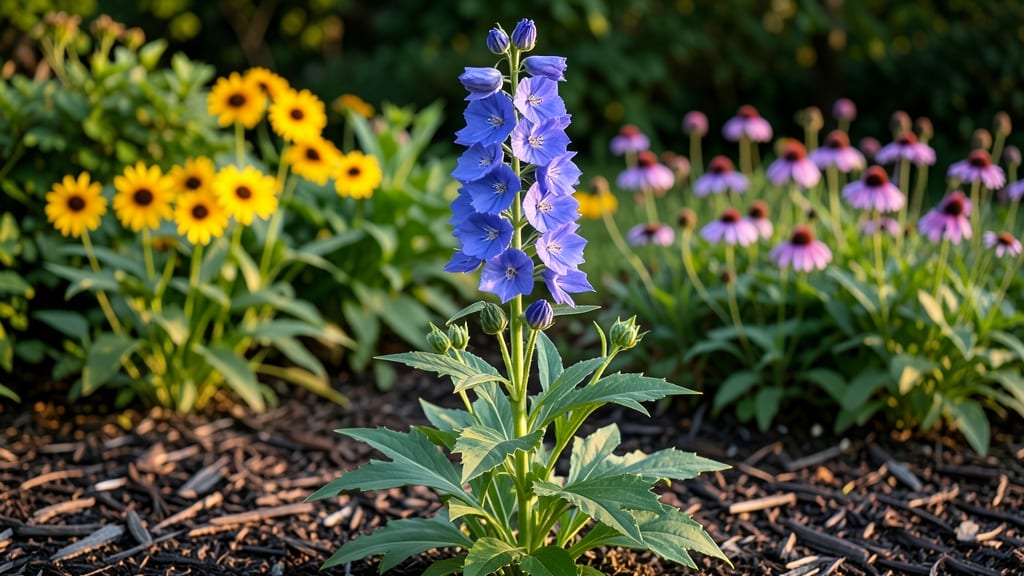
Tall long-blooming perennials transform your garden into a vertical masterpiece. 🌻 I’ve spent years testing varieties that stretch toward the sky while refusing to quit blooming—think hollyhocks that dance in summer breezes or delphiniums that tower over mixed borders for months.
These aren’t just pretty faces; they’re the backbone of a garden that stays dramatic from late spring through fall.
The secret lies in their placement: tuck them where they can stretch their legs—back borders, along fences, or as dramatic focal points—while pairing them with shorter perennials that spill around their bases.
My go-to combos include Shasta daisies (cheerful and reliable) with Russian sage (silvery-blue clouds) or black-eyed Susans (golden fireworks) to keep the show going. The key? Well-drained soil and full sun—most of these divas won’t bloom their best in shade or soggy spots.
What you’ll get is a garden that feels effortlessly lush, with blooms that last so long you’ll forget to deadhead. Imagine hollyhocks still standing tall in September, their papery petals catching the golden light, or delphiniums swaying like blue-green skyscrapers against a cottage backdrop.
The best part? They come back year after year, taller and more reliable than annuals. Here’s the twist: pruning and feeding at the right times (early spring and mid-summer) can extend their blooming season by weeks. And if you’re worried about flopping stems?
Stake them early—tall plants with weak stems are a design disaster waiting to happen. Let’s make your garden the talk of the neighborhood.
📚 In This Guide
- What you need
- Instructions
- Tips and common mistakes
- Wrapping up and next steps
What you need
- ● Tall perennials (6+ ft): 3–5 plants (e.g., Joe Pye Weed, Coneflower, Russian Sage, or Black-Eyed Susan)
- ● Well-draining soil: 50 lbs of compost or organic matter (mix 1 part compost to 2 parts native soil)
- ● Slow-release fertilizer: 10–20 lbs (10-10-10 NPK ratio) for planting season
- ● Mulch: 2–3 inches of shredded bark or straw to retain moisture
- ● Organic mulch: 1–2 bags of pine straw or wood chips (for weed suppression)
- ● Garden trowel or spade (for digging holes)
- ● Pruning shears (sharp, bypass-style for clean cuts)
- ● Garden hose or watering can (with a fine rose attachment)
- ● Gloves (heavy-duty for handling thorny plants)
- ○ Stakes or trellis (optional): 4–6 ft bamboo stakes or metal cages for support
- ○ pH test kit (optional): To check soil acidity (aim for 6.0–7.0 for most perennials)
- ● Full sun exposure (6+ hours daily) or partial shade (4–6 hours), depending on the plant
- ● Spacious planting area (at least 3 ft apart for mature growth)
- ● Access to water (drip irrigation or consistent hand-watering)
- ● Patience! Tall perennials may take 1–2 years to reach full height and bloom potential
How to design a stunning year-round perennial border with tall, long-blooming stars
Here's how to create a garden that stays dramatic from spring through frost—using the right plants and smart layering.
🌱 Step 1: Select the Right Foundation Plants
Start with 4-5 tall perennials that bloom sequentially for continuous color. My go-to choices include Joe Pye weed (4-6 feet, late summer bloom), Russian sage (5-6 feet, blue-purple spikes in midsummer), Coneflower (3-5 feet, summer through fall), and Hollyhock (4-6 feet, early to midsummer). These handle humidity well and attract pollinators.
For year-round structure, pair them with evergreen grasses like Miscanthus (6-8 feet) or Feather Reed Grass (5-6 feet). These add vertical movement and texture even when perennials are dormant. Space them 2-3 feet apart—taller plants at the back, mid-height in the middle, and shorter ones in front.
☀️ Step 2: Position for Sunlight and Seasonal Interest
Most tall perennials need full sun (6+ hours daily) for their best blooms. Place Russian sage and Hollyhocks where they get morning sun and afternoon shade—this prevents leaf scorch in hot climates. Joe Pye weed thrives in moist, sunny spots, while Coneflower adapts to dry conditions once established.
For winter interest, add ornamental grasses like Switchgrass or Big Bluestem—their seed heads stay upright through snow. Plant them where they won’t block spring bloomers like Lungwort or Bleeding Heart, which emerge early.
💧 Step 3: Amend Soil and Mulch for Longevity
Tall perennials need well-draining soil rich in organic matter. Work in 2-3 inches of compost and a balanced fertilizer (10-10-10) at planting. For clay-heavy soil, mix in sand or perlite to improve drainage—waterlogged roots lead to rot, especially in Joe Pye weed and Hollyhocks. Test soil pH; most prefer 6.0-7.0.
Mulch with 3-4 inches of shredded bark or straw to retain moisture and suppress weeds. Replenish mulch annually in spring—this keeps roots cool in summer and prevents soil-borne diseases. Avoid piling mulch against stems, which can trap moisture and invite rot.
✂️ Step 4: Prune Strategically for Next Year’s Blooms
Cut back dead foliage in late winter (just as new shoots appear) to encourage fresh growth. For Russian sage and Coneflower, trim spent blooms to the ground—these plants bloom on new growth. Hollyhocks need selective pruning: remove only the oldest stems after flowering to prevent rust disease.
Leave seed heads on grasses until spring for winter interest, then cut them down in early March before new growth starts. For Joe Pye weed, cut back 1/3 of the stems in late summer to promote a second flush of blooms—this keeps them flowering into October.
🌿 Step 5: Maintain Seasonal Care for Continuous Blooms
Fertilize lightly in early spring with a low-nitrogen formula (5-10-10) to encourage blooms over foliage. Water deeply once a week during dry spells—tall perennials have deep roots but still need 1-1.5 inches of water weekly. Drip irrigation at the base prevents fungal issues from overhead watering.
Watch for powdery mildew on Hollyhocks—space plants 3 feet apart and water in the morning for airflow. Divide clumps every 3-4 years in early spring to keep them vigorous. Russian sage and Coneflower are low-maintenance but benefit from annual deadheading to prolong blooms.
Tips & tricks for creating a stunning year-round perennial border
Here's what I've learned after designing borders that stay vibrant from spring to frost—without the guesswork.
Plant Height Layering: When arranging your 4-5 tall perennials, visualize the mature heights before planting. I like to use Miscanthus (6-8 feet) at the back as a dramatic backdrop, followed by Joe Pye weed (4-6 feet) and Russian sage (5-6 feet) in the middle, with Coneflower (3-5 feet) and Hollyhocks (4-6 feet) in front. This creates natural depth that keeps the border looking full throughout the seasons.
Soil Prep Secret: The 2-3 inches of compost and 10-10-10 fertilizer mentioned in Step 3 are non-negotiable, but here's the extra step: mix in 1 cup of bone meal (optional) when planting Hollyhocks—it gives them that extra boost of phosphorus for stronger stems and more abundant blooms. For Joe Pye weed, work in a handful of kelp meal to help with moisture retention in their native wetland conditions.
Seasonal Interest Strategy: To extend your border's appeal, add three seasonal accents that complement your main plants. For spring, include Bleeding Heart (which emerges early), for summer, add Black-Eyed Susan> (for extra pollinator action), and for fall, incorporate Sedum varieties with their vibrant foliage colors. These plants won't compete with your main stars but will fill in gaps beautifully.
Pruning Precision: When you're cutting back 1/3 of the stems on Joe Pye weed in late summer (Step 4), focus on the oldest, most leggy stems first. This encourages new growth that will bloom again in fall. For Russian sage, I've found that cutting back by 1/2 (not all the way to the ground) in early spring gives you a more controlled shape while still allowing for plenty of new growth.
Pro Tips for Tall Long Blooming Perennials
- Here's what I've learned after designing borders that stay vibrant from spring to frost—without the guesswork.
- Plant Height Layering: When arranging your 4-5 tall perennials, visualize the mature heights before planting.
- For Joe Pye weed, work in a handful of kelp meal to help with moisture retention in their native wetland conditions.
Frequently asked questions
Got questions about tall, long-blooming perennials?
You’re not alone! Here are answers to the most common ones to help you choose, plant, and maintain show-stopping vertical blooms all season long.
What are the best tall perennials for full sun exposure?
For hot, sunny spots, opt for Echinacea (Coneflower), Rudbeckia (Black-Eyed Susan), or Lavandula (Lavender). These thrive in full sun (6+ hours/day) and bloom prolifically. Pair them with Verbena bonariensis for airy height and late-season color. Just ensure well-draining soil to avoid root stress!
How do I extend the blooming season for tall perennials?
Deadhead spent blooms regularly to encourage reblooming, and fertilize lightly with a balanced, slow-release granular fertilizer in early spring. For perennials like Phlox or Shasta Daisy, cut back faded stems by half in mid-summer to stimulate a second flush. Mulch with organic matter to protect roots and retain moisture.
Which tall perennials tolerate wet soil or partial shade?
If your garden is shady or soggy, try Astilbe (feathery plumes), Hosta (for foliage + occasional blooms), or Cimicifuga (Bugbane). These handle moisture and dappled light beautifully. For container gardens, Heuchera (Coral Bells) adds height and texture while thriving in partial shade.
Why are my tall perennials flopping over or leaning?
Flopping often signals poor support or overcrowding. Stake tall varieties like Delphinium or Hollyhock early with hidden bamboo stakes or plant them near a fence or trellis. Thin out stems if growth is too dense, and avoid heavy morning watering (wet foliage encourages disease).
Can I grow tall perennials in containers?
Choose compact varieties like Dwarf Garden Phlox or Miniature Shasta Daisy for pots. Use a large container (12"+ diameter) with drainage holes, and mix potting soil with perlite for aeration. Water consistently—containers dry out faster—and fertilize monthly during the growing season. Just avoid top-heavy bloomers like Sunflower varieties!
Pro Tip:
For year-round interest, layer perennials with evergreen foliage (like Russian Sage) and winter-blooming varieties (e.g., Hellebore). This keeps your garden tall, lush, and colorful from spring to frost!
Wrapping up and next steps
Transforming your garden into a year-round spectacle of height and color is easier than you think! Tall, long-blooming perennials like Joe Pye Weed, Coneflower, and Russian Sage bring drama, texture, and seasonal interest with minimal fuss.
Whether you're a seasoned gardener or just starting, these plants offer low-maintenance beauty that thrives in diverse climates.
Ready to elevate your outdoor space? Start small—pick one or two perennials to test in your garden, then expand as you fall in love with their impact. Happy planting! 🌸🌿