
Diseases
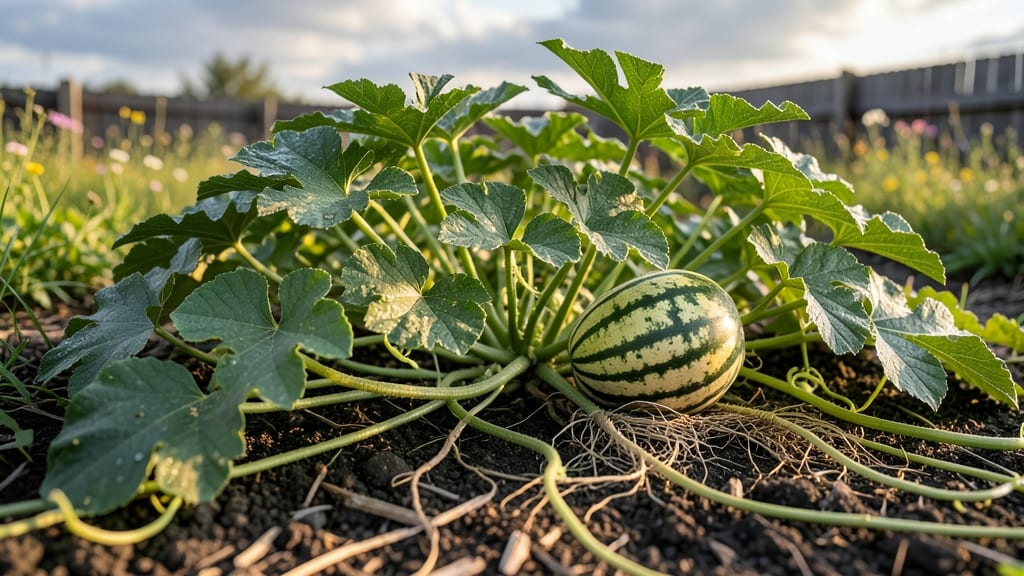
The watermelon root system determines whether your vines thrive or struggle, and understanding its structure is the game-changer between a bountiful harvest and a disappointing patch.
Did you know watermelon vines can spread up to 20 feet while their roots dig deep—or stay shallow—depending on soil conditions? That’s why knowing how to nurture those roots from the start makes all the difference.
This isn’t just about planting seeds and hoping for the best. A healthy watermelon root system needs the right balance of depth, spread, and soil conditions to support those sprawling vines and juicy fruit.
Get it wrong, and you’ll end up with stunted growth or weak plants that can’t handle the heat.
In this guide, I’ll break down the science behind watermelon roots—how deep they go, what they need to flourish, and the common mistakes that sabotage growth before the first fruit even appears.
How deep and wide does a watermelon root system grow?
Watermelons develop a fascinating bifurcated root system that combines a primary taproot with extensive lateral feeder roots. This dual structure allows them to access both deep moisture and shallow nutrients, but their exact growth patterns depend on soil conditions and variety.
For example, standard varieties like Sugar Baby can send roots 3-4 feet deep, while dwarf varieties like Bush Champion may stay shallower at just 1-2 feet. The horizontal spread can reach 10-20 feet for sprawling types, but compact varieties stay within 3-6 feet.
The primary taproot anchors the plant and grows downward, while secondary roots branch out horizontally to create a dense network. These lateral roots are crucial for nutrient absorption and water uptake, especially during fruit development.
In loose, well-draining soil, roots spread wider and deeper, but in compacted or clay-heavy soil, they may stay shallow and become more concentrated near the surface. This adaptation explains why watermelons thrive in sandy loam soils but struggle in heavy, waterlogged conditions.
| Root Type | Depth Range | Horizontal Spread | Soil Adaptation |
|---|---|---|---|
| Primary Taproot | 1-4 feet | N/A (vertical) | Deeper in loose soil |
| Lateral Feeder Roots | 0-1 foot (surface) | 3-20 feet | Wider in dry soil |
| Dwarf Varieties | 0.5-1.5 feet | 3-6 feet | Compacted soil |
| Standard Varieties | 2-4 feet | 10-20 feet | Loose, fertile soil |
Understanding these patterns helps with proper spacing—plant watermelons 6-12 feet apart for standard varieties to prevent root competition, but only 3-4 feet apart for dwarf types.
The root zone (where most feeder roots concentrate) typically stays within the top 6-12 inches of soil, which is why mulching (2-3 inches thick) helps retain moisture and regulate temperature for these shallow roots. Organic mulches like straw also prevent soil crusting, allowing lateral roots to spread freely.
Soil temperature plays a critical role in root development. Watermelon seeds germinate best in soil that’s 70-90°F, and roots grow most actively when soil temps stay above 65°F. In cooler climates, use black plastic mulch to warm the soil and encourage deeper root penetration.
Conversely, in hot, dry regions, shallow watering can cause roots to stay near the surface, increasing drought stress. Always water deeply (1-2 inches per week) to coax roots downward and improve drought resistance.
One common misconception is that watermelons need deep, rich soil to thrive. While they do prefer well-draining soil with a pH of 6.0-7.0, their roots are remarkably adaptable.
In sandy soils, roots spread wider to access scattered nutrients, while in clay soils, they grow more densely near the surface. Amending soil with compost or aged manure before planting ensures a balanced nutrient profile, supporting both deep and shallow root growth.
Avoid fresh manure, which can burn tender roots.
For container growing, choose pots at least 12 inches deep and 24 inches wide to accommodate the root system’s vertical and horizontal needs. Dwarf varieties like Sugar Baby can thrive in 5-gallon containers, but standard varieties need 15-gallon or larger pots to prevent root binding.
Always use well-draining potting mix with added perlite or vermiculite to mimic loose garden soil. Container-grown watermelons may produce slightly smaller fruits, but their root systems adapt by growing more densely within the limited space.
Monitoring root health is easier than you think. Healthy watermelon roots are white or pale yellow, while dark brown or black roots indicate rot from overwatering or fungal issues. If you notice yellowing leaves despite adequate water, it may signal root-bound conditions or nutrient deficiencies.
In such cases, side-dress with compost or apply a balanced fertilizer (10-10-10) to stimulate new root growth. Regularly check for root-knot nematodes, which thrive in warm, moist soil and can stunt root development.
Proper irrigation techniques directly impact root growth. Drip irrigation placed near the base of the plant delivers water directly to the root zone, encouraging deeper penetration. Avoid overhead watering, which can lead to soil compaction and fungal diseases like powdery mildew.
In the early stages, keep the soil consistently moist but not soggy—watermelon roots need oxygen to grow. Once the plant establishes a strong root system (after 4-6 weeks), you can gradually reduce frequency but increase water depth to 1-2 inches per session.
If you’re planting watermelons in raised beds, aim for
Deep vs shallow root systems: what determines your watermelon’s growth?
Watermelon roots can develop either deep taproots or shallow lateral networks, and the difference dramatically impacts your harvest. Deep roots access nutrients from lower soil layers, while shallow roots spread wide to absorb surface moisture.
The choice isn’t random—it’s shaped by your soil type, watering habits, and climate. Understanding these factors lets you optimize conditions for bigger, sweeter fruit.
Your watermelon’s root system adapts to its environment like a survival strategy. Sandy soils force roots to grow deep and sparse to chase moisture, while clay soils create shallow, dense networks near the surface.
Even temperature fluctuations play a role—roots grow deeper in consistent warmth but stay shallow when nights cool quickly. These adaptations explain why your neighbor’s watermelons thrive while yours struggle.
Deep Root Systems
- Pros: Accesses deep nutrients
- Pros: Better drought tolerance
- Pros: Supports larger vines
Shallow Root Systems
- Pros: Faster surface moisture uptake
- Pros: Better in compacted soils
- Pros: Easier to mulch effectively
Cons
- Cons: Vulnerable to deep soil compaction
- Cons: Needs consistent deep watering
- Cons: Harder to amend lower soil layers
Cons
- Cons: Dries out faster in heat
- Cons: Limited nutrient access
- Cons: More susceptible to surface pests
To encourage deep root growth, focus on loose, well-draining soil with organic matter mixed to 24 inches deep. Use a soil probe to check compaction—roots avoid dense layers. For shallow roots, prioritize surface mulch (straw or grass clippings) to retain moisture and prevent evaporation.
Both systems benefit from deep watering schedules, but deep-rooted plants need longer, less frequent soaks to encourage downward growth.
Temperature also plays a critical role. Watermelons prefer warm soil (70°F+) for root development, but cool nights can stunt growth. Use black plastic mulch to warm soil faster in spring, or plant in raised beds for better temperature control.
If your area has hot summers, shallow roots may dominate—so add drip irrigation to keep surface moisture consistent without overwatering.
One common mistake is assuming more water equals better roots. Overwatering creates waterlogged soil, which suffocates roots and promotes rot. Instead, aim for 1-2 inches of water per week, delivered deeply and infrequently.
For deep-rooted plants, let the top 6 inches dry between waterings to push roots downward. Shallow-rooted varieties need frequent light waterings to maintain surface moisture.
Monitor your watermelon’s root system by observing vine health and fruit development. Deep-rooted plants show sturdy vines and larger fruit, while shallow-rooted ones may have spread-out vines with smaller melons.
Adjust your approach based on what you see—sometimes, a mix of both root types develops, especially in mixed soil conditions. The key is balancing moisture, soil structure, and temperature to support whichever system your plants naturally favor.
Remember, your watermelon’s root system isn’t set in stone—it adapts throughout the season. Start with loose, fertile soil, maintain consistent moisture, and adjust as you learn.
With the right conditions, you’ll see healthier vines, bigger fruit, and fewer gardening headaches—all thanks to understanding what’s happening below the soil surface. 🌱💧☀️