
Planting
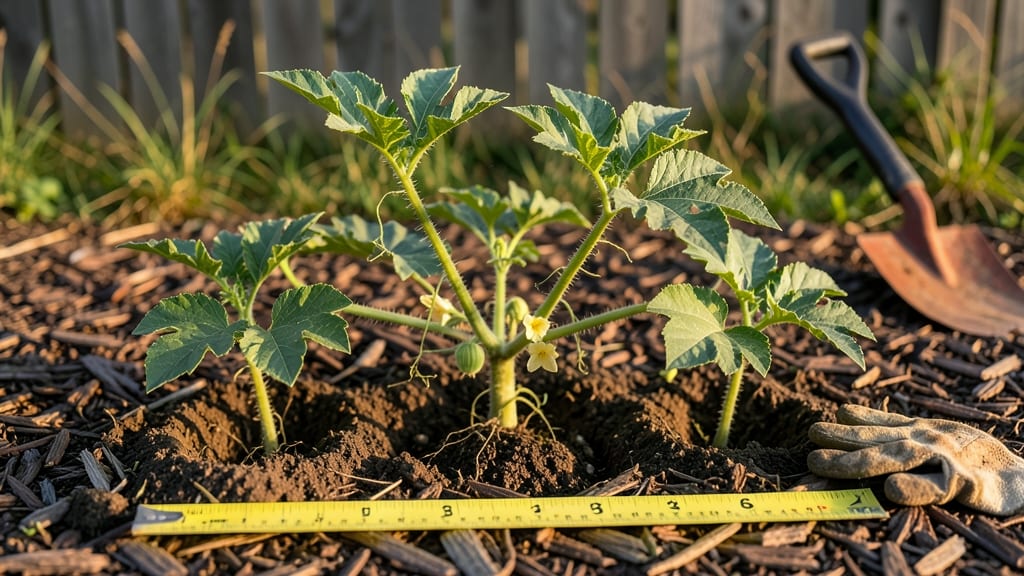
Spacing watermelons in feet determines whether your 🍉 plants thrive or fight for every inch of soil and sunlight.
Picture this: you’ve just planted your seeds, excited for a bumper crop, only to watch vines tangle into a chaotic mess by midsummer. That’s the cost of guessing on spacing—stunted growth, fewer fruits, and a garden that’s harder to maintain.
The right distance isn’t just about fitting plants in; it’s about giving them room to stretch, breathe, and produce sweeter, larger melons with less disease pressure.
Most gardeners overlook how variety, soil type, and even your local climate tweak the ideal spacing. A sprawling vine type needs 6 to 8 feet between plants, while compact bush varieties can squeeze into 3 feet. Get it wrong, and you’ll either waste space or watch your plants suffocate.
Below, I’ll break down the exact measurements for your garden layout—whether you’re working with rows, hills, or a tiny urban plot—and how to adjust mid-season if things get crowded.
Ready to turn your watermelon patch from a tangled nightmare into a high-yielding dream? Let’s dive into the spacing secrets that’ll have you harvesting plump, ripe melons all summer long.


Optimal watermelon spacing in feet by variety type
Getting your watermelon spacing right is the difference between a crowded mess and a thriving patch of juicy fruit. Different varieties need different room to spread—some sprawl like vines on a jungle floor, while others stay compact like neat little bushes.
I’ve grown everything from dwarf varieties in containers to massive vining types in my backyard, and spacing makes all the difference in yield and plant health.
Climate and soil type also play a role. In hot, dry climates, plants need more space to access water and sunlight, while rich, moist soils can support slightly tighter spacing.
Let’s break down the exact spacing in feet for each type so you can plan your garden like a pro.
🌱 Pro Tip: Always measure from the base of the plant to the next plant’s base—not the edge of the leaves. This ensures roots have room to expand without competing.
| Variety Type | Spacing (Feet) | Rows (Feet) | Notes |
|---|---|---|---|
| Bush Varieties (e.g., 'Sugar Baby', 'Black Diamond') | 3–4 ft apart | 4–5 ft between rows | Compact vines, ideal for small gardens or containers. |
| Standard Vining (e.g., 'Crimson Sweet', 'Charleston Gray') | 4–6 ft apart | 6–8 ft between rows | Classic sprawlers; trellis if space is tight. |
| Giant-Fruited (e.g., 'Moon and Stars', 'Jubilee') | 6–8 ft apart | 8–10 ft between rows | Need extra space for massive vines and large fruit. |
| Dwarf/Container (e.g., 'Tiny Tim', 'Minnesota Midget') | 2–3 ft apart | 3–4 ft between rows | Perfect for pots; prune to control size. |
| Hybrid/Modern (e.g., 'Sugarlee', 'Triple Crown') | 4–5 ft apart | 5–6 ft between rows | Balanced growth; adapt spacing to vine length. |
For bush varieties, like 'Sugar Baby,' I’ve found that 3–4 feet apart works perfectly in my raised beds. These compact plants stay tidy and produce fruit without sprawling everywhere.
If you’re growing them in containers, a single plant per 5-gallon pot with 2–3 feet of space around it keeps things manageable.
On the other hand, standard vining types like 'Crimson Sweet' need 4–6 feet of space to avoid tangled vines and poor airflow.
I once crammed them too close, and by midsummer, the plants were fighting for sunlight, leading to smaller, less flavorful fruit. Proper spacing ensures each plant gets 6–10 hours of sunlight daily, which is critical for sweetness and growth.
If you’re growing giant-fruited varieties, like 'Moon and Stars,' plan for 6–8 feet apart. These vines can stretch 20 feet or more, and the fruit itself can weigh 30+ pounds. Without enough space, the vines suffocate each other, and the fruit never reaches its full potential.
In my hot, dry climate, I also space them wider to help with water retention and reduce stress on the plants.
For small gardens or urban plots, consider trellising your vining varieties. This lets you grow them vertically, saving horizontal space while still giving roots room to breathe.
I’ve successfully grown 'Sugarlee' hybrids on a trellis with 4 feet of spacing between plants, and the yield was just as good as in-ground vines.
One mistake I see often is ignoring soil type when spacing. In clay-heavy soils, roots spread wider to find nutrients, so I increase spacing by 1–2 feet.
Conversely, in sandy soils, roots grow deeper, so standard spacing works fine. Always amend your soil with compost before planting to improve drainage and nutrient availability.
Finally, companion planting can help maximize space. I pair watermelons with bush beans or okra, which grow vertically and don’t compete for ground space. Just avoid planting near potatoes or squash
How to adjust spacing for different garden layouts
Watermelons need room to spread, but your garden layout determines how much space you can actually give them. Whether you're working with traditional rows, raised beds, or containers, proper spacing ensures strong vines, fewer diseases, and bigger fruits.
Let’s break down the best approaches for common garden setups so you can maximize your harvest without sacrificing space.
In traditional in-ground gardens, watermelons thrive when planted in rows or hills, but the spacing changes based on your variety. For vining types, like Sugar Baby or Crimson Sweet, you’ll want wider gaps to accommodate sprawling growth.
Meanwhile, bush varieties, such as Bush Champion, can handle tighter spaces. The key is balancing airflow and sunlight while avoiding overcrowding that leads to powdery mildew or poor fruit development.
📏 Watermelon Spacing by Layout (in Feet)
- 🌱 Rows (In-Ground): 4-6 ft between plants, 6-8 ft between rows (vining types). For bush varieties, reduce to 3-4 ft between plants.
- 🏞️ Hills (Mound Planting): 3 plants per hill, spaced 5-6 ft apart. Hills improve drainage and make harvesting easier.
- 🪴 Raised Beds: 2-3 ft between plants (bush types) or 4 ft between plants (vining types). Use dwarf varieties for tighter beds.
- 🏡 Containers/Pots: 1 plant per 5-gallon container, spaced 12-18 inches apart if using multiple pots. Choose compact varieties like Sugar Baby.
- 🏙️ Small Urban Gardens: Use vertical trellises for vining types, spacing 2 ft between plants along the trellis. Limit to 1-2 plants per 4x8 ft plot.
If you’re working with raised beds, think vertically and compactly. Bush varieties like Black Diamond or Crimson Sweet can thrive with just 2-3 feet between plants, while vining types need more room.
Line your raised beds with black plastic mulch to warm the soil faster and deter weeds, giving your watermelons a head start in the growing season.
For container gardening, prioritize dwarf or small-fruited varieties like Sugar Baby or Tiny Tim. A 5-gallon pot is the minimum, and you’ll need at least 12-18 inches of space between containers to prevent competition.
Place pots in a sunny spot and water deeply every 2-3 days, as containers dry out faster than in-ground soil.
In small urban gardens, get creative with vertical growing. Use trellises or cages to train vining watermelons upward, freeing up ground space for other crops. Space plants 2 feet apart along the trellis and prune side shoots to encourage upward growth.
Pair watermelons with companion plants like bush beans or marigolds to maximize your plot’s potential.
Remember, soil health and sunlight exposure matter just as much as spacing. Amend your soil with compost before planting, and ensure your garden gets at least 6-8 hours of full sun daily.
With the right layout and spacing, you’ll enjoy juicier melons, healthier vines, and a garden that feels organized and productive. Happy planting! 🌱