
Watering
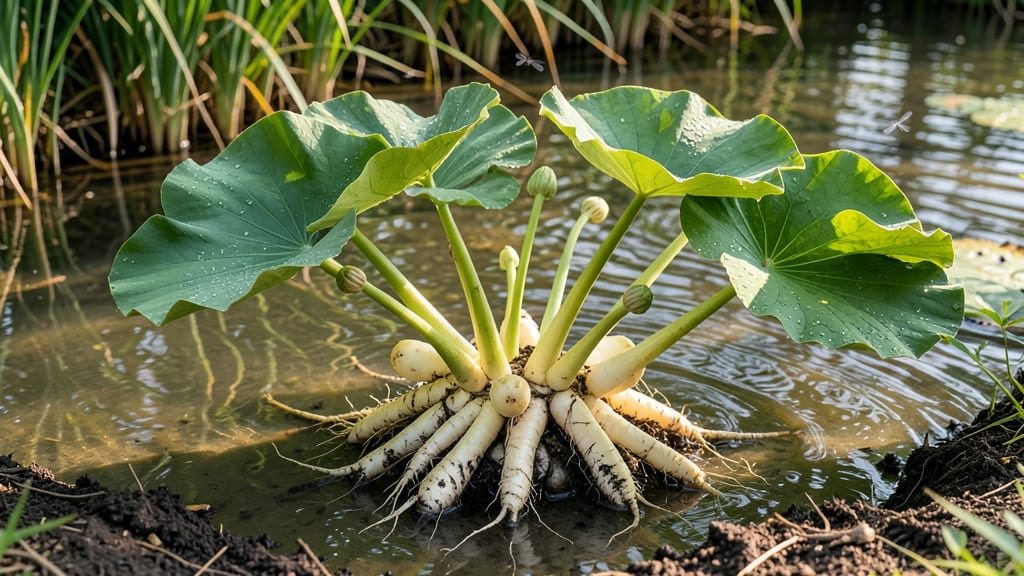
Water lily roots look like thick, knobby rhizomes with bulbous, irregular tubers and tiny air pockets along their surface—almost like underwater fingers with a rough, gnarled texture. These roots grow horizontally just below the waterline, anchoring the plant while storing energy.
These underwater structures are actually modified stems, not true roots, which is why they're called rhizomes. 🌿 The air pockets help them float just beneath the surface, while the knobby tubers act as nutrient reservoirs for the plant's growth.
When you see these distinctive shapes peeking through pond water or during harvest, you're looking at the plant's lifeline—both its storage system and its anchor.
In ponds, they often appear tangled and spread out, sometimes even breaking off into smaller segments that can regrow into new plants. This makes them both fascinating and a bit tricky to manage if you're trying to control their spread in your garden.
💡 In This Article
- Anatomy of Water Lily Rhizomes and Tubers
- How to Identify Water Lily Roots in Ponds or Gardens
Anatomy of water lily rhizomes and tubers
Water lily rhizomes are actually modified stems that function like roots, creating a fascinating hybrid structure. These underground (or more accurately, underwater) stems grow horizontally along the pond bottom, typically at depths of 3-12 inches, where they develop distinctive knobby growths every 2-4 inches.
Each knob is actually a tuber—a swollen section packed with starches that serve as the plant's energy reserve, similar to how potatoes store nutrients in their tubers. 🌊 The surface of these tubers often appears rough and textured due to tiny air pockets called lenticels, which help the rhizome exchange gases with the surrounding water.
The air pockets aren't just for show—they're crucial for the plant's survival. These lenticels allow oxygen to diffuse into the submerged rhizome while preventing water from entering, creating a natural buoyancy system.
This adaptation lets water lilies maintain their position just below the surface, where they can access sunlight for photosynthesis while keeping their roots anchored. You'll notice these air pockets are most prominent on younger growth, becoming less visible as the rhizome matures and thickens over time.
For comparison, lotus roots (which are true roots) have a smoother, more fibrous appearance without these distinctive air pockets.
What makes water lily rhizomes particularly interesting is their segmented growth pattern. Each segment contains a node where new roots and leaves can emerge, allowing the plant to propagate easily.
When you see these rhizomes in a pond, they often form sprawling networks that can extend 3-6 feet from the parent plant, with each segment capable of producing its own leaves and flowers.
This segmented structure also makes them highly resilient—even if a section breaks off, it can often regrow into a new plant, which is why water lilies spread so aggressively in ideal conditions.
The tuberous sections serve multiple purposes beyond storage. They act as ballast, helping the rhizome maintain its position in the pond's substrate, while also providing protection against predators.
The irregular shape and size of these tubers—ranging from 1/2 to 2 inches in diameter—create a unique visual pattern that distinguishes them from true roots or other aquatic plant structures.
When you examine them closely, you'll often find small scars where old leaves or roots have detached, giving them a weathered, gnarled appearance that's both functional and visually striking.
One fascinating adaptation is how these rhizomes change seasonally. In early spring, they appear more plump and white as they begin storing energy for new growth. By late summer, they develop a brownish tint and become firmer as they prepare for dormancy.
This seasonal transformation makes them particularly noticeable when you're monitoring your pond's ecosystem or planning maintenance tasks. The combination of these biological features—segmented growth, air pockets, and tuberous storage—makes water lily rhizomes one of nature's most efficient underwater survival systems. 🌱