
Picking
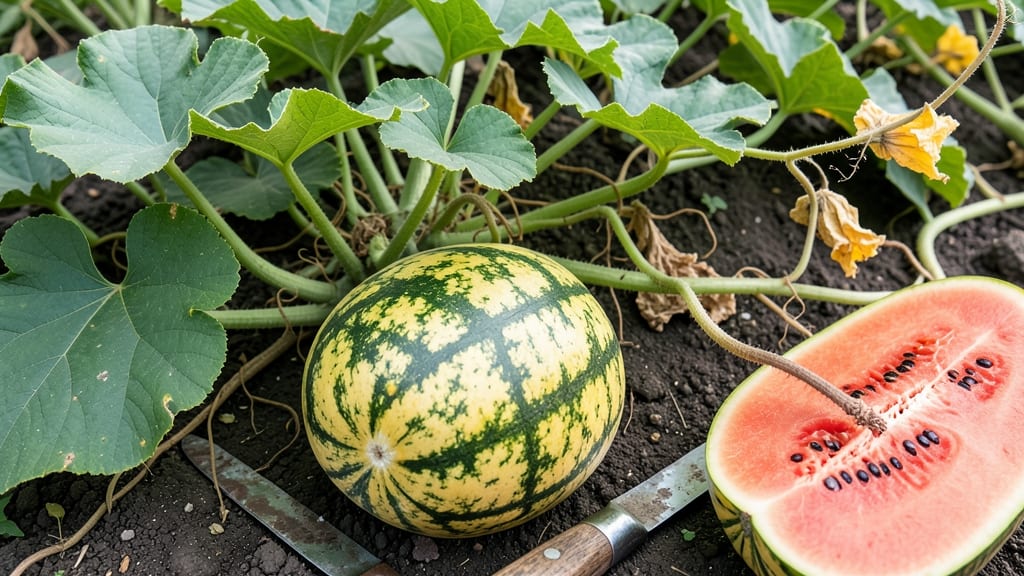
A watermelon is ready to pick when its field spot turns cream-colored, the rind resists pressure, and the vine begins to dry 🍉—but timing it wrong means the difference between a sweet, juicy reward and a bland disappointment.
Picture this: you’ve waited all summer for that first ripe watermelon, only to slice it open and find it’s still hard or watery.
It’s frustrating, but the good news is that with a few simple tricks—like the thump test, color shifts, and vine changes—you can nail the perfect harvest every time.
Most gardeners focus on size or the classic thump, but the real secrets lie in the field spot color and the condition of the stem. Combine these cues with the right weather conditions, and you’ll never second-guess when to pick again.
Below, I’ll walk you through the foolproof methods to determine ripeness, plus how to store your harvest for maximum flavor and shelf life—so you can enjoy that sweet victory all season long.

How to tell when a watermelon is ready to pick using the thump test and color guide
Nothing beats the excitement of harvesting your own watermelon—but timing is everything. A ripe watermelon delivers that perfect balance of sweetness and juiciness, while an unripe one can be bland and watery. The good news?
With a few simple tricks, you can tell when your watermelon is ready to pick. Let’s break down the most reliable methods, starting with the classic thump test and color guide that every gardener should know.
The field spot—the area where the watermelon touches the ground—is one of the first places to check. When ripe, this spot should turn from white or pale green to a cream or buttery yellow color.
This change signals that the melon has fully matured and absorbed enough sugars from the vine. Pair this with the rind texture, which should feel firm but slightly yielding when pressed with your thumb.
⚠️ CRITICAL: Don’t rely on size alone! Some watermelons reach their full size long before they’re ripe, while others may stay small but still be perfectly sweet. Always combine multiple indicators for accuracy.
| Indicator | Ripe Watermelon | Unripe Watermelon |
|---|---|---|
| Field Spot | Cream/yellow | White/green |
| Rind Texture | Slightly yielding | Firm/hard |
| Thump Test | Dull thud | Hollow sound |
| Stem End | Dried/browned | Green |
| Color Uniformity | Deep, consistent | Patchy/green streaks |
The thump test is a gardener’s secret weapon. Hold the watermelon with both hands and give it a firm thump near the field spot. A ripe watermelon will produce a dull, hollow sound, almost like knocking on a wooden door.
If it sounds more like a high-pitched ping, it’s likely underripe. Pro tip: Thump near the blossom end (the opposite side of the field spot) for the most accurate reading.
Next, examine the rind color. Ripe watermelons develop a deep, consistent hue—whether that’s classic dark green, striped yellow, or solid black. Avoid melons with green streaks or uneven patches, as these often indicate immaturity.
Pay special attention to the blossom end (the side where the flower was). If it’s brown and dried, that’s another green light for harvest.
Don’t forget to shake the melon gently before picking. A ripe watermelon will feel heavy for its size and produce a slight rattle when shaken. This rattle comes from the seeds and pulp inside, confirming that the melon has fully developed.
Skip the shake if you’re worried about bruising, but it’s a quick way to double-check your other indicators.
Here’s a pro move: Combine all three methods for foolproof results. If the field spot is cream-colored, the thump test sounds dull, and the rind feels slightly yielding, it’s time to harvest.
Even if the vine isn’t fully dried yet, these cues often mean the melon is ready to pick and ripen off the vine if needed.
One common mistake? Overestimating the thump test. Some gardeners swear by it, but environmental factors like heat or soil moisture can affect the sound. Always cross-reference with the field spot and rind texture for the most reliable results.
And remember: Patience pays off—a watermelon left on the vine too long can become overripe and mushy, so act when you see these signs.
Once you’ve confirmed ripeness, use a sharp knife or pruning shears to cut the melon from the vine, leaving a 1-inch stem attached. This helps prevent rot and extends shelf life.
Store your freshly picked watermelon in a cool, dry place (like a garage or basement) for up to two weeks, or enjoy it immediately for the freshest flavor.
Now that you’re armed with these tricks, you’ll never second-guess your watermelon harvest again. Grab your gardening gloves, head to the patch, and let these ripeness indicators guide you to that perfect, juicy reward! 🍉
Watermelon vine drying and stem changes: the hidden signs of ripeness most gardeners miss
When I first started growing watermelons, I relied solely on the thump test and field spot color—but I kept missing the mark. The real magic happens with the vine drying and stem changes that most gardeners overlook.
These subtle clues tell you exactly when your watermelon is ready to pick, even if the rind still looks greenish. Paying attention to these details can mean the difference between a sweet, juicy melon and one that’s underripe or overripe. 🍉
Here’s the secret: A watermelon’s vine begins to dry out and yellow as it matures, signaling that the fruit is nearing peak ripeness. This process happens naturally as the plant redirects its energy toward the fruit.
Meanwhile, the stem connecting the melon to the vine starts to darken and shrivel. If you see these changes, your watermelon is likely ready—even if it’s not yet the size you expected. 🌿
⚠️ callout warning ⚠️
If the vine turns completely brown and dries up, the watermelon may overripen and lose sweetness. Harvest within 1-2 days of these signs appearing for the best flavor. Also, avoid picking if the stem is still green or moist—this means the melon isn’t ready yet.
To confirm ripeness, combine vine and stem observations with other methods. For example, press your thumbnail into the rind: If it leaves a slight dent that doesn’t spring back, the melon is ripe.
Also, check the field spot (the area where the melon rests on the ground)—it should turn from white to cream-colored. These visual cues, paired with vine drying, create a foolproof system. ✂️
I’ve learned that heat waves can speed up vine drying, so monitor your plants closely during hot spells. If the vine dries too quickly, your melon might not reach full sweetness.
In cooler weather, the process slows down, so give it extra time. Always harvest in the morning when temperatures are mildest to preserve quality. ☀️
One common mistake I made was ignoring the stem’s texture. A ripe watermelon’s stem should feel dry and papery, almost like it’s ready to snap off easily. If it’s still firm or green**, the melon needs more time.
Pro tip: Gently twist the stem—if it separates cleanly from the vine, your watermelon is perfect for picking. 🤏
For container gardeners, vine drying is even more critical since space is limited. Watch for yellowing leaves on the main vine and reduced new growth—these are clear signals. If you’re unsure, wait another 24 hours before harvesting.
Patience pays off with a sweeter, more flavorful watermelon. Remember, the earlier you pick, the more time it has to ripen off the vine if needed. 🌱