
How To
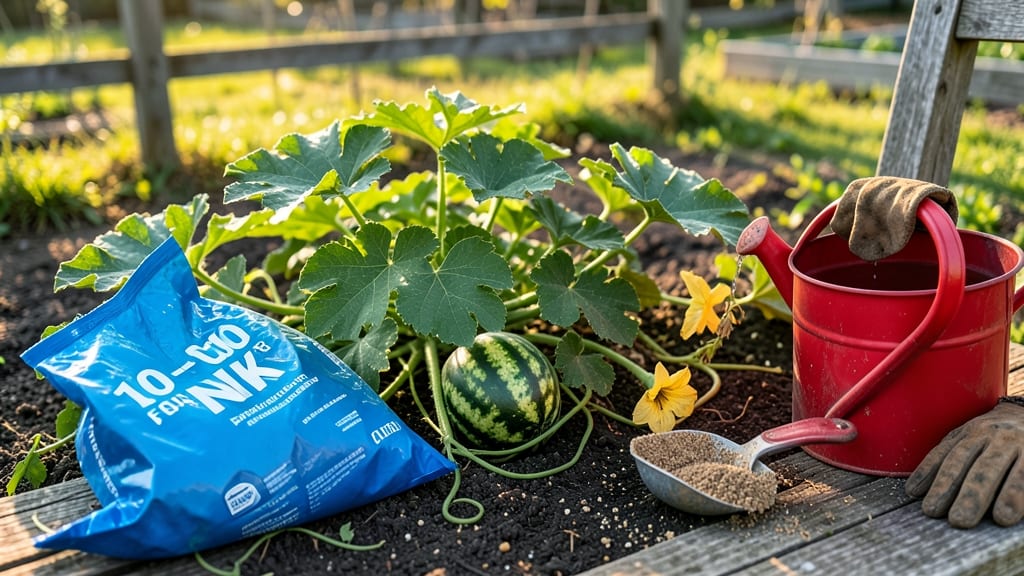
To fertilize watermelon plants at the right time means the difference between small, seedy melons and 20-pound giants that crack under their own weight.
Watermelon plants need precise fertilization timing to thrive—apply too early, and you’ll stunt growth; too late, and your fruit stays small. Mastering the schedule ensures juicy, vine-ripened melons that weigh 20+ pounds.
Start with a light feed when your 🍉 seedlings are just 2–3 inches tall, around late April or early May in most regions. This kickstarts strong vine growth without overwhelming the young roots.
Then, shift to a balanced fertilizer every 4–6 weeks as flowering begins, and switch to a potassium-rich mix once fruit sets. Here’s the exact schedule for each growth stage, plus how to spot over-fertilization before it’s too late.
Optimal fertilization schedule for watermelon growth stages
Watermelons thrive when you match fertilization with their growth phases. Too much nitrogen early stunts fruit development, while potassium shortages later reduce sweetness. The key is balancing nitrogen for leafy vines and potassium for fruit expansion.
My schedule aligns feeding with each stage—from seedling to harvest—using a 10-10-10 NPK ratio as the baseline.
Start with soil prep 2-3 weeks before planting. Work in compost or aged manure to build organic matter, but avoid fresh manure, which can burn tender roots. For container-grown watermelons, mix in slow-release granules at planting.
This foundational step ensures your plants have the energy to establish strong root systems before they need extra nutrients.
⚠️ CRITICAL: Never fertilize when soil is cold (<60°F/15°C). Watermelons won’t absorb nutrients efficiently until soil warms to at least 70°F (21°C). In cooler climates, wait until after your last frost date—typically late April or May—to begin any feeding.
During the seedling stage (2-3 inches tall), switch to a balanced 10-10-10 fertilizer. This encourages even growth without favoring leaves over roots. Apply it lightly—just ½ teaspoon per plant—when true leaves appear.
Overdoing it now leads to weak stems that snap under vine weight later. For organic gardeners, use fish emulsion diluted to half-strength for the same effect.
Once vines start running (4-6 weeks after planting), boost nitrogen slightly with a 12-12-12 mix. This supports rapid vine extension, which is critical for watermelon plants that spread 6-10 feet. Time your application when vines hit 12 inches long.
Side-dress with compost or sprinkle granules around the base, then water deeply to activate nutrients. Avoid leaf contact—fertilizer burns cause yellowing and stunt growth.
When flowers appear (6-8 weeks), shift to a 5-10-10 bloom booster. The reduced nitrogen prevents excessive foliage at the expense of fruit. Apply this fertilizer when you see the first male flowers (they have long stems) and female flowers (small fruit at the base).
For container plants, reduce amounts by half to prevent salt buildup in the soil. Pot-bound watermelons often suffer from over-fertilization, so monitor root growth closely.
At the fruiting stage (8-12 weeks),
Signs your watermelon plants need fertilizer (and when to stop)
Your watermelon plants send clear signals when they crave more nutrients. Pale, yellowing leaves or weak vines mean it's time to feed them—but overdoing it can backfire. I’ve learned the hard way that too much fertilizer delays fruit ripening and even causes blossom-end rot.
Let’s decode the visual cues so you fertilize at the perfect moment.
First, check the leaf color. Healthy watermelon leaves are deep green, but if they turn yellow (especially between veins), that’s a classic nitrogen deficiency. Darker green leaves with purple stems?
Your plants might need phosphorus for flowering. Meanwhile, crispy leaf edges or brown spots often signal over-fertilization—a common mistake I made last summer that shrank my melons to golf-ball size.
⚠️ WARNING: WHEN TO FERTILIZE WATERMELONS ⚠️ Do NOT fertilize when: ✅ Soil is frozen or waterlogged (roots can’t absorb nutrients) ✅ Plants are flowering or fruiting (unless using a low-nitrogen blend) ✅ Leaves show brown tips (sign of salt burn from excess fertilizer) ⚠️ Best time to fertilize: ✅ Pre-planting (mix compost into soil) ✅ When vines are 12-18 inches long (switch to balanced NPK 10-10-10) ✅ Every 4-6 weeks during active growth (May-July) 🌱 Pro Tip: Always water deeply before and after applying fertilizer to prevent root burn.
Next, examine the vine strength. Weak, sparse vines that barely creep along the ground? Your plants are starving for nutrients. On the flip side, if vines grow too fast but produce small, underdeveloped fruit, you’ve likely overfed.
I once saw a watermelon vine explode with growth but only yield tennis-ball-sized melons—a classic sign of nitrogen overload.
Don’t ignore the fruit development either. If your watermelons stay under 3 pounds or develop hollow centers, your plants need potassium-rich fertilizer (like 5-10-10) during the fruiting stage.
But here’s the catch: stop fertilizing 4-6 weeks before harvest. I learned this the hard way when my late-season feeding led to melons that never ripened properly.
Finally, watch for root health. Dig gently near the base—if roots are white and fibrous, you’re golden. But if they’re black or mushy, you’ve likely over-fertilized. In my garden, this happened when I used too much synthetic fertilizer in hot weather.
The solution? Switch to organic matter like composted manure and cut back on synthetic feeds.
Remember, watermelons are heavy feeders but hate excess salt. Always follow the package rates—less is more when it comes to these thirsty vines. With these signs in mind, you’ll grow melons that weigh in at 20+ pounds instead of struggling with stunted growth. Happy growing! 🍉