
How To
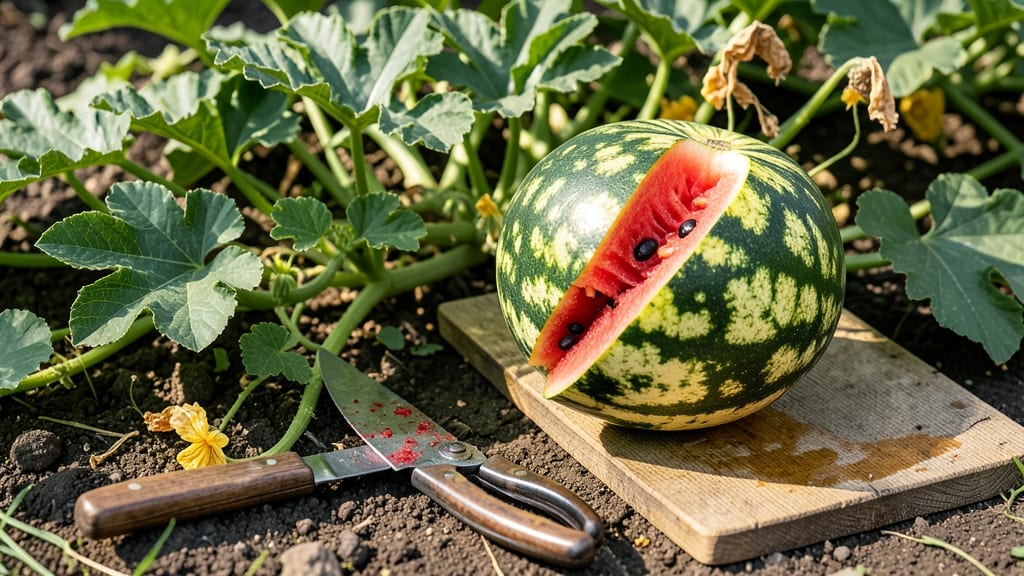
5 Visual and physical signs Crimson Sweet watermelons are ready to pick
Crimson Sweet watermelons are famous for their deep red flesh and sweet flavor, but timing your harvest perfectly is key. Unlike some varieties, Crimson Sweet doesn’t ripen as quickly, so relying on days-to-maturity alone can backfire.
Instead, focus on these five unmistakable signs that your watermelon is ready—no guesswork needed!
The first clue is the rind color. Crimson Sweet watermelons should develop a deep, creamy yellow patch on the underside where they rested on the soil. This patch should be bright and consistent, not pale or patchy. If it’s still white or green, your melon needs more time.
- 🍉 1. Rind Color: Deep creamy yellow patch on the underside (not pale or green)
- 🌿 2. Field Spot: Yellow or tan spot where the melon touched the ground (should be 1-2 inches wide)
- 🔊 3. Thump Test: Hollow, deep sound when tapped (like a drum)—not dull or flat
- 🪴 4. Stem Drying: Stem near the melon turns brown and dry (snaps easily when pulled)
- 🌱 5. Vine Condition: Main vine near the fruit yellows and dies back (signals energy is redirected to the melon)
The field spot is another critical indicator. This is the area where the watermelon made contact with the soil, and it should turn a tan or yellow color. For Crimson Sweet, this spot should be about 1-2 inches wide.
If it’s smaller or still green, the melon isn’t ready yet. Pro tip: Avoid harvesting if the spot is uneven or discolored, as this can signal stress or disease.
Next, perform the thump test—a classic but often misunderstood method. Gently tap the watermelon with your knuckles. A ripe Crimson Sweet will produce a deep, hollow sound, almost like a drum.
If it sounds dull or flat, it’s not ready. Overripe melons can also sound hollow, so combine this test with the other signs to avoid mistakes.
Pay close attention to the stem near the melon. When Crimson Sweet watermelons are ripe, this stem will turn brown and dry, almost like a straw. If you gently twist it, it should snap easily.
A green or flexible stem means the melon needs more time. This is one of the most reliable signs, especially in hot climates where melons can overripen quickly.
The final clue is the condition of the vine. As the watermelon nears ripeness, the main vine closest to the fruit will yellow and die back. This happens because the plant redirects its energy to the melon.
If the vine is still green and healthy, the melon isn’t ready. However, if the vine has turned brown and shriveled before the melon shows other signs, it might be overripe.
Distinguishing between perfectly ripe and overripe Crimson Sweet watermelons is easier than you think. An overripe melon may have a soft spot when pressed, a shriveled rind, or a stem that’s completely detached.
Its flesh might also be less sweet and more watery. Always prioritize melons that meet at least 3-4 of the 5 signs for the best flavor and texture.
If you’re growing Crimson Sweet in a hot, dry climate, keep an eye on the growth days. These melons typically take 75-90 days to mature, but heat can speed up the process.
In cooler regions, they may take longer. Use a harvest journal to track the signs and adjust your expectations based on your local climate.
Once you’ve confirmed all the signs, it’s time to harvest with care. Use a sharp knife or pruners to cut the stem about 1 inch above the melon. Avoid dragging the melon across the soil to prevent damage.
Store your freshly picked Crimson Sweet in a cool, dry place (around 50-55°F) to preserve its sweetness for up to 2 weeks.
Mastering these five visual and physical signs will ensure you never miss the perfect moment to pick your Crimson Sweet watermelons again. The next time you’re in your garden, take a closer look—your taste buds will thank you!
How to test Crimson Sweet watermelon ripeness: the ultimate guide (beyond the basics)
Beyond just waiting for the days-to-maturity estimate, Crimson Sweet watermelons demand precision. These melons ripen unevenly, especially in hot climates or cooler regions, so relying on size or weight alone is risky. Instead, combine visual cues, physical tests, and environmental factors to nail the perfect harvest window.
Start by checking the field spot—the cream-colored patch where the melon rested on the ground. For Crimson Sweet, this spot should turn deep yellow or buttery cream. A pale or greenish spot means it’s not ready, while an overly dark or sunken spot signals overripeness.
Pair this with the stem color, which should dry to a tan or brown hue near the vine.
⚠️ WARNING: Picking Crimson Sweet Too Early or Too Late Crimson Sweet watermelons have a slower sugar development compared to other varieties.
Picking too early results in watery, bland flesh, while waiting too long leads to grainy texture and reduced sweetness. Never harvest based on size alone—a 20-pound melon can still be underripe, while a 12-pounder might be perfect.
Combine these 3 critical tests for accuracy:
- Thump Test: Tap the melon with your knuckles—listen for a deep, hollow sound (ripe) vs. a dull thud (underripe).
- Stem Check: Twist the stem gently; it should snap cleanly (ripe) or pull away with resistance (unripe).
- Color Uniformity: The rind should be deep, consistent red (no green streaks) with a slight sheen when dry.
For the thump test, precision matters. A ripe Crimson Sweet produces a musical, echoing "thump"—almost like knocking on a hollow log. Tap near the stem end (not the blossom end) for the most accurate result.
If the sound is high-pitched or metallic, the melon is overripe. In humid climates, this test works best in the morning when the rind is firmer.
Don’t overlook the vine condition. Healthy Crimson Sweet vines produce brown, crisp tendrils near the fruit when ripe. If the tendril is still green or soft, wait 3–5 days.
Additionally, check the underside of the melon—ripe Crimson Sweets develop a yellow or beige patch where they touched the ground, while unripe ones remain white or greenish.
Climate plays a huge role in ripening. In hot, dry regions, Crimson Sweets may ripen faster, so monitor daily. In cooler or cloudy areas, they take longer—sometimes up to 90 days—so extend your testing window.
If your melons aren’t ripening by the expected date, check for nutrient deficiencies (yellowing leaves) or pests (chewed vines), which can delay ripening.
Pro tip: If you’re unsure, harvest 2–3 melons at once and test them. Crimson Sweets continue to ripen slightly after picking, so even a near-perfect one can improve in flavor for 1–2 days.
Store them in a cool, dry place (50–55°F) to slow further ripening while waiting for the rest to reach peak sweetness. 🍉