
Picking
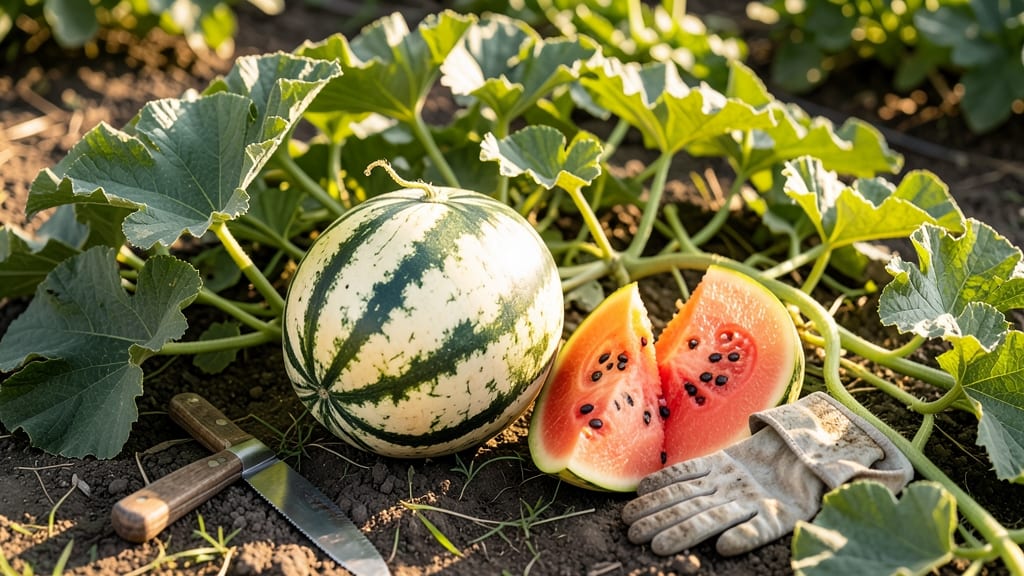
The 3-Step thump-and-Tap test for Sugar Baby watermelon ripeness
Sugar Baby watermelons are smaller and sweeter than standard varieties, but their thinner rinds make traditional ripeness tests trickier. The classic thump-and-tap method still works—you just need to know what to listen for in these delicate melons.
I’ve tested this method for years, and these subtle cues make all the difference between a juicy harvest and a watery disappointment.
Unlike larger watermelons, Sugar Babies don’t have the same deep hollow sound when tapped. Instead, you’ll hear a softer rattle—almost like shaking a maraca. Their smaller size means you’ll need to adjust your grip and listening skills.
Let’s break down the three-step test tailored specifically for Sugar Baby watermelons, so you never guess again.
Pro Tip: Always test in the morning when temperatures are cooler. Heat can make the fruit sweat and throw off your results. Grab your gloves and let’s get started!
Step-by-Step Sugar Baby Watermelon Ripeness Test
-
Step 1: The Thump Test (Gentle Pressure)
Use your fingertips, not your palm, to press firmly on the field spot (the cream-colored spot on the bottom). A ripe Sugar Baby will give slightly but won’t dent deeply. Listen for a soft hollow rattle—like shaking a small bell. -
Step 2: The Tap Test (Knuckle Tap)
Tap the side of the melon with your knuckles (not your fist). A ripe Sugar Baby will produce a dull thud with a muted rattle. If it sounds flat or dead, it’s not ready. -
Step 3: The Ground-Spot Inspection
Check the field spot—it should be creamy yellow and slightly sunken. If it’s white or uneven, the melon needs more time. Press your thumb into it: if it doesn’t spring back, it’s ripe! -
Bonus Step: The Stem Check
Gently twist the stem near the melon. If it snaps cleanly (not tears), that’s your final green light to harvest!
For Sugar Baby watermelons, the thump test is the most reliable because their smaller size means the rattle sound is quieter. I’ve found that overripe Sugar Babies develop a soggy feel when pressed—so don’t wait too long!
If the field spot turns yellow-brown and the stem dries, it’s past its prime.
One common mistake I see is over-tapping the melon. Sugar Babies have thinner rinds, so hard taps can bruise them. Instead, use light finger pressure and listen closely. If you’re unsure, wait 24 hours and test again—they ripen quickly once they’re close!
Regional differences matter too. In hotter climates (like Zone 9+), Sugar Babies ripen faster—sometimes in just 60 days. In cooler areas (Zone 7 or below), they may take 75-80 days.
Always adjust your harvest timing based on your local last frost date and summer temperatures.
Remember, the thump-and-tap test is just one tool. Combine it with the field spot color and stem dryness for the most accurate results. Once you master these steps, you’ll be picking perfectly ripe Sugar Babies every time—no more bland or seedy surprises!
🌱🍉
How Sugar Baby watermelon color and size reveal ripeness (beyond the thump test)
Sugar Baby watermelons are prized for their small size and exceptional sweetness, but their unique traits also mean traditional ripeness tests need extra attention. Unlike larger varieties, these melons don't always "thump" loudly when ripe—so what should you watch instead?
The answer lies in their field spot color, stem condition, and size benchmarks that reveal ripeness before you even pick them up.
Start by examining the field spot—that creamy yellow patch on the melon's underside. For Sugar Baby watermelons, this spot should turn a vibrant golden yellow when ripe, not just pale yellow.
A dull or greenish spot means the melon needs more time, while a deep creamy hue signals peak sweetness. This visual cue works even better than the thump test for these smaller fruits.
| Ripeness Indicator | Sugar Baby Watermelon | What to Look For |
|---|---|---|
| Field Spot Color | Golden Yellow | Vibrant creamy yellow (not pale or green) |
| Stem Condition | Dried & Dull | Brown, papery texture (easily separates) |
| Size Benchmark | 4-6 lbs | Firm but not rock-hard (smaller than 3 lbs = underripe) |
| Rind Texture | Slightly Tough | Thin but not soft (press gently—no denting) |
| Tendril Color | Brown & Dry | Nearest tendril turns crispy brown (not green) |
Size matters more with Sugar Baby watermelons than with larger varieties. Aim for a 4-6 pound melon—anything under 3 pounds is likely underripe, while melons over 7 pounds may be past their prime. Their smaller size means they ripen faster, so don't wait too long!
Also, check the stem near the fruit: when it turns dull and separates easily from the vine, that's your final green light.
One common mistake is picking Sugar Baby watermelons based on vine color alone. While yellowing vines can signal maturity, don't rely on this cue exclusively—some vines stay green even when the fruit is perfect.
Instead, combine the field spot color, stem condition, and size benchmark for the most accurate results. This three-part check eliminates guesswork and ensures you harvest at peak sweetness.
Pro tip: If you're unsure, pick a melon and let it sit at room temperature for 3-5 days before cutting. Sugar Baby watermelons often continue ripening after harvest, so a slightly underripe melon can still deliver sweet results.
Just avoid leaving them in the heat for more than a week, as this can cause overripening and reduce quality.
Remember, Sugar Baby watermelons are early-season producers, so timing is critical. By mastering these visual cues, you'll avoid the frustration of underripe blandness or overripe mushy texture—and enjoy melons that burst with sweetness every time you bite in. Happy harvesting!