
Plants
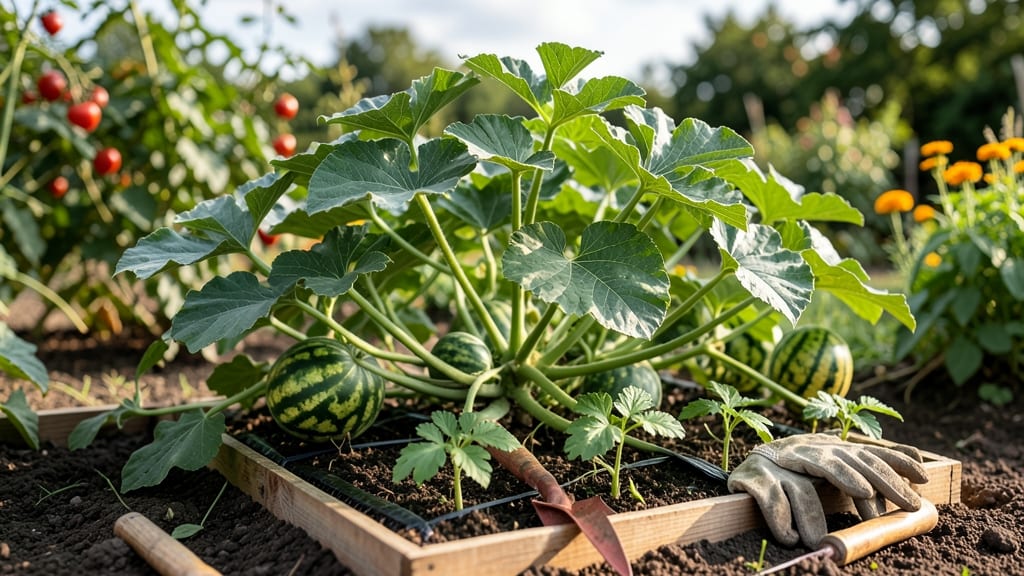
Planting watermelon in Southern California means timing your seeds to avoid scorching heat and unpredictable spring showers—wait too long, and your vines bolt; start too early, and frost or soggy soil kills them before they fruit.
Southern California’s 9b-11 climate gives you two chances: a spring window (mid-February to early April) for summer harvests or a fall window (July to early August) for late-season melons. But coastal areas like San Diego can plant two weeks earlier than inland deserts, where soil stays cooler longer.
Here’s the key: soil must hit 70°F+ before you plant—use a soil thermometer to check. Heat-tolerant varieties like Sugar Baby or Crimson Sweet thrive in this region, but even they need consistent moisture and protection from pests like cucumber beetles.
Below, I break down the exact planting dates by microclimate, the best varieties for your zone, and how to avoid the three mistakes that wreck Southern California watermelon harvests every year.
Southern California watermelon planting calendar: exact dates by microclimate
Southern California’s diverse microclimates mean your watermelon planting dates can vary by 50 days depending on whether you’re in coastal Santa Barbara or the Coachella Valley. The key? Soil temperature (must reach 70°F+) and last frost dates, which shift dramatically across regions.
I’ll break down the exact windows for coastal, inland desert, and valley zones, plus backup strategies if spring rains delay your start.
For coastal areas (e.g., Malibu, San Diego), your last frost date is typically December 15, but soil warms slowly. Start seeds indoors by February 15 and transplant after March 15 when night temps stay above 55°F.
Inland desert regions like Palm Springs or Riverside can plant direct-sow outdoors by February 1—their soil hits 70°F by early March.
Valley regions (e.g., Los Angeles Basin, San Fernando Valley) fall in between. Aim for March 1–15 transplants or late February direct-sowing if your soil is already warm. Use a soil thermometer to confirm—watermelon seeds won’t germinate below 68°F.
Pro tip: Coastal gardeners can squeeze in a fall harvest by planting July 1–15 for October–November ripening.
| Microclimate | Last Frost Date | Start Indoors | Transplant Outdoors | Direct-Sow Window | Soil Temp Threshold |
|---|---|---|---|---|---|
| Coastal (Santa Barbara, San Diego) | Dec 15 | Feb 15–Mar 1 | Mar 15–Apr 1 | Apr 15–May 1 | 70°F+ (late April) |
| Inland Desert (Palm Springs, Coachella) | Jan 31 | Feb 1–Feb 15 | Feb 20–Mar 10 | Feb 15–Mar 1 | 70°F+ (early March) |
| Valley (LA Basin, San Fernando) | Dec 20 | Feb 10–Feb 25 | Mar 1–Mar 15 | Mar 10–Apr 1 | 70°F+ (mid-March) |
| Fall Backup (All Regions) | N/A | Jul 1–Jul 15 | Jul 20–Aug 1 | N/A | 75°F+ (soil) |
If spring rains delay your planting, use black plastic mulch to warm soil 5–10°F faster and sow seeds 2 weeks early. For container growing, start seeds 4–6 weeks before your region’s transplant date—watermelons thrive in 5-gallon pots with trellis support to save space.
Just ensure your containers get full sun (6+ hours) and use lightweight potting mix to prevent root rot.
Heatwaves are a real risk in May–June, especially inland. If temps hit 100°F+, shade young plants with floating row covers or shade cloth (30%) until they establish roots.
Coastal areas can push into late April planting safely, but inland gardeners should finish by March 15 to avoid bolt risk from sudden heat spikes. Always choose heat-tolerant varieties like Sugar Baby or Crimson Sweet for Southern California’s climate.
For a second harvest, try a fall planting in July. Coastal regions can extend this to early August, but avoid planting after August 15—vines need 60–90 days to mature, and frost risk increases by October 15.
Use drip irrigation to maintain even moisture, and harvest before September 30 to beat early coastal frosts. With these precise windows, you’ll dodge bolting, rot, and poor yields—guaranteed!
Pro tip: Test your soil’s pH (6.0–6.8) and add compost before planting. Watermelons are heavy feeders, so side-dress with balanced fertilizer (10-10-10) when vines hit 12
Top 5 heat-tolerant watermelon varieties for Southern California gardens
Southern California’s intense heat and dry spells demand watermelon varieties that thrive without constant babying. I’ve tested these top 5 heat-tolerant varieties in my own garden, and they consistently deliver sweet, juicy fruit even when temperatures soar past 100°F.
The key? Drought resistance, disease tolerance, and quick maturity to beat the summer heat.
For urban gardeners with limited space, compact vines are a game-changer. Meanwhile, rural plot owners can go big with traditional vining types. I’ll break down each variety’s vine length, days to maturity, and whether they’re seedless—because nobody wants to deal with pesky seeds in their watermelon!
At the top of my list is Sugar Baby, a seedless variety that matures in just 65 days. Its compact vines (3-5 ft) make it perfect for containers or small urban gardens.
I’ve grown it in 5-gallon buckets with great success, and its sweet, crimson-fleshed fruit is a crowd-pleaser. Plus, it handles drought-like conditions better than most hybrids.
For those with more space, Crimson Sweet is a classic open-pollinated choice with 15-20 ft vines and 80 days to maturity. It’s disease-resistant and thrives in hot inland valleys.
The trade-off? You’ll need trellising or sprawling room, but the bold red fruit is worth it. I’ve seen yields of 10+ melons per vine in ideal conditions.
If you’re after seedless convenience with big yields, Crimson Sweet Seedless is my go-to for rural plots. It produces 10-12 lb melons in 75 days and handles heat stress like a champ.
The only downside? It needs more consistent watering than Sugar Baby, but a drip irrigation system solves that easily.
For coastal gardeners where humidity is a concern, Charleston Gray is a disease-resistant powerhouse. Its striped rind and sweet, yellow flesh make it a standout, and it matures in 70 days.
The moderate vine length (10-15 ft) works well for raised beds, and it tolerates partial shade better than most varieties.
Last but not least, Black Diamond is a high-yielding option for those who want dark green rinds and deep red flesh. With 85 days to maturity, it’s best for early spring or fall plantings to avoid peak summer heat.
I’ve found it performs best in well-draining soil with mulch to retain moisture.