
Watering
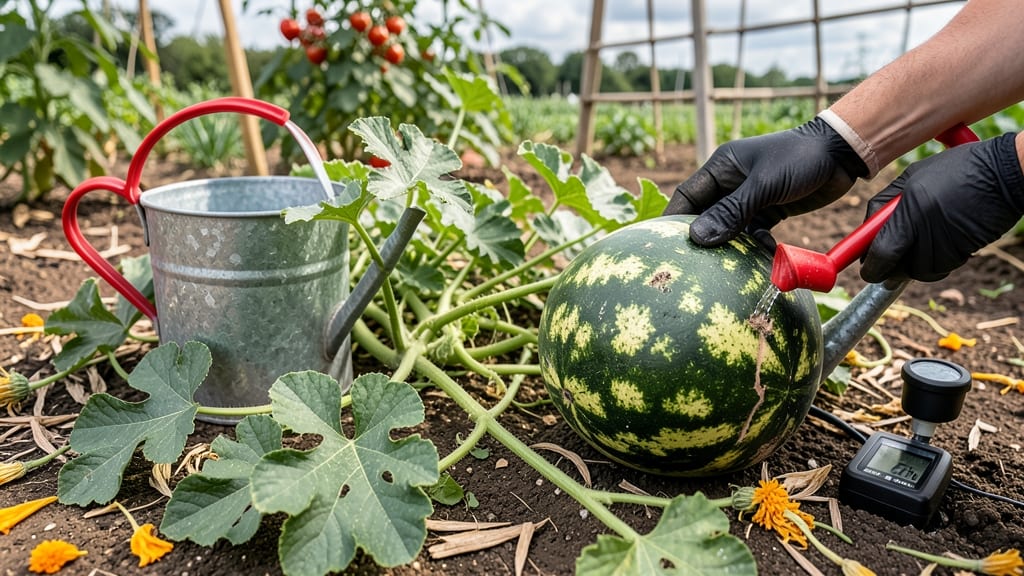
Stop watering watermelon 1-2 weeks before harvest to concentrate flavor and sweetness—this is the secret to juicy, vine-ripened fruit.
Overwatering your watermelon vines can turn your sweet harvest into a waterlogged disaster—here’s exactly when (and how) to stop watering for the perfect melon every time.
Most gardeners don’t realize that reducing water too late dilutes flavor, while stopping too early can stunt fruit development. The key is watching for three clear signs: a tough rind, yellowing vines, and creamy patches on the fruit’s underside.
Below, I’ll walk you through the exact timing, how to adjust your watering schedule, and what to watch for to avoid common mistakes that ruin your crop.
3 Clear signs your watermelon vines are ready to stop watering
Watermelons thrive on consistent moisture, but overwatering as they near maturity can dilute flavor and split fruit. Knowing when to taper your watering schedule is key to harvesting sweet, crisp melons.
The transition happens when your vines show these three maturity signals—each one a clear cue that your plants are ready for less frequent watering.
First, pay attention to the flower development stage. Watermelon vines produce both male and female flowers, and when you see female flowers (the ones with tiny watermelon shapes at their base) thicken and darken, it’s time to start reducing water.
This typically occurs 4-6 weeks after planting, but exact timing depends on your climate and variety.
Visual cues are your best friends here. The moment the fruit begins turning creamy yellow where it rests on the vine (the "ground spot"), your watermelons are signaling they need less water. This color change usually appears 2-3 weeks before harvest, marking the perfect window to adjust your watering routine.
Here’s what to watch for—these three clear signs will help you time your watering taper perfectly:
-
1. Female flowers wilt
When female flowers (with mini-fruit) droop or dry up after pollination, reduce water by 30% immediately. -
2. Vine growth slows
New vines stop extending beyond 6 inches weekly—tapering water helps redirect energy to fruit. -
3. Soil stays damp 3+ days
Use a soil probe: if moisture lingers 3+ inches deep after 72 hours, cut back watering.
Once you spot these signs, reduce watering frequency but keep sessions deep. Instead of daily shallow watering, aim for every 5-7 days with 1-2 inches of water per session.
This mimics natural rainfall patterns and prevents blossom-end rot, a common issue when watermelons get too much moisture late in the game.
Another tactile test is pressing your thumb into the fruit’s rind. When it feels firm and resists pressure (like a ripe avocado), that’s your final cue to stop watering entirely. At this point, your watermelon’s sugar concentration peaks, and excess water can only dilute that sweetness.
If you’re growing in containers or raised beds, these signs appear slightly earlier due to faster drying soil. Monitor the weight of your pots: when they feel noticeably lighter between waterings, it’s time to adjust. Container-grown watermelons also benefit from mulching to retain moisture while reducing evaporation.
Remember, the goal isn’t to completely dehydrate your plants, but to stress them just enough to focus energy on ripening. Think of it like training for a marathon—your watermelons need that final push to reach their peak.
Once you see these three signs, you’re just 2 weeks away from harvest, and every drop of water counts!
For extra insurance, harvest in the morning after a dry spell. The cooler temperatures help preserve sweetness, and the reduced soil moisture ensures your melons stay crisp. Now go enjoy that juicy payoff—your watermelons will thank you with explosive flavor! 🍉
How to adjust watering before and after pollination for bigger watermelons
Watermelon vines need precise watering to thrive, especially during their three critical growth stages: pre-flowering, flowering, and fruiting. Too much water at the wrong time can lead to cracked fruit or diluted flavor, while too little causes stunted growth.
The key is adjusting your watering schedule before and after pollination to maximize yield and sweetness.
During the pre-flowering stage (first 30-40 days), keep soil consistently moist but not soggy. Watermelons need about 1-2 inches of water per week, delivered through deep watering sessions.
This encourages strong root development and healthy foliage growth. Avoid shallow watering, which can stress the plant and lead to weak vines.
Once flowers appear (around 40-50 days), increase watering slightly to support pollination success. Water in the morning hours to prevent fungal diseases like powdery mildew. During this flowering stage, aim for 1.5-2 inches of water per week, ensuring the soil stays evenly moist but not waterlogged.
When to Stop Watering Watermelon Vines
- 🍉 1-2 weeks before harvest: Reduce watering to 50% of normal to concentrate sugars and firm up the rind.
- 🌱 When vines yellow and die back: This signals the plant is redirecting energy to fruit ripening—stop watering entirely.
- 🤏 When fruit rind hardens: Press a thumbnail against the rind; if it resists, it’s time to taper watering.
After pollination (when fruit begins to form), shift to a maintenance watering schedule. Watermelons need about 1 inch of water per week during the fruiting stage, but avoid overwatering as the fruit nears maturity.
Overwatering at this stage can cause fruit cracking and dilute sweetness. Instead, let the top inch of soil dry out slightly between waterings.
In the final 2 weeks before harvest, reduce watering significantly to 50% of normal. This helps the fruit develop a thicker rind and more concentrated flavor.
Stop watering entirely if the vines begin to yellow and die back naturally—a sign the plant is focusing energy on ripening the fruit.
Watch for visual cues like a creamy yellow patch on the fruit’s underside or a hollow sound when shaken. These indicate maturity and signal it’s time to halt watering completely. With the right adjustments, you’ll grow watermelons that are sweeter, larger, and crack-resistant.