
Orchid Care
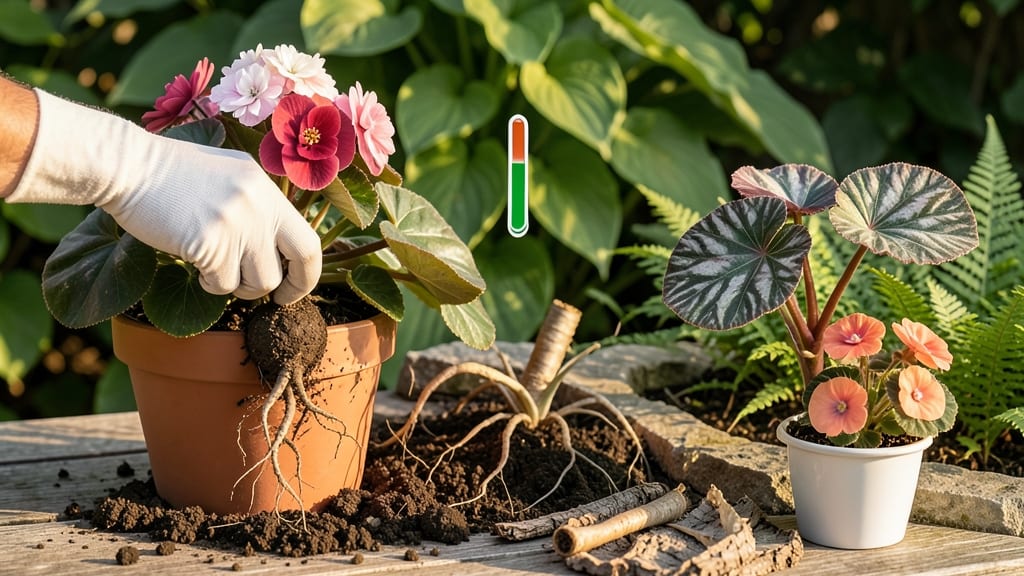
Whether begonias are annuals or perennials depends entirely on your climate zone—these plants thrive as perennials in frost-free regions like USDA Zones 10-12 but must be treated as annuals in colder areas (Zones 6-9) where freezing temperatures kill their delicate roots.
This isn't just about temperature tolerance—it's about survival strategy. 🌱 In warmer zones, begonias naturally regrow from their roots each spring, while in colder climates, gardeners must either dig up and overwinter tubers or accept they'll need replanting annually.
The key difference lies in tuberous vs fibrous root systems: tuberous types (like Begonia tuberhybrida) store energy underground and can survive dormancy, while fibrous-rooted varieties are far more vulnerable to winter die-off. Understanding your specific begonia type and zone makes all the difference in planning your garden's seasonal rhythm.
For those in transitional zones (like Zone 8-9), partial winter protection—such as mulching or container growing—can sometimes extend their lifespan beyond one season. The real game-changer? Knowing when to bring plants indoors before the first frost hits.
I've seen gardeners successfully overwinter begonias by cutting back foliage, storing tubers in dry peat moss, and providing consistent moisture—though even then, some varieties simply refuse to make it through without damage.
The bottom line: your zone dictates whether you're playing the long game with perennials or treating them as fleeting annuals.
💡 In This Article
- How Climate Zones Determine Begonia Lifespan
- Year-Round Begonia Care for Cold Climates
How climate zones determine Begonia lifespan
Begonias' survival hinges on their root systems and temperature thresholds. Tuberous begonias (like Begonia tuberhybrida) store energy in thickened underground tubers that can withstand 30-40°F for short periods, while fibrous-rooted varieties (such as Begonia rex) have no such protection and die back completely at 32°F.
This explains why tuberous types thrive as perennials in Zones 10-12, where winter temps rarely drop below 40°F, while fibrous varieties behave like annuals even in Zone 9 without intervention.
The critical threshold is 28°F—this is when begonia cells begin freezing, causing irreversible damage to their vascular systems. In Zone 8, where winters dip to 10-20°F, even tuberous begonias struggle unless protected.
What's fascinating is how begonias' native tropical origins (South America/Africa) have left them with no cold-hardiness adaptations—unlike hardy perennials such as hostas or daylilies, which evolved frost-resistant proteins in their cell membranes. 🌡️
Zone differences create dramatic variations in growth patterns. In Zone 11, begonias grow continuously year-round, while Zone 7 gardeners face a 6-8 month dormant period.
The key distinction lies in tuberous begonias' ability to enter dormancy: when nighttime temps drop below 55°F, they naturally reduce water intake and redirect energy to their tubers. Fibrous varieties, lacking this mechanism, simply wilt and die when temps fall.
Here's what happens at the cellular level: Cold stress triggers ice crystal formation in begonia tissues, rupturing cell walls and blocking nutrient transport. Tuberous begonias combat this with higher starch reserves (up to 30% dry weight in tubers), while fibrous types rely on above-ground foliage that freezes solid.
This biological difference explains why tuberous begonias can be coaxed back to life through overwintering, while fibrous varieties must be propagated from cuttings each spring.
Consider this comparison: A Begonia elatior tuber left in Zone 10 ground will regrow in 4-6 weeks after winter rains, while the same tuber in Zone 6 will shrivel to 50% original size without protection.
The zone you're in isn't just about whether begonias survive winter—it determines whether they'll return stronger or weaker each year, or not at all.
What most gardeners don't realize is how soil temperature plays a secondary role. Even in Zone 9, soil temps below 50°F can stunt tuber growth, while mulching with 4-6 inches of organic matter can raise soil temps by 5-10°F.
This explains why container-grown begonias often survive colder zones—their roots warm faster in pots than in ground soil. 🌱