
Flowers
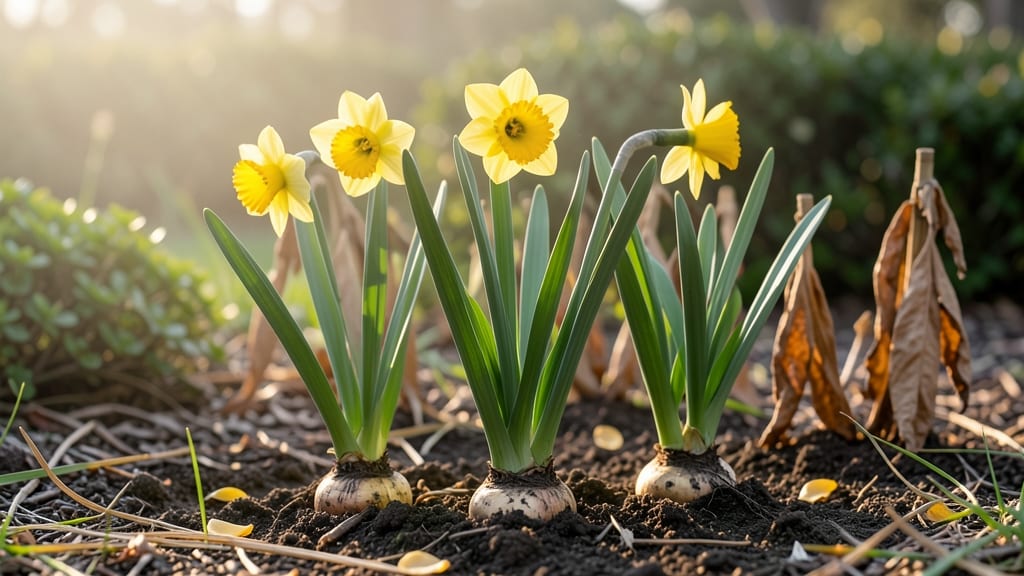
Yes, daffodils are perennials that regrow each spring from underground bulbs, thriving for years with proper care—though some varieties may decline after 3-5 years without division or renewal. Their hardy nature makes them a staple in seasonal gardens.
Daffodils earn their perennial status thanks to their underground bulbs, which act like natural energy banks. 🌱 These bulbs store nutrients and moisture during winter dormancy, then push up fresh foliage and flowers each spring.
Unlike annuals that complete their life cycle in one season, daffodils' bulbs remain dormant underground until conditions are right to regrow—making them low-maintenance garden workhorses. The key to their longevity lies in this underground storage system, which also helps them resist many common garden pests that plague other plants.
What sets daffodils apart from other perennials is their ability to naturalize—meaning they spread over time to create dense, self-sustaining colonies. This makes them perfect for gardeners who want reliable color year after year with minimal effort.
However, their hardiness comes with one important caveat: without occasional bulb division (every 3-5 years), some varieties may produce fewer blooms as the bulbs become overcrowded or depleted.
💡 In This Article
- Why Daffodils Survive as Perennial Bulbs
- Extending Daffodil Longevity in Gardens
Why daffodils survive as perennial bulbs
Daffodils thrive as perennials because their bulbs function like nature's energy storage units. Each bulb contains concentric layers of fleshy scales packed with starches and sugars—essentially a food reserve that sustains the plant through winter dormancy.
During the growing season, the bulb absorbs sunlight through its green tunic (the papery outer layer) to produce energy via photosynthesis in the leaves, then stores this energy back into the bulb's scales.
This process allows daffodils to survive harsh winters and regrow each spring, unlike annuals that must complete their entire life cycle in one season.
The bulb's structure also provides natural pest resistance.
Daffodils produce a milky sap containing lycorine, a compound that deters many common garden pests like squirrels and deer. 🌱 Additionally, their bulbs grow just below the soil surface (typically 6-8 inches deep), placing them out of reach for most rodents while still allowing roots to access moisture.
Unlike biennials that flower once then die, daffodils' bulbs remain dormant underground until environmental cues—like increasing daylight and soil temperatures—trigger their regrowth. This adaptive dormancy cycle is what makes them perennial powerhouses in gardens.
What's fascinating is how daffodil bulbs adapt to seasonal changes. In autumn, the plant's leaves turn yellow and wither, but the bulb continues storing energy until winter. By late winter, the bulb's basal plate (the bottom layer) begins producing new roots, while the shoot (future stem) grows upward.
This precise timing ensures daffodils bloom reliably each spring, often before many other perennials emerge. The bulb's ability to "reset" annually through this cycle is what distinguishes daffodils from annuals that must be replanted every year.
Consider this comparison: A daffodil bulb contains about 10-15% starch by weight, while a tulip bulb (also a perennial) has around 20% starch. This difference explains why daffodils often outlast tulips in gardens—daffodils' more moderate starch levels provide steady, long-term energy without the risk of over-depletion.
Their bulbs also develop protective layers that prevent rot, making them more resilient against fungal diseases that plague other bulb plants.
The bulb's layered structure plays a crucial role in this longevity. Each new layer forms after flowering, creating a protective barrier around the previous year's growth.
This concentric design acts like an onion's layers—each new layer adds insulation and storage capacity. 🌟 For example, a mature daffodil bulb might have 5-7 layers, with the outermost layer acting as a shield against soil-borne pathogens.
This architectural advantage is why daffodils can thrive for decades with proper care, unlike many perennials that decline after 3-5 years.
One common misconception is that all daffodils behave identically as perennials. While most varieties follow this pattern, some hybrid daffodils (particularly those bred for large blooms) may require more frequent division to maintain vigor.
The key difference lies in their bulb size—larger blooms often mean larger bulbs that deplete energy faster. Understanding this bulb mechanics helps gardeners choose varieties that match their climate and maintenance preferences, ensuring these cheerful flowers return year after year.