
Plants
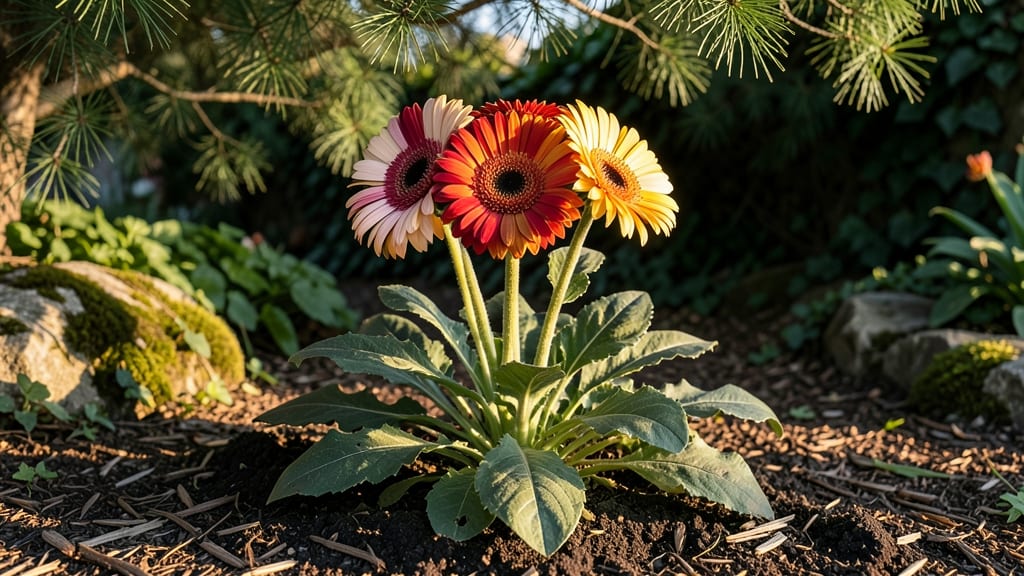
Gerbera daisies are not perennial plants in most regions—they die back to the ground each winter and rarely survive freezing temperatures without protection. While they act like annuals in cold zones, they can persist as tender perennials in USDA zones 10-11, where winters stay mild.
Gerbera daisies behave like perennials only in frost-free climates. 🌱 In colder areas, their roots struggle with winter chill, often rotting or failing to regrow unless you take special steps. The key difference lies in their native habitat—these vibrant flowers evolved in South Africa's warm, dry regions, not cold winters.
That's why gardeners in zones 8 and below typically treat them as seasonal plants, replacing them each spring.
What's interesting is how their growth cycle works: they focus all their energy on blooming during warm months, leaving little reserve for surviving harsh winters. Even in ideal zones (10-11), they may still need occasional division to maintain vigor, as their root systems can become crowded over time.
💡 In This Article
- Why Gerbera Daisies Die Back in Cold Climates
- How to Overwinter Gerbera Daisies in Cold Zones
Why gerbera daisies die back in cold climates
Gerbera daisies originate from South Africa's frost-free regions, where temperatures rarely drop below 32°F. Their root systems lack natural cold tolerance, making them vulnerable to freezing damage.
When exposed to temperatures below 20°F, the plant's cells begin to rupture due to ice crystal formation, which disrupts water flow and nutrient transport. This cellular damage is irreversible, causing the entire plant to die back to the ground.
The roots themselves are particularly sensitive, often rotting if soil moisture remains high during cold snaps. Unlike hardy perennials that develop insulating layers, gerberas have shallow, fibrous roots that can't withstand prolonged exposure to freezing soil.
Even a single hard frost can trigger irreversible dormancy or death, depending on the plant's age and health. In USDA zones 8 and below, winter survival rates drop dramatically without protection.
What makes this worse is their growth habit. Gerberas focus all their energy on producing vibrant blooms during warm months, leaving minimal reserves for winter survival. Their native environment's consistent warmth means they've never evolved the ability to enter true dormancy like many temperate perennials.
Instead, they rely on warm-season growth to sustain themselves year-round in ideal climates.
Moisture stress compounds the problem. Wet soil conducts cold more efficiently, accelerating root damage. The plant's natural response to cold is to reduce water uptake, but this creates a feedback loop where the roots become dehydrated and brittle.
In contrast, hardy perennials like peonies can tolerate winter moisture because their root systems are adapted to insulating snow cover.
Here's the science: Gerbera roots contain high levels of unsaturated fats that remain liquid at warm temperatures, but these fats solidify when exposed to cold, disrupting cell membranes. This is why even a light frost can cause visible wilting that never fully recovers.
The plant's inability to regenerate from damaged roots explains why most gardeners in cold climates treat them as annuals.
In their native habitat, gerberas experience consistent temperatures between 60-80°F year-round, with no freezing periods. This environmental consistency explains why they struggle in regions with seasonal temperature swings. The lack of evolutionary pressure for cold adaptation means their survival strategies are limited to rapid growth and reproduction during favorable conditions.
For gardeners in marginal zones (9-10), even a single unexpected freeze can be catastrophic. The plant's shallow root system provides no insulation, making it particularly vulnerable compared to deeper-rooted perennials.
This biological limitation is why gerberas thrive best as container plants in colder regions, where they can be moved indoors before temperatures drop.