
Vegetables
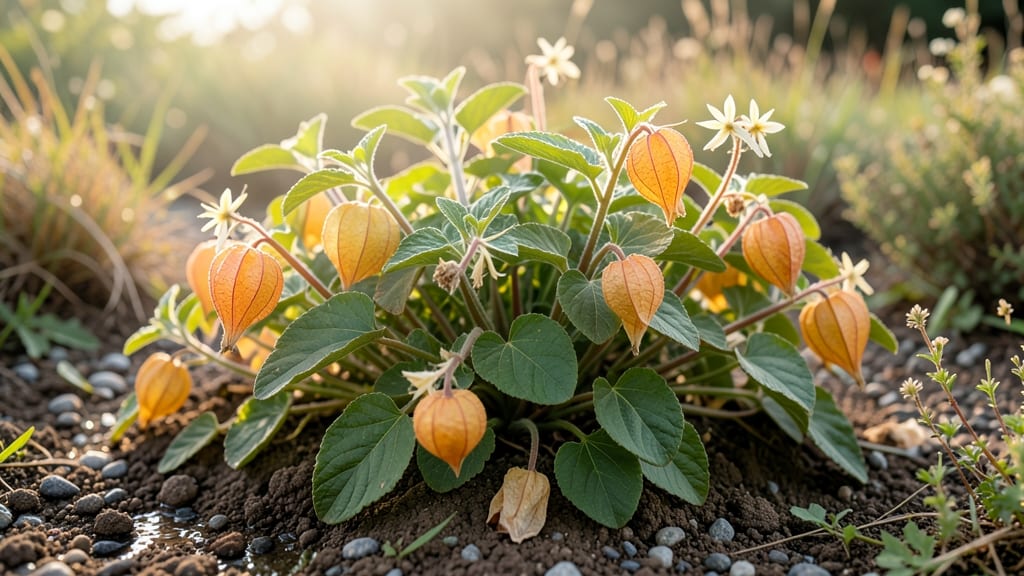
Ground cherries behave like perennials in warm climates but die back annually—their roots survive underground each winter, allowing regrowth when temperatures rise. In colder regions, they act as annuals unless protected.
This dieback cycle is actually a survival strategy—ground cherries prioritize root development over above-ground growth during cooler months. 🌱 The key difference between true perennials and ground cherries lies in their hardiness: while perennials like asparagus or rhubarb withstand freezing temperatures, ground cherries need consistent warmth to thrive year after year.
I've seen them bounce back spectacularly in Zone 8+ gardens, but even in colder areas, proper mulching can protect their roots through winter.
What sets ground cherries apart is their ability to produce fruit within just 60-90 days of planting, making them feel like annuals despite their persistent root systems. This dual nature means gardeners can enjoy their sweet, tomato-like harvests annually while still benefiting from a perennial-like plant structure.
💡 In This Article
- Ground Cherry Dieback Cycle Explained
- Climate-Specific Ground Cherry Care for Longevity
Ground cherry dieback cycle explained
Ground cherries (Physalis spp.) undergo a fascinating biological process where their aboveground foliage and stems die back completely in late fall, only to regrow from the same root system in spring.
This isn't true dormancy like hardy perennials—it's a survival adaptation where the plant redirects energy underground during cooler months. The roots, which can extend 12-18 inches deep, store carbohydrates and nutrients, allowing regrowth when temperatures rise above 55°F.
The key difference between ground cherries and true perennials lies in their cold tolerance. While plants like asparagus survive -20°F winters, ground cherries' roots typically tolerate only 20-25°F without protection. This is why they behave as annuals in Zone 5 or colder—frost penetrates too deeply to preserve the root crown.
In warmer climates (Zone 8+), they act like perennials, producing fruit for 3-5+ years from the same planting.
What's happening biologically? Ground cherries prioritize root development over fruit production when days shorten. The plant's meristematic cells (growth centers) remain active in the roots, ready to sprout new shoots when conditions improve.
This is why you'll often see fresh green leaves emerging from the soil in early spring—it's not a new plant, but the same one continuing its life cycle. 🌱 The process is similar to how strawberries regrow annually, though ground cherries have a more dramatic dieback.
Temperature triggers this cycle: below 45°F, the plant stops producing new growth and begins senescing (aging) its leaves. The roots continue photosynthesizing through chlorophyll in their bark until frost stops all activity.
This explains why ground cherries often look completely dead in winter—what's actually happening is a strategic energy conservation to survive until spring's warmth reactivates their growth hormones.
Here's where climate plays a critical role: In Zone 6-7, ground cherries may survive winters without protection if the ground doesn't freeze solid, but they'll produce less vigorously. In Zone 9-10, they behave like true perennials, with minimal winter dieback.
The transition between these behaviors happens gradually—it's not an all-or-nothing scenario but a spectrum determined by winter severity and root insulation.
What most gardeners don't realize is that ground cherries actually benefit from this dieback cycle. By completely resetting their growth each year, they avoid the buildup of diseases that plague older perennial plants.
This natural pruning helps maintain vigorous growth and higher fruit yields—another reason they're such rewarding plants to grow. The tradeoff? Their annual-like behavior means you'll need to replant seeds every year in colder climates unless you take protective measures.