
Plants
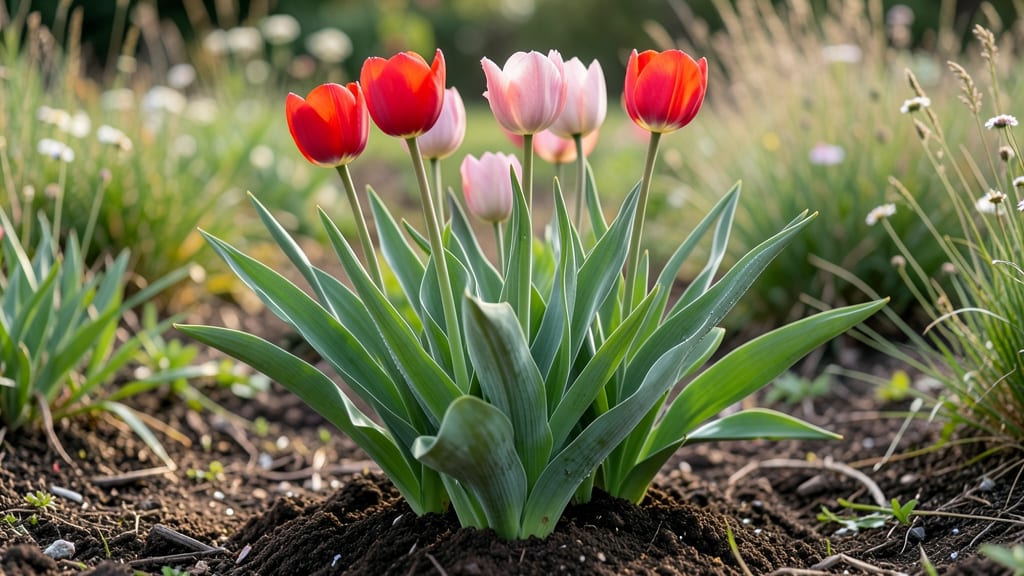
Tulips aren't true perennial plants—their above-ground stems and leaves die back completely each year, but their underground bulbs store energy to regrow for several seasons if cared for properly. Their survival depends on factors like soil quality, seasonal maintenance, and climate conditions.
While tulips may seem to disappear completely after blooming, their bulb-based lifecycle makes them behave like perennials in practice. 🌱 What sets them apart is how they store energy—unlike true perennials that maintain some foliage year-round, tulips redirect all their resources into the bulb after flowering.
This is why leaving the yellowed leaves intact for several weeks is crucial; they're the plant's last chance to replenish energy before dormancy. In colder climates, this process can repeat for 3-5 years with proper care, though neglect often leads to bulb exhaustion within 1-2 seasons.
What many gardeners overlook is how post-bloom care directly impacts longevity. Cutting back foliage too soon or planting in poor soil creates energy deficits that weaken the bulb's ability to regenerate.
Even in ideal conditions, tulips eventually decline after 3-7 years, which is why bulb division every 3-4 years becomes essential for maintaining healthy blooms. The key difference from true perennials lies in this energy storage mechanism—tulips are essentially dormant bulbs waiting for the right conditions to emerge again.
💡 In This Article
- Why Tulip Bulbs Die Back Annually
- How to Extend Tulip Bulb Longevity
Why tulip bulbs die back annually
Tulips follow a unique biological cycle where their above-ground growth completely withers after flowering—a process called senescence. This occurs because tulips are geophytes, meaning they store all their energy in underground bulbs rather than maintaining foliage year-round like true perennials.
When tulips bloom in spring, they rapidly deplete their bulb's stored starch reserves (up to 60% of the bulb's weight in ideal conditions) to fuel flower production and stem growth. Once flowering completes, the plant's priority shifts entirely to replenishing these reserves through photosynthesis in the remaining leaves.
The yellowing foliage you see after blooming isn't dead—it's actively working to convert sunlight into carbohydrates that get transported back into the bulb. This 6-8 week period is critical: studies show bulbs left with foliage can store 30% more energy than those with prematurely removed leaves.
The bulb's outer scales act like a biological battery, swelling with starch until dormancy begins. Without this replenishment phase, the bulb enters the next season with insufficient energy to produce flowers, leading to weak or non-existent blooms.
What makes this different from true perennials is their energy allocation strategy. Plants like hostas maintain some foliage year-round to sustain gradual growth, while tulips use a "all-in" approach—redirecting every resource into bulb storage after flowering.
This creates their characteristic dieback, but also makes them more vulnerable to environmental stressors. For example, a late spring frost can damage emerging foliage before it completes photosynthesis, leaving the bulb energy-depleted for the next season.
Temperature plays a crucial role in this cycle. Tulip bulbs require a 12-16 week cold period (40-50°F) to break dormancy—this chilling requirement prevents premature sprouting. Without adequate cold exposure, bulbs may produce foliage but fail to flower, a condition called "blind stalking."
In warmer climates, this means tulips often need artificial chilling or specific planting times to ensure proper dormancy cycles. The bulb's internal clock regulates this through hormonal changes, particularly the reduction of growth-promoting gibberellins during dormancy.
Here's what's actually happening at the cellular level: The bulb's basal plate (where roots emerge) contains meristematic cells that remain dormant until conditions are right. These cells divide rapidly during the 60-90 day growth period after chilling, using stored starches to produce new shoots.
The key difference from true perennials is that tulips don't maintain an active meristem year-round—they essentially "reset" their growth cycle annually through this bulb-based mechanism.
This annual dieback isn't a sign of weakness—it's an evolutionary adaptation for survival in temperate climates. The trade-off is that tulips become increasingly dependent on perfect post-bloom care each year.
Without proper maintenance, bulbs gradually lose their ability to store energy efficiently, leading to smaller flowers or complete failure to bloom after 3-5 years. 🌱