
Flowers
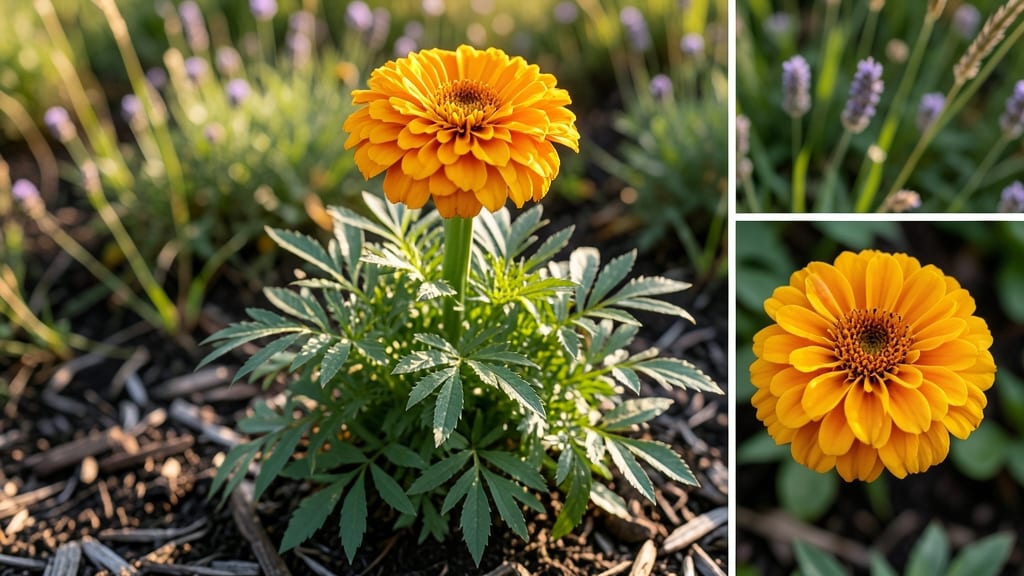
These perennial flowers, marigolds, behave like annuals in most climates because they don't reliably survive winter frost, though their seeds often sprout again the following year. Only in warmer zones (USDA 9-11) can they persist as true perennials with proper winter protection.
Marigolds thrive as annuals because their tops die back with frost, but their roots and seeds remain dormant until spring. 🌱 In colder zones (USDA 3-8), they'll always return from seeds unless you remove them, while in milder areas, their roots may survive with heavy mulch.
This self-seeding habit is why many gardeners treat them as perennials—even when they're technically not. The key difference lies in winter survival: true perennials like lavender regrow from the same root system every year, while marigolds rely on seeds or protected roots to bounce back.
For gardeners in transitional climates (USDA 7-8), overwintering marigolds in containers or under thick mulch can extend their lifespan. I've found that French marigolds, with their deeper roots, handle colder snaps slightly better than Mexican varieties.
The secret to treating them as perennials lies in protecting their roots from freezing—whether through deep mulch, row covers, or moving pots to sheltered spots.
💡 In This Article
- Marigold Hardiness Zones and Winter Survival Guide
- How to Grow Marigolds as Annuals or Perennials
Marigold hardiness zones and winter survival guide
Marigolds thrive in USDA zones 2-11, but their perennial status depends entirely on winter temperatures. The critical threshold is 20°F (-7°C)
In zones 3-8, marigolds behave as annuals because frost kills the foliage, but their seeds often germinate the next spring. This self-seeding habit is why many gardeners mistake them for perennials—though technically, they're not. The science behind this involves marigold root hardiness. Their fibrous roots can tolerate brief cold snaps down to 15°F (-9°C), but prolonged freezing kills them. In zones 9-11, where winters rarely drop below 30°F (-1°C), marigolds can persist as true perennials, regrowing from the same root system each year. The key difference? True perennials like lavender or rosemary have woody stems that survive winter, while marigolds rely on protected roots or seeds. 🌱 Seed persistence is another factor. Marigold seeds remain viable in the soil for 2-3 years, germinating when conditions are favorable. This means even in colder zones, you'll often see "volunteer" plants popping up—though they may not match the parent plant's vigor. French marigolds (Tagetes patula) tend to self-seed more reliably than Mexican varieties (Tagetes erecta) due to their smaller, lighter seeds that disperse easily. For gardeners in transitional zones (7-8), the solution lies in winter protection. A 4-6 inch mulch of straw or leaves can insulate roots enough to survive 15°F (-9°C) snaps. In containers, moving pots to unheated garages or wrapping them in bubble wrap extends their lifespan. Without protection, marigolds will always die back to the ground—it's their natural survival strategy in colder climates. What most gardeners don't realize is that marigold roots contain natural antifreeze compounds similar to those in winter wheat. These compounds lower the freezing point of cell sap by 1-2°F, giving them a slight edge in marginal climates. However, this only buys them time—prolonged freezing will still kill the roots. The real perennial advantage comes in zones 9-11, where marigolds can bloom continuously year-round with minimal care. Consider this comparison: In zone 5, marigolds will always return from seeds, while in zone 10, they'll regrow from the same roots. The difference isn't in the plant itself, but in how winter temperatures interact with its biology. This is why marigolds are called "warm-season perennials"—they behave like perennials only in warm climates. 💫