
Plants
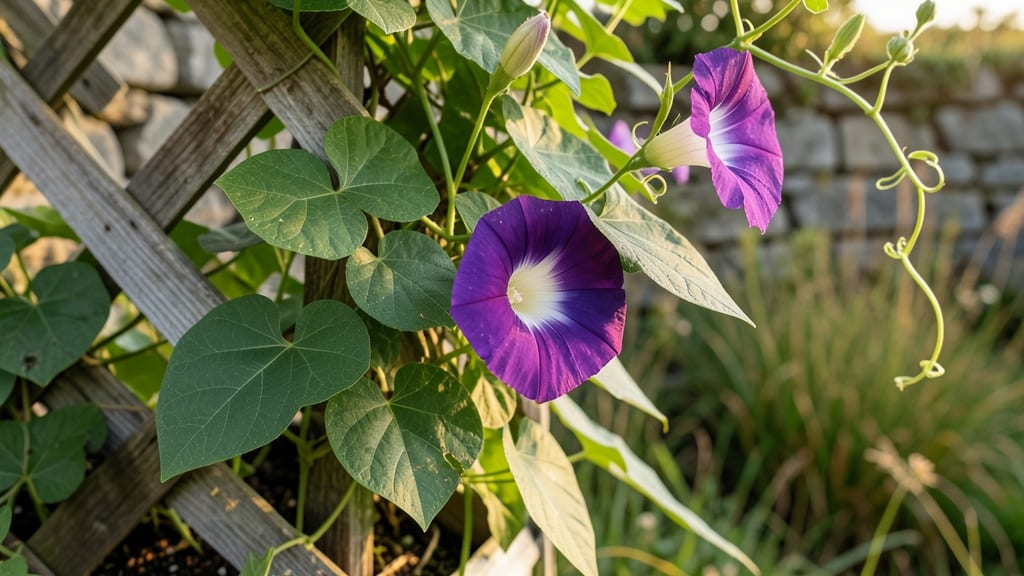
Morning glories are not true perennials in most climates, as they die back to the ground after frost and regrow only from seeds each spring. However, in warmer zones (USDA 9-11), they may persist as self-seeding annuals or weak perennials with minimal winter survival.
Morning glories behave like annuals in most regions because their delicate vines and shallow roots can't survive freezing temperatures. 🌱 The moment frost hits, their foliage blackens and dies—leaving only the seeds buried in the soil to sprout again next year.
This explains why gardeners in colder zones treat them as seasonal plants rather than perennials. Even in mild winters, they rarely regrow from the same roots, making them more of a self-seeding annual than a true perennial.
What changes in warmer climates is their ability to self-perpetuate through seeds. In zones 9-11, morning glories often reseed themselves so aggressively that they create dense ground covers year after year—though technically, they're still not true perennials.
The key difference lies in their root system: perennial plants store energy underground to regrow, while morning glories rely entirely on seed germination each spring.
💡 In This Article
- Why Morning Glories Die Back in Cold Climates
- How to Grow Morning Glories Like a Perennial
Why morning glories die back in cold climates
Morning glories (Ipomoea species) are classified as tender annuals because their biological makeup simply can't withstand frost. Their shallow root systems—typically no deeper than 12-18 inches—lack the energy reserves needed to survive winter dormancy.
When temperatures drop below 32°F, the plant's cellular structure freezes, causing irreversible damage to the vines and leaves. This is why you'll see their foliage turn black and crispy within 24-48 hours of the first frost, leaving only the seeds buried in the soil.
The key difference between morning glories and true perennials lies in their cambium layer—the growth tissue responsible for producing new stems and leaves. Morning glories have minimal cambium activity, meaning they can't regenerate from the same rootstock after winter.
In contrast, perennials like hostas or peonies store carbohydrates in their roots to fuel regrowth. Morning glories, however, rely entirely on seed germination each spring, which is why they're treated as annuals in most climates.
USDA hardiness zones 3-8 experience complete die-back each winter, but the severity varies by region. In zone 8, where winters are mild but occasional frosts occur, morning glories may survive a single frost but still die back entirely.
Only in zones 9-11 do they exhibit any semblance of perennial behavior, where they might self-seed so densely that they create a continuous ground cover. This is why gardeners in these zones often mistake them for perennials—what they're actually seeing is aggressive reseeding rather than true perennial regrowth.
Another critical factor is their water content. Morning glories have a high moisture content in their stems, which makes them particularly vulnerable to frost damage.
When water freezes inside plant cells, it expands and ruptures the cell walls—this is the same process that causes pipes to burst in freezing temperatures. The result is a plant that looks healthy one day and completely dead the next, with no chance of recovery.
For comparison, consider the difference between morning glories and sweet potatoes (Ipomoea batatas), which are true perennials in warm climates. Sweet potatoes store energy in their thick, tuberous roots, allowing them to regrow from the same plant year after year.
Morning glories, on the other hand, have fibrous roots that store minimal energy, making them incapable of this survival strategy. 🌱
In practical terms, this means that if you're growing morning glories in zones 3-8, you'll need to replant seeds every spring.
Even in zone 9, where they might survive a light frost, they won't regrow from the same roots—they'll simply produce more seeds to sprout in the following season. This is the fundamental reason why morning glories are classified as annuals rather than perennials in most gardening contexts.