
Flowers
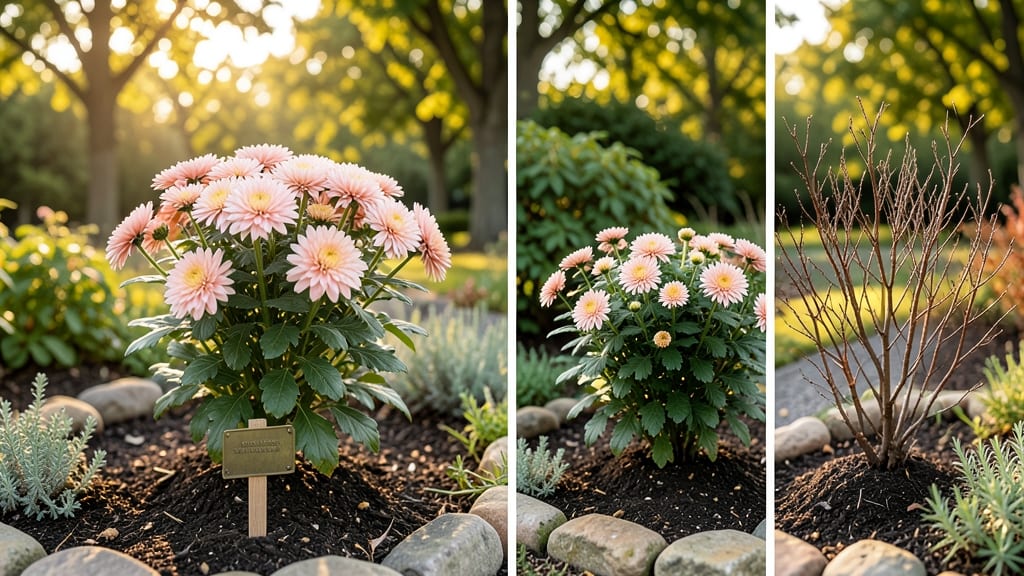
Pelee mums behave like perennials in USDA Zones 8-10, regrowing from their tuberous roots each season, but they're not true perennials in colder climates where frost often kills them back to the ground.
Pelee mums thrive as seasonal plants in warmer climates because their tuberous roots store energy for regrowth. 🌿 In colder regions, even cold-hardy varieties need extra protection—like thick mulch or container growing—to survive winter.
The key difference is that true perennials regrow from their crowns, while Pelee mums rely on their root systems, making them more sensitive to freezing temperatures.
For gardeners in Zones 7 and below, treating them as annuals or digging up tubers for indoor storage is often the best approach. This distinction explains why some gardeners swear by Pelee mums in mild winters while others treat them like temporary summer blooms.
💡 In This Article
- Why Pelee Mums Struggle in Cold Climates
- Best Practices for Overwintering Pelee Mums
Why Pelee mums struggle in cold climates
Pelee mums rely on tuberous roots for survival rather than true perennial crowns, which makes them far more sensitive to freezing temperatures.
Unlike hardy perennials like hostas or daylilies that regrow from protected underground stems, these mums store energy in thickened root structures that can rot if exposed to prolonged cold or wet soil.
When temperatures drop below 20°F, the root cells begin to break down, leading to complete dieback in Zones 7 and below.
The real issue isn't just frost—it's the combination of cold and moisture. When soil temperatures hover around 32-35°F for extended periods, the tuberous roots experience what botanists call "chilling injury," where cell membranes rupture and nutrients leak out.
This is why Pelee mums often look healthy in fall but fail to re-emerge in spring, even in supposedly "cold-hardy" varieties. The roots simply can't withstand the cumulative stress of winter's freeze-thaw cycles.
Here's what happens at the cellular level: Pelee mum tubers contain high starch reserves that convert to sugars during dormancy.
But when soil temperatures fluctuate between freezing and thawing, these sugars attract water molecules, causing the root tissue to swell and crack. 🌱 In true perennials like coneflowers, the crown remains insulated by insulating leaf litter, but Pelee mums lack this natural protection system.
Their roots need consistent temperatures above 25°F to survive.
Another critical factor is the plant's natural dormancy cycle. While true perennials enter a deep, protected dormancy, Pelee mums remain semi-active until hard frost. This means their metabolic processes continue until killed by cold, depleting their energy reserves.
In Zones 8-10, they get a second chance because winter temperatures rarely drop below 25°F for long periods, allowing the tubers to remain viable.
To put this in perspective, consider that garden chrysanthemums (their relatives) can survive down to 15°F with proper care, but Pelee mums were bred specifically for their vibrant colors and compact growth—not cold endurance.
Their tuberous structure, while excellent for energy storage, lacks the protective insulation found in true perennial root systems.
The bottom line is that Pelee mums are more like "pseudo-perennials" in ideal climates. Their survival depends entirely on maintaining root integrity through winter, which becomes nearly impossible in regions with frequent sub-freezing temperatures or heavy winter rains that saturate the soil.