
Plants
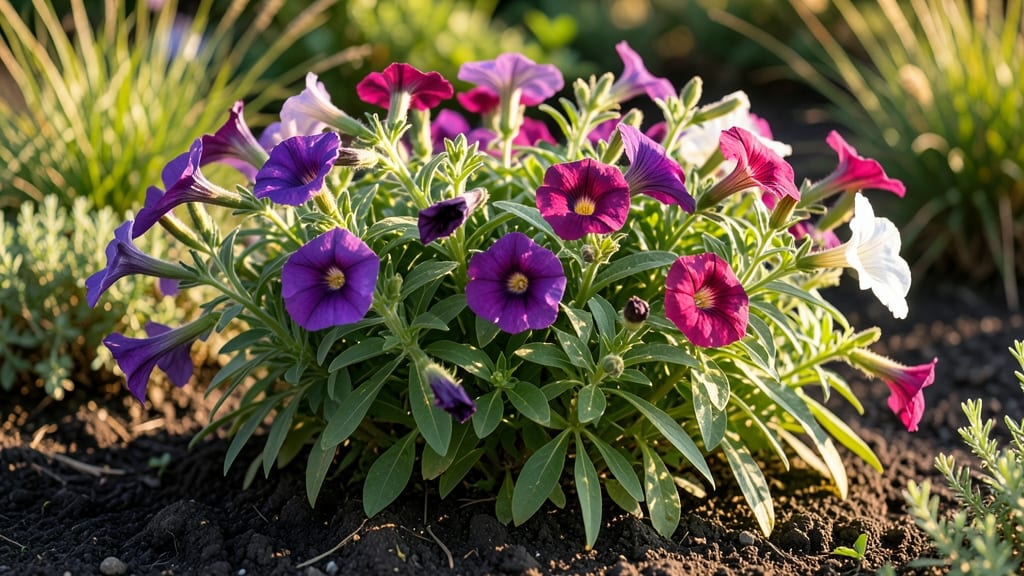
Petunias are not perennials in most climates but thrive as annuals, dying back in frost. In USDA Zones 10-12, they return yearly as tender perennials with proper winter care, like mulching or container protection. Most gardeners replant them annually in cooler regions.
Petunias originate from South America’s frost-free regions, which explains why they struggle in cooler climates. 🌱 Their delicate stems and leaves freeze at temperatures below 32°F, causing irreversible cell damage. Even in milder zones, their growth slows dramatically when nights dip below 50°F, triggering dormancy.
This frost sensitivity is why they’re classified as annuals in most of the U.S.—they complete their life cycle in a single growing season unless protected.
The key difference in warmer zones is that with proper winter care, like heavy mulching or moving potted plants to sheltered areas, they can survive and regrow each spring.
For gardeners in Zones 10-12, the secret to perennial petunias lies in consistent moisture and shelter. I’ve seen them thrive for years when given 3-4 inches of organic mulch around the base, which insulates roots from temperature swings.
Container growers can extend their lifespan by bringing pots indoors during cold snaps or using frost blankets. The trade-off? These plants may produce fewer blooms their second year, but their ability to return makes them worth the extra effort.
💡 In This Article
- Petunia Lifespan: Why They Die Back in Cold Climates
- Extending Petunia Growth: Zones 10-12 Winter Care Tips
Petunia lifespan: why they die back in cold climates
Petunias trace their origins to South America’s tropical and subtropical regions, where temperatures rarely drop below 50°F at night. This genetic heritage explains their frost sensitivity—when exposed to freezing temperatures (32°F or lower), their cell walls rupture due to ice crystal formation within plant tissues.
Unlike hardy perennials that develop cold-resistant proteins, petunias lack these adaptations, making them vulnerable to even light frosts. 🌱 The damage isn't just cosmetic; it's systemic, affecting the entire plant's ability to regenerate.
Even in milder climates, petunias respond to cooler temperatures by entering a state of dormancy. When nighttime lows dip below 50°F for extended periods, their growth slows dramatically as metabolic processes shut down. This survival mechanism conserves energy but also signals the plant's inability to withstand prolonged cold.
The result? In most U.S. regions (Zones 1-9), petunias complete their life cycle in a single growing season, producing vibrant blooms from spring to frost before dying back completely. This annual behavior is hardwired into their biology, making them ill-suited for regions with regular freezes.
What makes this particularly interesting is how petunias compare to other tropical plants. Unlike hibiscus (which can survive brief cold snaps) or bougainvillea (which drops leaves but regrows), petunias have no recovery mechanism once their cells freeze.
Their stems become brittle and blacken, while leaves turn mushy—a clear sign of irreversible damage. This biological limitation is why gardeners in colder zones treat them as annuals, replanting fresh seeds or transplants each spring. The trade-off?
Their rapid growth and prolific blooming make them worth the annual investment for seasonal color.
Here's what happens at the cellular level: When temperatures drop below 32°F, water inside petunia cells begins to crystallize. These ice formations puncture cell membranes, causing them to leak vital fluids. The plant's vascular system clogs with these damaged cells, preventing nutrient transport.
Within hours, the entire plant systemically shuts down. 💫 This process is why you'll never see a petunia "come back" after a hard freeze—unlike some perennials that regrow from roots, petunias have no dormant underground structures to restart growth.
For gardeners curious about extending their petunias' lifespan, understanding this biological limitation is crucial. In frost-free zones (Zones 10-12), petunias can persist because they never experience these destructive freezes. Instead, they face gradual seasonal changes that allow them to adapt.
The key difference lies in consistent moisture and protection from temperature fluctuations—factors we'll explore in the next section about warm-climate care strategies.