
Orchid Care
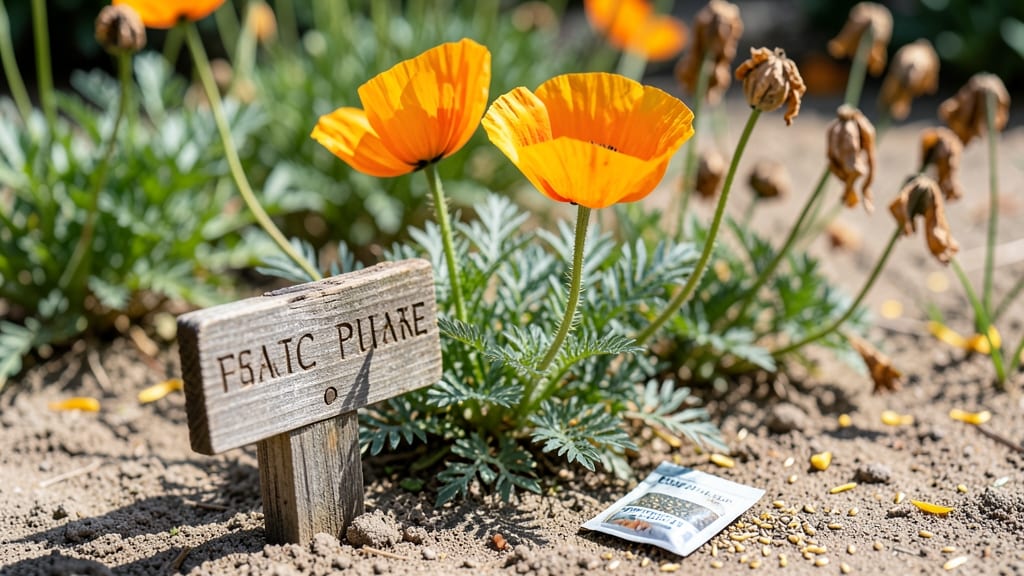
Are poppies annuals or perennials? Most poppies are annuals, though some varieties like the Icelandic poppy (Papaver nudicaule) and oriental poppies (Papaver orientale) are perennials in mild climates, returning for 2–3 years before declining. Most common types, such as California poppies (Eschscholzia californica), complete their lifecycle in one season.
Most poppies you'll find in gardens are annuals, meaning they sprout, bloom, and set seed all in one growing season before dying back. 🌸 However, the key difference lies in their hardiness—perennial poppies like the oriental poppy can survive winter in zones 3-8, while annuals like the California poppy thrive in warmer climates but won't return the following year.
This makes variety selection crucial for garden planning, especially if you want consistent blooms year after year.
For gardeners in colder regions, choosing perennial poppies means fewer replanting efforts, though they may take 2-3 years to reach full maturity. Annual poppies, on the other hand, offer vibrant seasonal color with minimal upkeep, often self-seeding to create naturalized meadows.
The right choice depends on your climate goals and how much maintenance you're willing to invest.
💡 In This Article
- How Poppy Lifespan Varies by Species and Climate
- Best Poppy Varieties for Year-Round Garden Impact
How poppy lifespan varies by species and climate
The botanical distinction between annual and perennial poppies comes down to their root systems and survival strategies. Annual poppies like the California poppy (Eschscholzia californica) develop shallow, fibrous roots that store just enough energy to fuel their rapid growth and seed production in a single season.
Their lifecycle is a race against time—typically 60-90 days from seed to seed—optimized for warm, dry climates where winters are absent or brief. 🌵 These species prioritize reproduction over longevity, often self-seeding prolifically to ensure the next generation's survival.
Perennial poppies, however, invest in deep, sturdy taproots that act like natural storage units, allowing them to survive winter dormancy. The Icelandic poppy (Papaver nudicaule), for example, thrives in USDA zones 3-8, where its roots can endure temperatures down to -30°F (-34°C).
This hardiness means it can return year after year, though its vigor may decline after 2-3 years due to accumulated stress or disease. Climate plays a critical role: in colder regions (zones 1-2), even these perennials behave like annuals, as their roots simply can't withstand the freeze-thaw cycles.
The science behind this lies in photoperiodism—the plant's response to daylight length. Annual poppies in temperate zones often flower in response to shorter days (short-day plants), triggering a rapid lifecycle before winter sets in.
Perennials, however, delay flowering until they've built sufficient root reserves, a strategy that requires multiple growing seasons. 🌱 This is why oriental poppies (Papaver orientale)—native to mountainous regions—take 2-3 years to mature but then reward gardeners with dramatic 4-6 foot stems and 5-inch blooms that last for weeks.
What most gardeners don't realize is that some poppies exhibit "semi-perennial" behavior. Species like the corn poppy (Papaver rhoeas) may live for 2-3 years in ideal conditions but often revert to annual habits when stressed by drought or poor soil.
This plasticity explains why poppy populations can appear and disappear unpredictably—what seems like a perennial might actually be a short-lived annual in your specific microclimate. 🌿 Understanding these nuances helps explain why your neighbor's poppies might thrive while yours struggle.
USDA hardiness zones provide a useful guideline, but local conditions matter more. For instance, a zone 5 garden might successfully grow Icelandic poppies in a sheltered, south-facing bed where winter winds are blocked, while the same variety fails in an exposed location.
The key is matching the poppy's native growing conditions: Mediterranean annuals need well-drained soil and full sun, while alpine perennials tolerate cooler, moister soils. This adaptability is why poppies have naturalized across five continents—each variety has evolved survival strategies tailored to specific environmental pressures.
Consider this when selecting poppies: annuals offer instant gratification with vibrant seasonal color, while perennials provide long-term structure and reliability. The trade-off? Annuals require annual replanting, whereas perennials demand patience during their establishment phase.
For example, planting oriental poppies in early spring (when soil temperatures reach 50°F) gives roots time to develop before winter, while sowing annuals too early risks bolting (premature flowering) due to cold stress. 💡 This balance between immediate impact and long-term investment defines the poppy gardener's dilemma.